There is something deeply compelling about the half-orc. Born between two worlds — the thunderous, war-painted culture of the orc clans and the fragile, ambitious civilizations of humanity — the half-orc walks a road no one else truly understands. They are survivors by blood, warriors by necessity, and often the most emotionally complex characters at any adventuring table. Whether your half-orc is a brooding mercenary haunted by his heritage, a noble paladin determined to rise above every low expectation, or a cunning rogue who weaponizes the world’s underestimation of her, one truth remains: they deserve a name that carries weight.
A name, in fantasy storytelling and tabletop roleplay, is never just a label. It is the first piece of armor a character wears. It signals backstory, culture, threat level, and soul. When a half-orc steps forward and declares their name, that single word or phrase should echo with everything they are — the roughness of orc syllables, perhaps, softened or sharpened by a human tongue. Or something entirely their own, forged in the fire of an identity that refuses to be defined by either parent race.
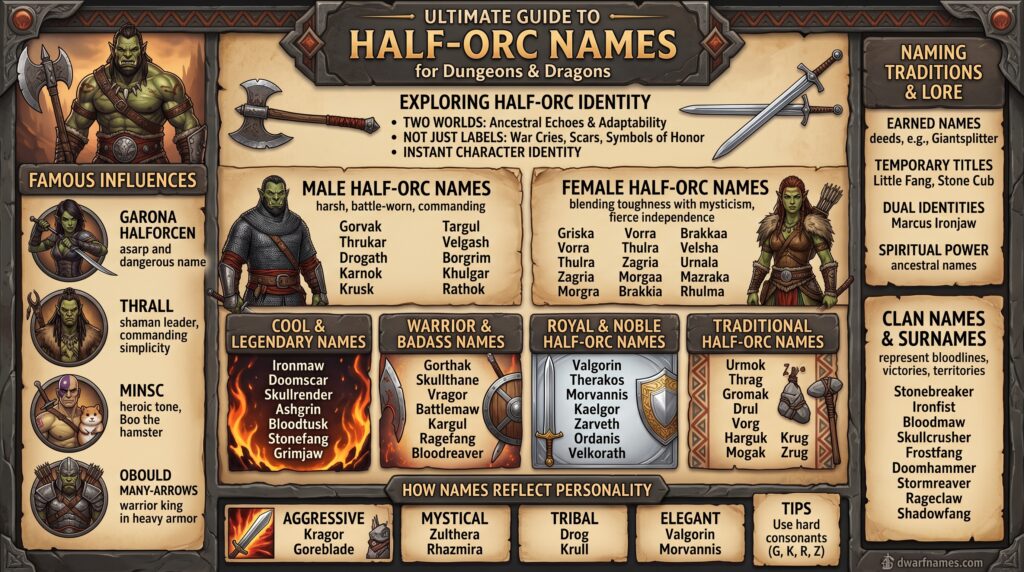
This guide is your complete resource for half-orc names. Whether you are building a character for a long campaign, writing a fantasy novel, designing a villain for your homebrew world, or simply worldbuilding for the love of it — you will find hundreds of names here, organized by theme, gender, tone, and tradition. We have also woven in lore about half-orc naming culture, clan surnames, and the philosophy behind how these powerful people name themselves and their children.
Let your half-orc have a name worthy of the legend they are about to become.
Famous Half-Orc Names From Literature & Games
Before we dive into the lists, it helps to look at the half-orcs who have already carved their names into fantasy history. These characters show us how a well-chosen name can define an entire arc.
Gruumsh-Born (Legendary Concept, D&D Lore) — While not a single character, the idea of a half-orc who bears the name of the orc deity Gruumsh as part of their identity represents the heaviest kind of naming tradition. To carry a god’s syllables in your name is both a curse and a crown.
Bhorg the Unmade — A recurring half-orc figure in fan-made D&D campaigns who earned his surname on the battlefield, “Bhorg” is a perfect example of a short, percussive orc-origin name that hits like a warhammer. The surname was given, not chosen — a naming tradition common in half-orc culture.
Half-Orc Barbarians in Baldur’s Gate — The video game series has introduced countless players to half-orc characters whose names blend guttural consonants with human phonetics. Names like Dorn Il-Khan use both heritage traditions: a short harsh first name followed by a clan-style surname.
Orc-Born in The Witcher Universe — While not strictly D&D, fantasy traditions across media show half-blooded warrior characters given names that reflect duality: soft vowels swallowed by hard consonants, just as their identity is always two things at once.
If you love exploring how race shapes identity in naming traditions, you might also enjoy browsing DnD Halfling names for a fascinating contrast — where halfling names tend toward warmth and comfort, half-orc names tend toward endurance and edge.
Male Half-Orc Names
Male half-orc names often carry a percussive energy — consonant-heavy, short to medium in length, and built to be barked across a battlefield or muttered in the shadows of a tavern. These names feel earned rather than given.
- Groth
- Varek
- Morghul
- Torvan
- Draksh
- Hrund
- Bolgar
- Skarryn
- Vord
- Durnak
- Thraxx
- Orgrim
- Vethkar
- Rulgore
- Kharzen
- Drogan
- Ulmash
- Barrog
- Svornn
- Wulgar
- Gothrak
- Draeven
- Korrath
- Yargul
- Thrend
- Bruvok
- Mazgul
- Varkon
- Thork
- Hravan
- Dolkur
- Skardun
- Morgen
- Velkar
- Kragoth
- Durvel
- Zorn
- Bhurrak
- Tolvak
- Gruhan
- Orryn
- Garvok
- Skorn
- Rethgar
- Tormund
- Vralk
- Harkon
- Dragovar
- Kelghor
- Urgmath
Female Half-Orc Names
Female half-orc names carry the same strength but often with a slightly different cadence — still grounded in power, but sometimes more fluid, more cunning, or more emotionally layered. These names honor the complexity of the character.
- Vorka
- Zulra
- Thraya
- Morgath
- Valka
- Reshka
- Drakha
- Ulvara
- Skorra
- Brendha
- Marsha the Grim (traditional full-name style)
- Vekta
- Thulna
- Orgra
- Kharva
- Roshka
- Druuna
- Gortha
- Yelka
- Baksha
- Marreth
- Volsha
- Threnka
- Bulvara
- Skarsha
- Zendra
- Relva
- Morwen
- Hulda
- Varkha
- Drusna
- Grethka
- Kelsha
- Throva
- Umara
- Bregda
- Sharryn
- Orvha
- Grulla
- Daksha
- Voldra
- Helgra
- Rukka
- Tharva
- Zulsha
- Norka
- Shremba
- Vedra
- Ashkra
- Urtha
Cool and Unique Half-Orc Names
Some names transcend categories. These are the names that make a table go quiet when they are first spoken — names that feel both ancient and immediate, both invented and inevitable. These are perfect for players who want something truly memorable.
- Azurak
- Velanthor
- Ghorzak
- Draveth
- Skuldren
- Morthaine
- Brakoven
- Vorath
- Zhulgrim
- Kethavar
- Drenthok
- Ulvrak
- Thraxian
- Orrevak
- Vaelmur
- Grothian
- Khorzeth
- Skavalorn
- Mordhek
- Braketh
- Velshior
- Darvaken
- Uldrathar
- Skarrion
- Vorkesh
- Thraeldun
- Grulveth
- Azrakh
- Drakoven
- Korathis
- Muldrak
- Zharevak
- Skorrith
- Bhravan
- Olvarak
If you enjoy unique naming traditions across the fantasy spectrum, the DnD Aarakocra names collection offers a fascinating look at how avian fantasy races approach naming — a wonderful contrast to the earth-bound weight of half-orc names.
Warrior and Badass Half-Orc Names
These names were built for the front line. They hit hard, end fast, and leave an impression. Every syllable is a warning. These are the names enemies learn to fear and allies learn to trust with their lives.
- Skullcleave (earned name)
- Vorghast
- Thromdak
- Razorgrin
- Krakgar
- Bonebreaker Kel
- Skarrvok
- Grondar
- Deathstride
- Vrommak
- Urghal
- Dreadmane
- Volkarr
- Grimhowl
- Rakhun
- Thraxul
- Ironwrath
- Skalgron
- Bharak
- Sordak
- Ruinhand
- Morghast
- Darkstrike
- Grelvak
- Kordun
- Wrathmar
- Stonefist Dor
- Vorrath
- Shatterbone
- Kraggus
- Halvok
- Dreadkarr
- Rolvak
- Slashgrim
- Tharkon
Royal and Noble Half-Orc Names
Not every half-orc is born into blood and mud. Some rise — through politics, through conquest, through sheer force of personality — to positions of power. Noble half-orc names often blend orc strength with more structured, resonant syllables that suggest authority and lineage.
- Dravoran
- Velmorath
- Korindrak
- Gorthavel
- Thraven
- Uldraveth
- Skarmoran
- Bhregan
- Vorindal
- Marlgoth
- Durvendrak
- Khorthein
- Valdrevar
- Ormandrak
- Skeldoran
- Brakthain
- Veldrath
- Thordavan
- Grulmaren
- Kortheval
- Uldravorn
- Zharendrak
- Morghavel
- Dreventhal
- Skarrindor
- Valdreth
- Khordavan
- Urthalmor
- Drothaven
- Gromveldrak
Traditional and Classic Half-Orc Names
These are the names you would find carved into stone above a half-orc clan’s war hall, or spoken in hushed reverence by their descendants. They carry the weight of established fantasy tradition and feel at home in any campaign setting.
- Gruuk
- Thrak
- Morda
- Bolg
- Urzak
- Vrak
- Shrath
- Drak
- Orrul
- Grunn
- Torgh
- Skrak
- Vrund
- Murg
- Bolrak
- Dolg
- Urrax
- Thorg
- Skrul
- Grumm
- Voth
- Mroth
- Ulgar
- Skrag
- Dregg
- Brul
- Thrak
- Vogg
- Murga
- Krul
Half-Orc Naming Traditions and Lore
Understanding how half-orcs are named opens a window into one of the most fascinating cultural intersections in fantasy worldbuilding.
The Two-Name Divide
Many half-orcs carry two names throughout their lives: the name given at birth by whatever parent raised them, and the name they earn or choose for themselves. An orc-raised half-orc might receive a guttural birth name like Gruuk or Skrak, then earn a second name through a rite of passage — a hunt, a battle, a duel. A human-raised half-orc might be given something like Maren or Aldric, only to later adopt an orc-style name as they discover their heritage.
The Earned Name Tradition
Among many orc tribes and clans, a name is not a gift — it is a trophy. Children are called by a placeholder (“young one,” “whelp,” “child of the third moon”) until they prove themselves. The first earned name is usually a single noun: a weapon, an animal, a natural force. Earned names are worn proudly: Stonehand, Bloodcry, Ashborn, Dawnbreaker.
Human-Side Naming
When a half-orc is raised in human society, they may receive entirely human names — often with an edge or a roughness that reflects their appearance and the unconscious expectations of those around them. Names like Helda, Marta, Garret, or Rodric are common. Some half-orcs keep these names their whole lives as a statement of belonging. Others eventually shed them like old armor.
The Clan Marker
Among half-orcs who maintain orc clan ties, the clan name often precedes or follows the personal name. “Of the Broken Tusk,” “Bloodrock-born,” “of Clan Ashfang” — these markers tell the world who your people are. They also serve as a warning. Clan Skullfire, for example, is not a name you want to find carved into the hilt of a sword pointed at you.
For fans of deep naming lore, exploring how other fantasy peoples mark lineage is equally rewarding. Check out DnD Goblin names for another orc-adjacent culture whose naming traditions are rich with personality and menace.
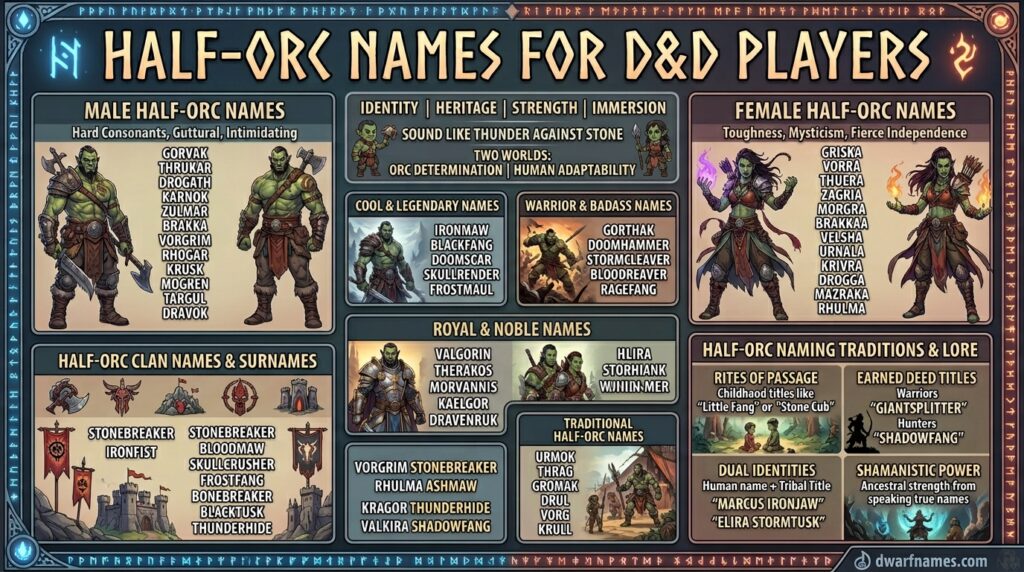
Half-Orc Clan Names and Surnames
Half-orc surnames often describe either a physical characteristic, a famous ancestor’s deed, a clan symbol, or a terrible event in clan history. These compound names function as both identifiers and declarations.
- Ashbone
- Ironhide
- Stonefang
- Bloodcrest
- Duskmantle
- Grimtusk
- Darkmane
- Blackvein
- Shatterhorn
- Wolfgore
- Ashstride
- Boulderfist
- Craghorn
- Dustmarrow
- Emberfang
- Firegrin
- Grimshield
- Hellroar
- Ironjaw
- Jadebones
- Knuckledrake
- Longfang
- Marshbane
- Nightcleave
- Oakenmarrow
- Plaguehand
- Quickblade
- Ravenbone
- Scalecroft
- Thornhide
- Undertusk
- Vilehorn
- Warbone
- Xenomaw
- Yellowtusk
- Zorngrave
- Axeborn
- Blastvein
- Crushrock
- Deathmarrow
- Embervein
- Flintbone
- Grimrock
- Hammerborn
- Ironcrest
- Jawbreaker
- Knifemark
- Lichwood
- Moonbane
- Nightvein
Half-orc names are not the only ones built around clan legacy and earned titles. If you enjoy fantasy naming for sailing and adventure-themed settings, the fantasy ship names collection draws on a similar tradition of names that declare purpose and power.
Half-Orc Naming Generator Ideas
If you want to build your own half-orc names from scratch, here is the framework that makes these names feel authentic.
Start with Structure:
- Short names (1–2 syllables) feel orc-traditional: Groth, Vrak, Skorra
- Medium names (2–3 syllables) feel half-blood balanced: Vorghast, Thraya, Vorath
- Longer names (3–4 syllables) feel earned, noble, or chosen: Dravoran, Velanthor, Morgathis
Orc-Sound Building Blocks:
- Hard consonants: Gr, Kr, Sk, Thr, Vr, Br, Zh
- Middle sounds: -akh, -orn, -rath, -ulk, -ark, -esh
- Endings: -ak, -ar, -eth, -un, -or, -ath, -ix
Human-Touch Modifiers:
- Adding “-en,” “-an,” “-el,” or “-on” to a rough orc root softens it slightly: Thrakken, Voran, Skorgel
- Pairing an orc first name with a human surname creates immediate narrative tension: Groth Alderman, Skorra Thistlewood
For an entirely different approach to fantasy naming traditions — one built on community and comfort rather than combat and survival — explore the wonderful world of Realm names to see how entire kingdoms and regions earn their identities.
Conclusion
A half-orc’s name is never just a convenience. It is the opening line of their story — the one word that precedes every entrance, every battle, every moment of unexpected grace. Whether you choose a name that thunders like a war drum or one that carries a quiet, unspoken grief, the right name will deepen your character in ways that no stat block ever can.
The 300 names in this guide represent only the beginning. Half-orc names are living things — they grow, they change, they get replaced by something harder or something softer, depending on what life demands. Your character might start as Gruuk and end as Velanthor the Unyielding. They might shed a human name and claim an orc one, or do the reverse entirely. That journey is the story.
Use these names in your campaigns, your novels, your homebrew worlds. Let them inspire not just what your character is called, but who they are. The best fantasy names do not just label — they reveal. And a half-orc, perhaps more than any other fantasy race, has the most to reveal.
Now go name your legend.
Frequently Asked Questions
What makes a good Half-Orc name in D&D?
A good half-orc name blends guttural orc sounds with human phonetics, reflecting dual heritage while sounding powerful, memorable, and character-appropriate for roleplay.
Can Half-Orcs have human names in Dungeons & Dragons?
Yes, half-orcs raised in human communities often carry fully human names, sometimes adopting an orc name later as they discover or embrace their heritage.
How do Half-Orcs earn their names in orc culture?
In many orc traditions, names are earned through deeds — battles, hunts, or rites of passage — rather than given at birth, making each name a personal achievement with deep meaning.
What are cool last names for a Half-Orc character?
Compound surnames like Ironhide, Stonefang, Ashbone, or Bloodcrest work perfectly, referencing physical traits, clan symbols, or legendary ancestors from the character’s bloodline.
Are Half-Orc names gender-specific in fantasy lore?
While male half-orc names often use harder consonants and female names may flow slightly more, both are rooted in strength — gender boundaries in orc naming traditions are generally flexible.
How many syllables should a Half-Orc name have?
Most half-orc names range from one to three syllables. Shorter names feel traditional and orc-rooted; longer names suggest nobility, a chosen identity, or human cultural influence.
Can I mix orc and human name elements for a unique Half-Orc name?
Absolutely — combining a hard orc root like “Skrag” with a human ending like “-en” or “-ar” produces authentic hybrid names like Skragen that perfectly capture half-orc duality.