
The Nine Realms are vast, ancient, and alive with names that have echoed across centuries of myth and legend. Long before the silver screen brought Asgard to life, Norse mythology carved out one of the richest naming traditions in all of human storytelling. From thundering warriors to trickster gods, from wise all-fathers to fierce Valkyries riding through storm clouds, every name in the Norse pantheon carries the weight of worlds.
Whether you first encountered these names through the mighty halls of Marvel’s cinematic universe or through the ancient sagas of Scandinavia, there is something undeniable about their power. They feel raw, elemental, and unforgettable. A Norse name does not merely label a character; it announces them. It carries their nature, their fate, their very essence in every syllable.
For writers crafting epic fantasy, game masters building dark realms, or worldbuilders shaping civilizations from scratch, Norse god names offer an extraordinary well of inspiration. They blend harsh consonants with rolling vowels, ancient meaning with timeless resonance. They feel at home whether carved in stone on a mountain peak or spoken in hushed reverence in a mead hall.
This guide is your complete resource: a deep dive into hundreds of Norse-inspired names drawn from mythology, Marvel lore, and the boundless imagination of the fantasy genre. Use them freely, let them inspire your own creations, and never settle for a name that does not feel worthy of legend.
Famous Norse God Names From Literature and Games
Before diving into the name lists, it is worth pausing to appreciate how deeply a few iconic names have shaped our collective imagination. These are the names that turned Norse mythology into a global phenomenon.
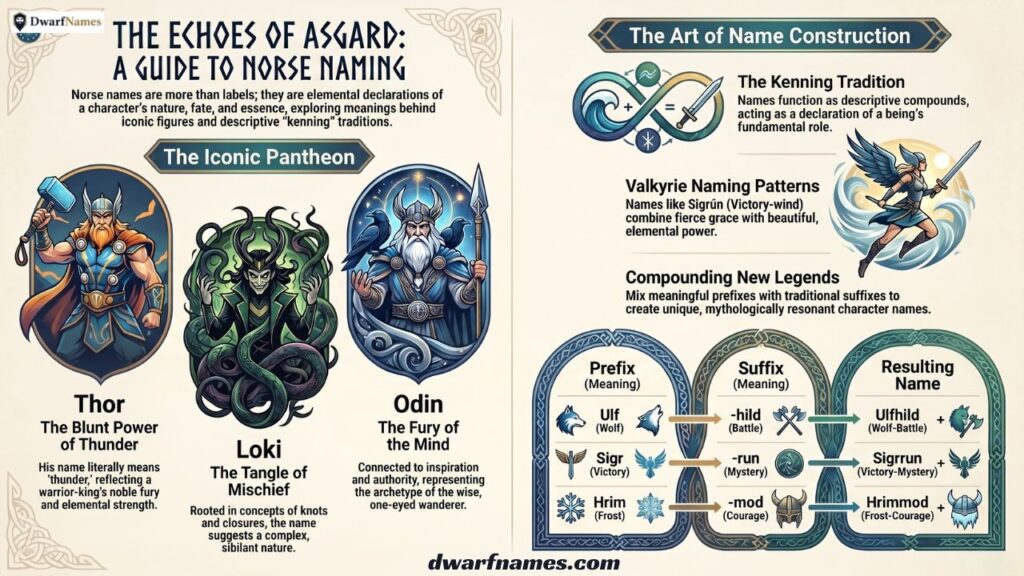
Thor stands above all others as the most recognizable Norse god name in modern culture. His name literally means “thunder,” and the character lives up to every syllable. In Marvel’s universe, Thor is not simply strong; he is the embodiment of noble fury, a warrior-king wrestling with humility and destiny. The name is blunt, powerful, and immediately evocative.
Loki is perhaps the most narratively fascinating name in the entire Norse tradition. The trickster god whose schemes unravel entire cosmologies, Loki’s name has ancient roots tied to concepts of knots, tangles, and closure. In Marvel storytelling, Loki became one of cinema’s most beloved antiheroes precisely because his name carries both menace and mischief. It is sharp, sibilant, and memorable.
Odin, the All-Father, bears a name connected to fury, inspiration, and the mind itself. The one-eyed wanderer who traded an eye for wisdom and hung from Yggdrasil to earn the runes is the archetype of the wise and terrible king. His name resonates with quiet authority. Similarly, Freya, goddess of love, war, and seidr magic, carries a name meaning “lady” or “noblewoman.” In fantasy games and RPGs, Freya consistently ranks among the most beloved names for powerful female characters.
These four names alone demonstrate how Norse naming traditions create characters whose very titles tell a story. If you are building DnD characters, you might also explore blood elf names for similarly mythic resonance with a magical edge.
Male Norse God Names
These names carry the thunder of Asgard’s warrior culture. Strong, direct, and ancient, they are built for kings and battle-gods alike.
- Thor
- Odin
- Loki
- Baldur
- Tyr
- Freyr
- Heimdall
- Vidar
- Vali
- Bragi
- Hodr
- Magni
- Modi
- Njord
- Ullr
- Forseti
- Mimir
- Aegir
- Kvasir
- Hod
- Meili
- Narfi
- Borr
- Buri
- Ymir
- Surtr
- Frey
- Hermod
- Skimir
- Alviss
- Lodur
- Rigr
- Otr
- Fafnir
- Thrym
- Utgard
- Sindri
- Brokkr
Female Norse God Names
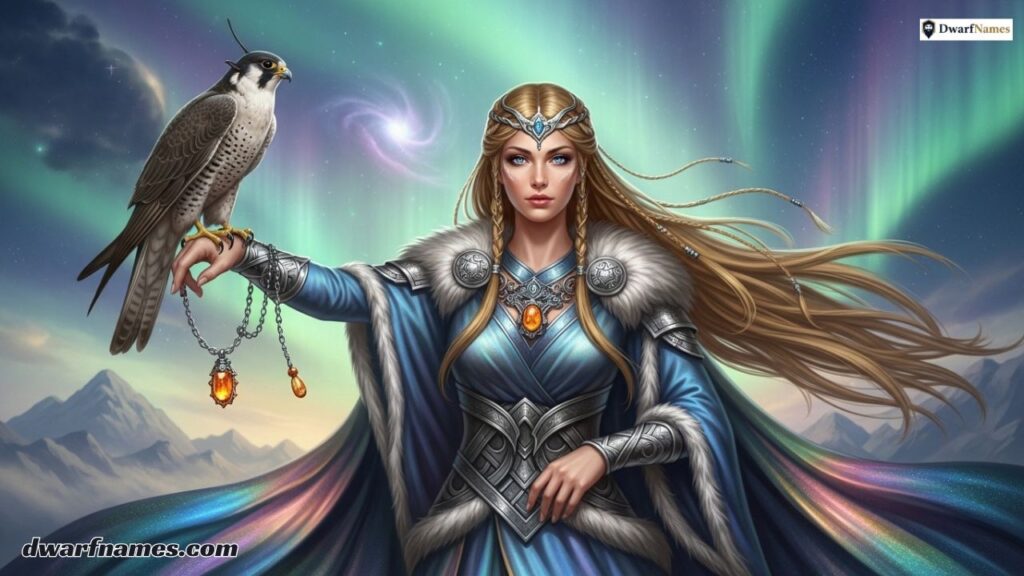
The women of Asgard and Norse mythology are every bit as formidable as their male counterparts. These names move between fierce grace and elemental power.
- Freya
- Frigg
- Sif
- Sigyn
- Nanna
- Skadi
- Rán
- Hel
- Idunn
- Gerd
- Saga
- Lofn
- Var
- Syn
- Hlin
- Snotra
- Vor
- Eir
- Gefjon
- Fulla
- Sjofn
- Jord
- Nott
- Ran
- Angrboda
- Bestla
- Grid
- Rindr
- Thrud
- Gondul
- Kara
- Sigrún
- Brynhildr
- Skuld
- Verdandi
- Urd
Cool and Unique Norse God Names
These names strike a balance between mythic authenticity and creative edge. Perfect for characters who stand apart from the crowd.
- Aldrnari
- Vafthrudnir
- Jormungandr
- Nidhoggr
- Ratatoskr
- Huginn
- Muninn
- Gjallarhorn
- Sleipnir
- Fenrir
- Bifrost
- Ygdrasil
- Valknutr
- Volsung
- Hreidmar
- Andvari
- Regin
- Gudrun
- Sigurd
- Gunnar
- Atli
- Hogni
- Knefrud
- Niflheim
- Muspell
- Asgrim
- Ginnungagap
- Valaskjalf
- Gladsheim
- Valholl
Just as Norse names carry elemental weight, Japanese names carry centuries of poetic tradition. If your worldbuilding spans multiple cultural aesthetics, Japanese names offer a beautifully contrasting palette for your characters.
Warrior and Badass Norse God Names
For characters who exist on the battlefield, in the storm, or at the edge of the world. These names carry steel in every syllable.
- Tyr
- Vidar
- Magni
- Modi
- Surtr
- Thrym
- Fenrisulfr
- Jarngreipr
- Megingjord
- Skofnung
- Hrungir
- Hymir
- Bergelmir
- Utgardloki
- Geirrod
- Vafnir
- Skrymir
- Grimr
- Bolverk
- Fjolnir
- Vidofnir
- Alsvid
- Arvakr
- Blodughofi
- Grani
- Hrimfaxi
- Skinfaxi
- Jarnaxe
- Bloodravnir
- Steinulf
For characters who channel a different kind of ferocity, DnD half-orc names offer another rich tradition of warrior names built around raw power and clan identity.
Royal and Noble Norse God Names
Asgard’s royal lineage carries names that feel elevated, weighty, and ancient. These are names suited to thrones, crowns, and divine ancestry.
- Odin Allfather
- Borr Sonofburi
- Buri Firstborn
- Baldur Brightgod
- Forseti Lawkeeper
- Freyr Vanir
- Bragi Skaldic
- Njord Seafather
- Aegir Oceanlord
- Frigg Queenmother
- Saga Wiseone
- Gefjon Ploughqueen
- Skadi Snowqueen
- Idunn Applegiver
- Nanna Moonwife
- Sigyn Faithful
- Gerd Goldenfields
- Rán Netweaver
- Bestla Giantqueen
- Hel Halfdead
- Sif Goldenthread
- Thrud Strengthmaiden
- Grid Giantwise
- Urd Ancestorweaver
- Verdandi Presentseeker
- Skuld Futurebound
- Valkyria Warmaiden
- Gondul Chooser
- Sigrún Victorywind
- Brynhildr Shieldfire
Traditional and Classic Norse God Names
These are the names closest to the original Old Norse mythological record. Pure, unaltered, and carrying the full weight of Scandinavian tradition.
- Wotan
- Woden
- Thunor
- Tiw
- Eostre
- Ing
- Hretha
- Nerthus
- Frikko
- Gautr
- Yggr
- Grimnir
- Harbardr
- Hnikarr
- Bolverkr
- Sigtyr
- Hangatyr
- Valtyr
- Farmatyr
- Rognir
- Haptagud
- Hertyr
- Aldagautr
- Oski
- Omi
- Bileyg
- Baleyg
- Tveggi
- Gagnrad
- Skilfingr
If you enjoy how traditional naming systems encode cultural identity, Italian names offer a similarly deep well of history and meaning for Mediterranean-inspired fantasy worlds.
Norse God Names for Valkyries
The Valkyries are among the most evocative figures in Norse mythology. These divine warrior-maidens who chose the slain on battlefields have names that are as fierce as they are beautiful.
- Gondul
- Kara
- Sigrún
- Skuld
- Göndul
- Hildr
- Herfjötur
- Hlökk
- Göndul
- Randgríðr
- Reginkunnr
- Reginleif
- Skalmöld
- Skögul
- Svipul
- Thrúðr
- Göll
- Geirdriful
- Hrist
- Mist
- Skeggjöld
- Geirölul
- Hervor
- Brynhildr
- Sigrdrifa
- Ölrún
- Alvit
- Svanhvít
- Alvitr
- Bodhmall
Naming Traditions of the Norse Gods
Understanding how Norse gods received their names opens a doorway into one of the most fascinating worldbuilding systems in all of mythology. Norse divine names were rarely arbitrary. They were almost always descriptive, prophetic, or inherited from cosmic forces.
Odin alone carried over two hundred names, each reflecting a different aspect of his vast and terrible nature. He was Grimnir the Masked, Gangleri the Wanderer, Bolverk the Worker of Misfortune. This tradition of kenning-based naming, where a being’s essence is captured through a descriptive compound, runs throughout all of Norse culture.
Names often reflected a god’s domain. Thor’s name means thunder. Tyr’s name is linguistically connected to the Proto-Germanic word for god itself, making him in some sense the archetypal divine. Bragi’s name connects to poetry and eloquence. Idunn’s name carries associations with renewal. The name was not a label but a declaration of what the divine being fundamentally was.
For worldbuilders, this offers a powerful model. Instead of inventing names arbitrarily, consider what each name means about the character’s role, their power, their fate. A god of storms should have a name that crackles. A goddess of wisdom should carry a name that whispers.
This tradition of meaningful naming parallels what you find in Hawaiian names, where names often carry deep spiritual meaning and connection to the natural world, making them another excellent resource for mythologically rich fantasy naming.
Norse Clan Names and Family Lineages
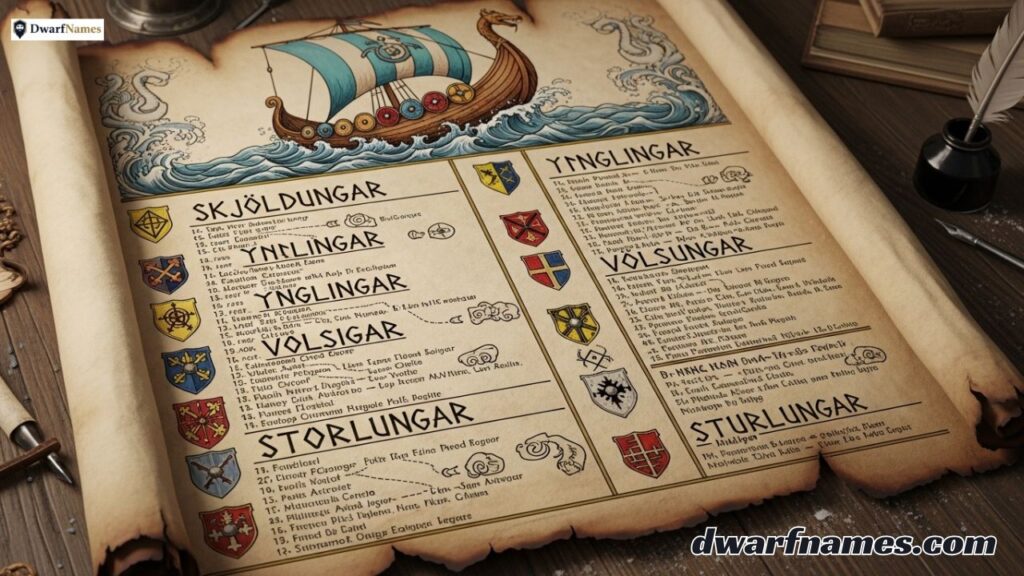
In Norse tradition, clan identity was paramount. The great families of gods and giants each carried their lineage in their names.
- Aesir Goldenshield
- Vanir Seatreader
- Jotun Ironbrow
- Aesirborn Thunderstrike
- Vanaheim Wavecaller
- Jotunheim Frostkeeper
- Ymir’s Blood
- Buri’s Line
- Odinborn Ravenmark
- Thorson Hammerhold
- Lokison Shadowveil
- Friggborn Moonweave
- Skadison Icepeak
- Freyrborn Harvestfall
- Heimdallson Goldtooth
- Baldurborn Brightmantle
- Tyrborn Swordheld
- Njordson Tidesong
- Braginborn Versecraft
- Aegirson Deepwater
- Helborn Halfworld
- Fenrirskin Ironchain
- Midgardcoil Serpentblood
- Surtrson Emberdawn
- Frostgiant Boulderback
- Fireborn Muspelsson
- Valkyriemaiden Battlechosen
- Nornsister Fatespinner
- Dwarfcraft Stonehammer
- Aesirend Twilightsun
- Ragnarborn Endwatcher
- Yggdrasilroot Worldtree
- Bifrostkeeper Rainbowwarden
- Valhallaguard Slainchooser
- Gladsheimhall Godmoot
- Midgardserpent Oceanwrap
- Niflheimborn Mist-dweller
- Muspelheim Ashwalker
- Asgardwall Goldenseat
- Svartalheimdark Forgechild
Bonus: Norse God Naming Generator Ideas
Creating original Norse-inspired names is easier when you understand the building blocks. Here are compound patterns drawn from the mythological tradition that you can mix and match endlessly.
Prefixes rooted in Norse meaning: Ulf (wolf), Bjorn (bear), Stein (stone), Eirik (ever-ruler), Gunnar (battle-warrior), Sigr (victory), Thor (thunder), Hrim (frost), Eld (fire), Vik (creek), Grims (masked), Ravn (raven), Svan (swan), Orm (serpent), Brand (sword), Val (chosen), Nord (north), Hed (heath), Skald (poet)
Suffixes for divine names: -bjorn, -ulfr, -vidr, -heim, -gard, -inn, -and, -mod, -helm, -brand, -thyr, -frid, -run, -hild, -gripr, -veig, -ny, -laug, -vor, -dis
Example compound creations:
- Ravnjord (Raven-Sea)
- Ulfheim (Wolf-Home)
- Steinvidr (Stone-Wide)
- Grimsbrand (Masked-Sword)
- Valdis (Chosen-Goddess)
- Svanlaug (Swan-Wave)
- Ormheim (Serpent-Home)
- Skaldrun (Poet-Mystery)
- Hrimmod (Frost-Courage)
- Eldvidr (Fire-Wide)
- Thorstein (Thunder-Stone)
- Sigrhild (Victory-Battle)
- Gunnarvidr (Warrior-Wide)
- Nordfrid (North-Peace)
- Bjornmod (Bear-Courage)
- Brandhild (Sword-Battle)
- Valgripr (Chosen-Grip)
- Hedny (Heath-New)
- Eirikbrand (Ever-Ruler-Sword)
- Ormund (Serpent-Protection)
For characters who straddle two worlds or carry dual heritage, DnD half-elf names offer a fascinating model of blended naming traditions that could enrich a Norse-adjacent fantasy setting.
The Power of a Name Chosen Well
In Norse mythology, names were not decoration. They were weapons, shields, destinies, and declarations. When Odin walked the worlds under his many names, each alias was a mask that revealed a truth. When the Norns wove fate, they were in some sense weaving names into the fabric of existence. To know a being’s true name was to hold power over it.
This philosophy is the beating heart of great fantasy naming. The 350 Norse god names and naming patterns gathered here are not simply a list. They are an invitation to think about what a name says about a character’s soul. Is your warrior carrying a name that means thunder and stone? Does your wise elder bear a name that means memory and far-sight? Does your trickster figure have a name that coils and twists like a serpent?
Whether you are writing an epic novel, running a campaign through the Nine Realms, designing a video game world, or simply searching for the perfect name for a character who deserves something ancient and powerful, let these names be your starting point. Let them inspire you to dig deeper, to combine and remix, to build naming traditions that feel as lived-in and real as the myths that birthed them.
The gods of Asgard are still listening. Name your characters wisely.
Frequently Asked Questions
What are the most famous Norse god names used in Marvel movies?
The most recognized names from Marvel include Thor, Odin, Loki, Heimdall, Freya, Baldur, Tyr, Sif, and Hela, all drawn from genuine Norse mythology.
Are Norse god names good for fantasy characters in RPGs and writing?
Yes. Norse god names carry powerful cultural resonance, strong phonetics, and mythological meaning that make them ideal for warriors, mages, and divine characters in fantasy settings.
What does the name Thor mean in Norse mythology?
Thor means thunder in Old Norse. The name reflects his divine role as god of storms, strength, and the protection of humanity from chaos.
Can I use Norse god names for female fantasy characters?
Absolutely. Names like Freya, Skadi, Sif, Hel, Idunn, and Sigyn are deeply rooted in Norse mythology and make excellent strong, distinct female character names.
How do Norse naming traditions differ from other mythological traditions?
Norse names are often compound, descriptive, and tied to natural forces or occupations. Kenning-style names reveal character essence through imagery rather than pure invention.
What is the difference between Aesir and Vanir god names?
Aesir names tend to be more martial and sky-oriented, like Thor and Odin, while Vanir names like Freyr and Njord are connected to fertility, seas, and natural abundance.
Where can I find more fantasy name inspiration beyond Norse names?
Explore different cultural mythologies for fresh inspiration. Resources covering Japanese names, Italian names, and Hawaiian names all offer rich traditions with their own fantasy potential.
Discover More Articles
https://dwarfnames.com/dnd-halfling-names/
https://dwarfnames.com/greek-god-names/
https://dwarfnames.com/dnd-orc-names/
https://dwarfnames.com/greek-names/
https://dwarfnames.com/arabic-names/
https://dwarfnames.com/dark-elf-name/
https://dwarfnames.com/blood-elf-names/
https://dwarfnames.com/dnd-half-elf-names/