
Somewhere between the golden domes of Constantinople and the whispering steppes of Central Asia, a naming tradition was forged that rivals any in the world. Turkish names carry centuries of culture within their syllables. They echo the ancient Turkic clans who rode across Eurasia, the Islamic scholars who illuminated the medieval world, and the poets of the Ottoman court who turned language into art. For modern families, for fantasy writers crafting new worlds, and for storytellers who understand that a name is never just a label, Turkish names offer something rare: beauty with weight, sound with soul.
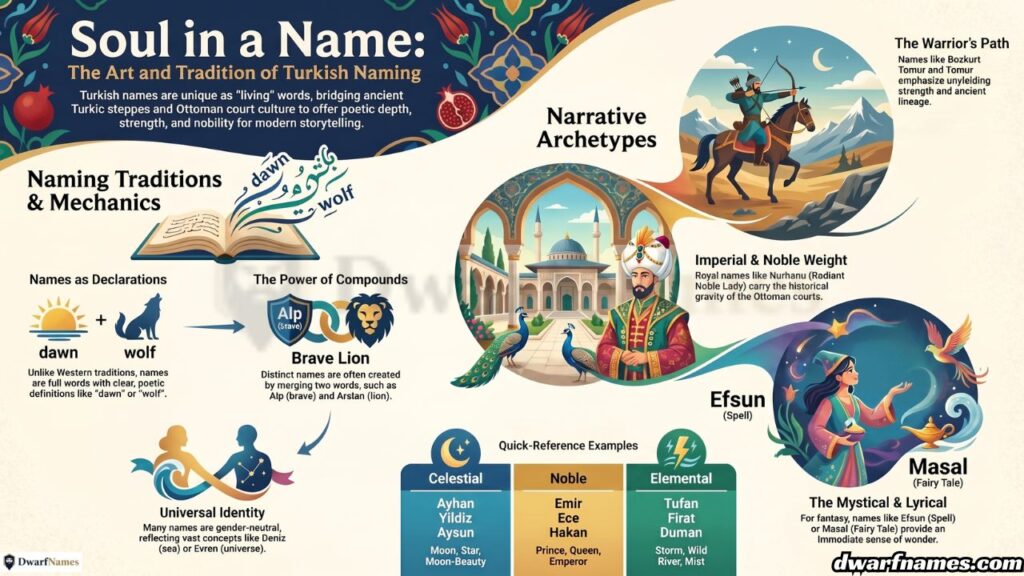
Whether you are searching for the perfect name for a newborn, building a richly textured fantasy realm, designing a character for a tabletop RPG, or simply drawn to names that carry genuine meaning, Turkish names deliver on every front. Unlike many Western naming traditions, Turkish names are often full words with clear, poetic definitions. A Turkish name might mean “brave,” “dawn,” “wolf,” or “light of the moon.” The name itself becomes a declaration, a prayer, a piece of identity worn for a lifetime.
This tradition shares something with other great naming lineages of the ancient world. Just as Spanish names carry centuries of Roman, Moorish, and Iberian heritage, and just as Viking names pulse with Norse mythology and warrior culture, Turkish names are alive with history. They are not decorative. They are meaningful.
This guide explores over 250 Turkish names, their meanings, naming traditions, and their power in storytelling. Dive in.
Famous Turkish Names From Literature and History
Before exploring the full lists, it helps to understand how Turkish names function in narrative and identity by looking at some of the most iconic bearers of these names.
Suleiman is perhaps the most recognized Turkish name in the world, borne by the great Ottoman sultan Suleiman the Magnificent, who ruled at the height of the empire’s power. The name means “man of peace,” derived from the Arabic Sulayman. Yet history remembers him as a conqueror, a lawgiver, and a patron of extraordinary culture. In fantasy writing, Suleiman represents the archetype of the philosopher-king, the ruler whose strength lies not only in armies but in wisdom.
Ertugrul, meaning “mature falcon” or “righteous falcon,” rose to global fame through the historical drama series. He embodies the warrior-leader archetype, a man whose name perfectly mirrors his nature: fierce, sharp-eyed, and noble in purpose. For worldbuilders, Ertugrul is the ideal template for a founding hero, the kind of character whose name becomes a dynasty.
Nurbanu was a real historical figure, a Venetian-born woman who became one of the most powerful women in Ottoman history. Her Turkish name means “radiant noble lady.” In fiction, names like this carry layers of irony, power, and transformation, perfectly suited to complex female characters who rise beyond their origins.
Timur, though Turkic in origin, means “iron.” It was the name of Timur the Great (Tamerlane), one of history’s most feared conquerors. Stark, strong, and elemental, this name works in any setting where you need a character who commands the room before speaking a word.
Turkish Male Names and Their Meanings
Turkish male names often draw from strength, nature, light, and noble virtues. Many carry Arabic or Persian roots absorbed through centuries of Islamic culture, while older names reach back to pre-Islamic Turkic tradition.
- Adem (first man, humanity)
- Alp (brave warrior, hero)
- Alparslan (brave lion)
- Aslan (lion)
- Aydin (enlightened, bright)
- Ayhan (moon lord)
- Aziz (dear, beloved, powerful)
- Baran (rain)
- Batur (brave, bold)
- Bayram (festival, celebration)
- Berk (firm, strong, solid)
- Bilal (water, moisture; a revered Islamic name)
- Burak (lightning)
- Caner (brave soul)
- Cem (gathering, union)
- Cemal (beauty, elegance)
- Cengiz (fierce ruler, oceanic)
- Deniz (sea, ocean)
- Dogan (falcon)
- Emre (friend, beloved)
- Ercan (brave soul)
- Erdem (virtue, integrity)
- Erdogan (born warrior)
- Erenay (moonlight warrior)
- Erhan (free warrior)
- Erkin (free, independent)
- Ertugrul (mature falcon)
- Evren (universe, cosmos)
- Firat (the Euphrates River; wild, fast)
- Furkan (criterion of truth)
- Gokhan (sky lord)
- Hakan (emperor, ruler of rulers)
- Hamza (strong, steadfast)
- Ilhan (lord of the nation)
- Iskender (defender of men)
- Kadir (powerful, capable)
- Kaplan (tiger)
- Kemal (perfection, maturity)
- Koral (coral; rare and precious)
- Koray (ember moon)
- Mehmet (praised, glorified)
- Mert (brave, honest)
- Murat (wish, desire)
- Oguz (ancient Turkic tribe name; strength)
- Onur (honor, dignity)
- Orhan (leader of the army)
- Ozan (bard, folk poet)
- Ozgur (free)
- Selim (safe, sound, peaceful)
- Sener (joyful, cheerful)
- Sercan (brave head)
- Sertac (crown of bravery)
- Sinan (spearhead)
- Suleiman (man of peace)
- Tarik (morning star, path)
- Timur (iron)
- Tufan (storm, typhoon)
- Tugrul (a kind of hawk)
- Umut (hope)
- Yavuz (stern, forceful)
- Yigit (brave young man, hero)
- Zeki (clever, intelligent)
Turkish Female Names and Their Meanings
Turkish female names are among the most lyrical in the world, blending meaning with music. Many are drawn from nature, light, beauty, and virtue. Persian poetic influence runs deep here, giving these names an almost verse-like quality.
- Acelya (anemone flower)
- Afet (beauty that causes ruin)
- Aida (returning, noble)
- Asel (pure honey)
- Asli (genuine, original)
- Aysegul (moonflower)
- Ayse (life, lively)
- Ayten (moon-skin, moon-colored)
- Azra (virgin, pure)
- Bahar (spring, springtime)
- Banu (lady, noblewoman)
- Belgin (clear, distinct, bright)
- Beren (strong)
- Beyza (white, pure)
- Birsen (one love)
- Buket (bouquet of flowers)
- Ceylan (gazelle)
- Cigdem (crocus flower)
- Ciler (dewdrop)
- Damla (raindrop)
- Defne (laurel tree)
- Derya (sea, ocean, vast)
- Dilara (beloved, darling)
- Dilek (wish, desire)
- Duru (clear, pure)
- Ebru (paper marbling art; cloud-like patterns)
- Ece (queen, noble lady)
- Ecem (my queen)
- Elif (slender, like the letter A)
- Elmas (diamond)
- Emre (though often male, used for girls too; beloved)
- Esra (night journey)
- Fidan (sapling, young plant)
- Firuze (turquoise)
- Gizem (mystery, enigma)
- Gonca (rose bud)
- Gulbahar (rose of spring)
- Gulsen (rose garden)
- Havin (summer)
- Hazal (autumn, light brown)
- Irem (paradise garden)
- Ipek (silk)
- Kumru (turtledove)
- Lale (tulip)
- Leyla (night, dark beauty)
- Melek (angel)
- Merve (a hill in Mecca; grace)
- Narin (slender, delicate)
- Nazli (coy, graceful)
- Nilufer (lotus, water lily)
- Nur (light)
- Nurbanu (radiant noble lady)
- Ozlem (longing, yearning)
- Pelin (wormwood herb; bitter-sweet)
- Pembe (pink)
- Reyhan (sweet basil, fragrant herb)
- Seda (voice, echo)
- Selin (river, stream)
- Sema (sky; also a Sufi spiritual dance)
- Seren (calm, peaceful)
- Sibel (water droplets from clouds)
- Tugba (paradise branch; blessedness)
- Yasemin (jasmine)
- Zehra (radiant, blooming)
- Zeynep (father’s jewel)
- Zilan (flowing water)
Cool and Unique Turkish Names for Fantasy Characters
These names feel powerful, unusual, and immediately striking. They work beautifully for fantasy protagonists, mystical figures, and characters who exist slightly outside the ordinary world. If you have been exploring Celtic names for their ancient resonance, you will feel that same mythic quality here.
- Aihan (moon lord, ancient form)
- Altan (golden dawn)
- Altinay (golden moon)
- Arzu (desire, longing)
- Aysun (as beautiful as the moon)
- Boncuk (bead, charm; mystical)
- Borga (storm-bold; Old Turkic)
- Cevahir (jewel, gem)
- Cihan (world, universe)
- Doruk (peak, summit)
- Duman (mist, smoke)
- Efsun (spell, enchantment)
- Elvan (colorful, radiant)
- Esin (inspiration, muse)
- Esmer (dark-complexioned, mysterious)
- Ferzan (bright, clever)
- Gunseli (sunray girl)
- Irmak (river, stream)
- Kadim (ancient, eternal)
- Kayra (gift, grace)
- Kumsal (sandy beach; rare)
- Levent (tall, handsome, brave)
- Masal (fairy tale, story)
- Nisan (April; sign, mark)
- Ogan (shaman; seer)
- Ozan (wandering poet-bard)
- Petek (honeycomb)
- Serhat (frontier, border)
- Tanri (sky deity; god)
- Umay (a goddess of fertility and children in Turkic mythology)
- Vuslat (reunion, union of souls)
- Yildiz (star)
- Yuce (sublime, lofty, exalted)
- Zumrut (emerald)
Strong Turkish Warrior and Badass Names
These names carry power in their very syllables. Whether you need a general, a champion, a warlord, or a legendary fighter, these Turkish names command respect.
- Alp (brave hero)
- Alpay (heroic moon warrior)
- Alperen (heroic wandering sage)
- Arslan (lion; fearless)
- Atakan (ancestor blood; fierce lineage)
- Atilla (father of all; from the great conqueror)
- Aybars (moon leopard)
- Bahadir (brave, heroic)
- Balta (axe; sharp and decisive)
- Batuhan (warrior lord)
- Berke (strong, firm; a great Mongol-Turkic khan)
- Bozkurt (grey wolf; symbol of the Turkic peoples)
- Cengiz (oceanic power; fearsome ruler)
- Dogan (hawk, falcon)
- Erkin (free fighter)
- Gokboru (sky wolf)
- Kahraman (hero, champion)
- Kara (black; dark power)
- Kilic (sword)
- Kurt (wolf)
- Meric (powerful river)
- Muzaffer (victorious)
- Oguz (ancient warrior clan)
- Savash (war, battle)
- Sencer (brave spearman)
- Tansu (dawn water; fierce and pure)
- Temur (iron, steel)
- Tugay (tribal army)
- Turgay (crane bird; swift and watchful)
- Uras (brave, bold; mythic Turkic hero)
- Yavuz (stern and unyielding)
- Yigithan (brave lord)
Royal and Noble Turkish Names
These names carry the weight of courts, thrones, and dynasties. They are names spoken by sultans and queens, grand viziers and beloved empresses.
- Beyhan (moon lord)
- Devlet (state, empire, fortune)
- Emir (commander, prince)
- Fatma (to abstain; the beloved daughter of the Prophet)
- Ferhat (joy, happiness; a legendary romantic hero)
- Gulbahar (rose of spring; an imperial name)
- Hafsa (gathering; a name of sultanas)
- Hurrem (joyful; the famous Ukrainian-born Ottoman empress)
- Huseyin (handsome, good-natured)
- Ibrahim (father of multitudes)
- Kosem (a great Ottoman valide sultan)
- Mahidevran (moon-like, moon-faced; an imperial consort)
- Mehmed (glorified; dynasty-founding name)
- Murad (desired, wished for)
- Mustafa (chosen, selected)
- Nurbanu (noble radiant lady)
- Osman (young bustard bird; the dynasty-founder)
- Selcuk (noble, gentle; a founding Turkic dynasty)
- Selim (safe and sound; name of Ottoman sultans)
- Suleiman (man of peace; the Magnificent)
- Turhan (Turk queen; a powerful valide sultan)
- Ulviye (exalted, sublime)
- Validé (mother; title of queen mother)
- Yildizhan (star lord)
- Zubeyda (cream of the top; a renowned Abbasid queen)
Turkish Naming Traditions and Worldbuilding Lore
Turkish naming tradition is one of the richest in the world, and for a fantasy writer, it is an almost inexhaustible source of world-building material.
In traditional Turkish culture, names were often given by the eldest member of the family or by a respected religious figure. The name chosen had to carry positive meaning, since it was believed that a name shaped the spirit of the child who bore it. Naming a child “Arslan” (lion) was not simply a hope for strength; it was understood as a declaration to the cosmos.
Many Turkish names come in compound forms that combine two meaningful words. “Alp” (brave) plus “arslan” (lion) gives “Alparslan,” a name meaning “brave lion.” “Kara” (black) plus “bugra” (male camel; strength) creates a name for a legendary Karakhanid ruler. This compound structure is perfect for fantasy worldbuilding because it lets you construct names that are immediately legible in meaning while sounding authentically exotic.
Gender in Turkish naming is interesting. Many names are used by both men and women, such as Deniz (sea), Derya (ocean), and Evren (universe). This ambiguity can be powerful in fiction, creating characters whose identity is not immediately fixed by their name.
In the Ottoman period, epithets and honorifics became almost part of the name itself. A sultan might be known as “Yavuz Selim,” meaning “Stern/Fierce Selim,” a name that functioned more like a title of character than a birth name. This system of earned epithets is a rich tradition for any fantasy author building a world where names can be given, earned, and changed.
Clan and family identity also played a deep role. Before the adoption of surnames in modern Turkey (mandated by law in 1934), Turks were often identified by their father’s name, their profession, their place of origin, or their physical traits. A man might be “Demir Usta” (Iron Master) or “Kara Mehmed” (Black/Dark Mehmed). This gives fantasy writers the freedom to create naming systems where characters carry descriptive epithets as natural extensions of identity.
Turkish Clan Names and Fantasy Surnames
These compound names work beautifully as clan names, house names, fantasy surnames, or warrior titles. Each carries the weight of lineage and legend.
- Aksaray (white palace)
- Altindag (golden mountain)
- Altinkaya (golden rock)
- Arslanoglu (son of the lion)
- Atesbaz (fire-player; fearless)
- Bozdag (grey mountain)
- Bozkaya (grey rock)
- Bozkurt (grey wolf)
- Buluthan (cloud lord)
- Buyukhan (great lord)
- Cakilci (pebble-striker; sharp)
- Demirci (ironsmith)
- Demirdas (iron companion)
- Demirel (iron hand)
- Demirkaya (iron rock)
- Derinsu (deep water)
- Dogankaya (falcon rock)
- Dorukhan (peak lord)
- Ercument (brave jewel)
- Erdal (brave son)
- Ergun (brave sun)
- Gunaydin (good morning; dawn clan)
- Gundogdu (sun rose; born at dawn)
- Guneser (sun dawn)
- Gungor (sunlight)
- Gurcan (rushing river warrior)
- Kahraman (champion, hero)
- Karaaslan (black lion)
- Karabay (black bey)
- Karadag (black mountain)
- Karaoglan (black youth; fierce young warrior)
- Kayaalp (rock hero)
- Kayabas (rock head; stubborn strength)
- Kilinc (blade-sharp)
- Kocabas (great head; elder leader)
- Kuloglu (son of the slave-soldier; elite lineage)
- Mercanli (of coral; precious)
- Oguzhan (lord of the Oguz; legendary ancestor)
- Ozalp (true hero)
- Ozbek (true noble; a great Turkic ruling name)
- Sahin (falcon; sharp-eyed)
- Sahinbay (falcon bey)
- Sancaktar (standard-bearer)
- Saritas (yellow stone; gold-flecked rock)
- Tasdemir (stone iron)
- Timurhan (iron lord)
- Topal (limping, enduring; a fighter’s epithet)
- Tugrul (a kind of war-hawk)
- Tuncay (bronze moon)
- Tuncel (bronze hand)
- Tuncoglu (son of bronze)
- Uysal (gentle, tame; deceptively soft)
- Uzdogan (far-reaching falcon)
- Yazici (scribe; keeper of knowledge)
- Yildirim (lightning; the name of Sultan Bayezid I)
- Yildirimoglu (son of lightning)
- Yildizoglu (son of the star)
- Yucedal (sublime valley)
- Zorlu (powerful, capable)
- Zoroglu (son of the powerful one)
Conclusion
A name is never just a sound. In Turkish tradition, a name is a hope, a declaration, a piece of a people’s ancient soul made portable. Whether you are naming a character in your next novel, building the ruling houses of a fantasy kingdom, choosing a name for a child, or simply drawn to the beauty of a language that turns meaning into music, Turkish names offer something profound.
They carry the Eurasian steppe in their consonants and the Ottoman court in their vowels. They echo the call to prayer at sunrise and the cry of a hawk over mountain passes. They hold within them a civilization that stretched from Vienna to the Persian Gulf and left its mark on dozens of languages and cultures.
Just as the warrior-poets of the Norse tradition gave us names like those explored in Viking naming traditions, and just as the Mediterranean world shaped names that still resonate today, Turkish names connect the bearer to something vast and enduring.
Use them well. Give them to characters who deserve their weight. Let them shape the worlds you build. Names like these are not decorations. They are destiny.
Frequently Asked Questions
What are the most popular Turkish names for boys?
The most popular Turkish boy names include Mehmet, Mustafa, Ahmet, Ali, and Yusuf, each carrying deep Islamic and cultural significance in Turkish tradition.
What do Turkish female names typically mean?
Turkish female names often mean natural elements like flowers, light, water, or seasons. Examples include Lale (tulip), Nur (light), Bahar (spring), and Yasemin (jasmine).
Are Turkish names suitable for fantasy characters?
Absolutely. Turkish names carry strong, meaningful sounds and clear definitions, making them ideal for fantasy characters, worldbuilding, and RPG campaigns needing depth and authenticity.
Do Turkish names have last names or surnames?
Modern Turkish surnames were adopted after 1934. Many are compound words like Yildirim (lightning) or Demirci (ironsmith), reflecting occupations, nature, or family traits.
What is the meaning of the name Ertugrul?
Ertugrul means “mature falcon” or “righteous falcon” in Turkish, symbolizing nobility, sharp vision, and warrior strength, made famous by the legendary Seljuk hero.
Are there gender-neutral Turkish names?
Yes, several Turkish names are used for both genders, including Deniz (sea), Derya (ocean), Evren (universe), and Emre (beloved), reflecting Turkish naming flexibility.
Where can I find more fantasy-inspired name lists?
For similar richly cultural naming traditions, exploring Spanish names and Celtic names will provide excellent companions to Turkish naming inspiration.