
Deep beneath the sunlit world lies a civilization forged in shadow and silence. The Drow—dark elves of the Underdark—are among the most iconic, feared, and fascinating races in Dungeons & Dragons lore. Their names are not mere labels; they are declarations of power, lineage, and intent. A Drow name carries centuries of history, echoing through obsidian halls and spider-silk courts where survival depends on every whispered syllable.
Whether you are building a campaign, crafting a novel, or designing a character who has clawed their way up through the brutal hierarchy of the Underdark, the right name transforms your Drow from a concept into a legend. Names among the Drow are weapons as much as words—chosen to intimidate, to signal status, and to honor the spider goddess Lolth. A warrior without the right name is a warrior half-formed.
In D&D worldbuilding, the Drow occupy a unique space. They are elegant yet ruthless, cultured yet savage, ancient yet ever-evolving. Their society is matriarchal, steeped in divine treachery, and obsessed with power—and every name they bear reflects that. A great Drow name should feel sharp on the tongue, carry a sense of darkness and grace, and hint at something dangerous lurking just beneath the surface.
This guide exists to help you find that perfect name. From warrior titles that shake stone walls to royal names whispered in spider-lit courts, we have gathered, created, and catalogued hundreds of powerful Drow names for every purpose. Dive into the dark.
Famous Drow Names From Literature & Games
Before generating your own, it helps to understand what makes a legendary Drow name work. The most famous Drow characters in fiction carry names that feel earned—syllables that resonate with personality, power, and fate.
Drizzt Do’Urden is arguably the most famous Drow in all of fantasy fiction, born from R.A. Salvatore’s Forgotten Realms novels. His name is immediately recognizable—the double-Z carries a hissing, serpentine quality, while “Do’Urden” anchors him to a house both doomed and legendary. Drizzt defied Drow culture, yet his name still sounds unmistakably Drow. That tension between belonging and rebellion is embedded in the phonetics themselves.
Lolth, the Demon Queen of Spiders and patron goddess of the Drow, holds a name as ancient as the Abyss. Short, venomous, and impossible to forget—it hisses and stops cold. Divine names among the Drow are often like this: minimal in syllables, maximum in weight.
Matron Malice Do’Urden, Drizzt’s ruthless mother, bears a name that is almost too perfect. “Malice” crosses seamlessly from common word to Drow title, embodying the cold cruelty that defines Drow matriarchs. Her name tells you everything before she speaks a word.
Jarlaxle, the legendary mercenary and leader of Bregan D’aerthe, carries a name that is peculiar, almost playful—yet utterly memorable. It breaks the typical Drow naming pattern intentionally, reflecting a character who has always operated outside the rules. Even in names, the Drow communicate identity.
These examples show that great Drow names balance harshness and elegance, darkness and precision. Keep them in mind as you explore the lists below.
Male Drow Names
Male Drow occupy a subordinate yet dangerous role in their society. Often warriors, assassins, or wizards, they carry names that project capability and controlled menace. A male Drow name tends to be sharp, multi-syllabic, and subtly threatening—like a blade kept just out of sight.
- Zaknafein
- Pharaun
- Ryld
- Veldrin
- Szordrin
- Tathlyn
- Quenthel (used for males in some houses)
- Dantrag
- Elkantar
- Krenzel
- Oblodra
- Valereth
- Xullrae
- Zuvexis
- Nalfein
- Berginyon
- Zammzt
- Drathir
- Selorn
- Welverin
- Terizan
- Orbrix
- Ghaunadrix
- Veldreth
- Kaereth
- Iztaryn
- Mordyn
- Quelvar
- Thessal
- Vhaerun
- Zalvrix
- Erloryn
- Draevyn
- Kelvrix
- Anszar
- Neldrath
- Tulzeth
- Xalvar
- Orryn
- Brelvix
Female Drow Names
In Drow society, females hold ultimate power. Matrons, priestesses, and assassins—female Drow names carry authority like iron wrapped in spider silk. They tend to flow more fluidly while still maintaining that characteristic edge. If you enjoy crafting powerful female figures, you might also appreciate royal names from other fantasy traditions for cross-cultural inspiration.
- Vierna
- Triel
- Liriel
- Halisstra
- Sshamath
- Zeerith
- Qilué
- Imrae
- Auvry
- Myrymma
- Elvara
- Szordrina
- Talindra
- Veldara
- Nathrae
- Pellanistra
- Xullra
- Faerindel
- Thessindra
- Zilvara
- Morrith
- Quelindra
- Orbindra
- Delvara
- Szinnel
- Aranindra
- Elvindra
- Velethris
- Maerimydra
- Ilindra
- Thalindra
- Nyrindra
- Ssinrae
- Veldris
- Zhalindra
- Quelris
- Brathindra
- Xaelindra
- Drathindra
- Kaelris
Cool and Unique Drow Names
Sometimes a name needs to stand apart—not just powerful, but singular. These names are crafted to feel genuinely uncommon, perfect for a character meant to be unforgettable. If your Drow is an outlier, a rogue, or a legend in the making, choose from here. Fans of unique fantasy naming might also enjoy browsing fantasy surnames to pair with these first names for a fully realized identity.
- Vhexaris
- Zolundra
- Thessvorn
- Orbenthal
- Xelzaris
- Draevindra
- Quelzonis
- Myraxis
- Saeldris
- Velvendri
- Zorvethis
- Thalzindra
- Orraxis
- Neldrivyx
- Quelveris
- Xaevindra
- Drolvaxis
- Szoraxis
- Ilvethris
- Brindaxis
- Mordelvrix
- Zaeloris
- Telvindrix
- Quelmorith
- Nelvaxis
Warrior and Badass Drow Names
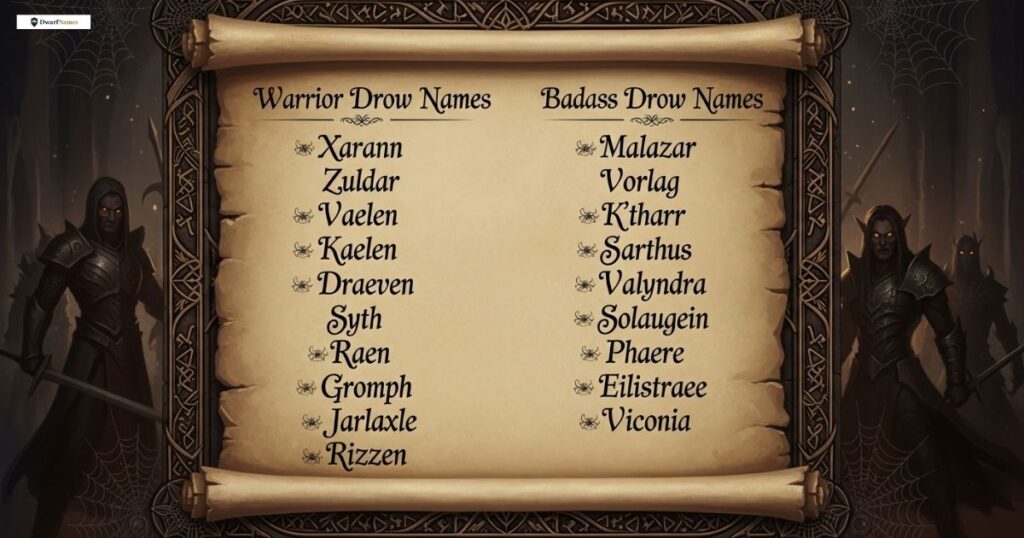
These are names built for battle—for characters who have carved their way through rivals, survived the chaos of Lolth’s tests, and emerged bloodied but unbroken. Hard consonants, aggressive syllable patterns, and a sense of coiled violence define this category. Warriors among other races share this naming philosophy; if you want contrast, explore barbarian names to see how surface-world warriors name their fighters.
- Zakkrix
- Drathvorn
- Velzarix
- Mordhex
- Szindrok
- Thelvorn
- Queldar
- Neldrok
- Orbvrix
- Xelthrok
- Zaraxis
- Drakvorn
- Breldrix
- Thorzax
- Veldrok
- Mordrix
- Szorzax
- Galvrix
- Keldrok
- Rheldrix
- Zervax
- Drolvrix
- Thervorn
- Xalvrok
- Narldrix
- Quelvax
- Brelvorn
- Kordrix
- Velthrak
- Szeldrak
- Morkthax
- Droveldrix
- Zarldrix
- Thelbrax
- Xorveth
Royal and Noble Drow Names
Matrons, High Priests, and House Lords carry names that echo through generations. These names are chosen for their gravity—names that command silence in a room, that end sentences and begin wars. For rulers of other fantasy civilizations, royal names offers a broader lens on what makes noble naming traditions resonate across cultures.
- Maerimydra
- Zeerith Q’Xorlarrin
- Melarne
- Pellanistra
- Trielindra
- Ssivrixis
- Zilvara Oblodra
- Queltris
- Auvryath
- Veldara Baenre
- Thornindra
- Naelindra
- Quelmorindra
- Szisselvara
- Elvindara
- Zhalvaris
- Orbindara
- Thalindaris
- Myrindra
- Auvelvara
- Velthindra
- Nalindra
- Ssivindara
- Xaelindaris
- Drathvara
Traditional and Classic Drow Names
The Underdark has deep traditions. These names follow the classical Drow naming conventions closest—flowing syllables, apostrophes suggesting house affiliation, and phonetic patterns passed down through matriarchal lines. These are the names that feel most authentic to the established lore, perfect for players who want to honor the source material. Similarly, dwarf names reflect another ancient fantasy tradition where naming conventions carry deep ancestral weight.
- Drizzt
- Zaknafein
- Halisstra
- Jarlaxle
- Vierna
- Nalfein
- Bregan
- Qilué
- Auvry
- Pharaun
- Liriel
- Triel
- Imrae
- Szordrin
- Dantrag
- Berginyon
- Veldrin
- Welverin
- Oblodra
- Ryld
- Tathlyn
- Ssin
- Zuvexis
- Vhaerun
- Quelvar
- Selorn
- Orbrix
- Velethris
- Thessal
- Neldrath
Drow Naming Traditions and Cultural Lore
Understanding how Drow names work transforms a good name into a great one. In Drow society, names are never accidental. They are deliberate constructions carrying multiple layers of meaning, obligation, and identity.
House Names and Apostrophes The apostrophe in many Drow names is not decorative—it signals a linguistic break between the personal name and the house affiliation. “Do’Urden,” “Q’Xorlarrin,” and “Baenre” are all house names, and bearing them is both an honor and a chain. A Drow who loses their house loses their name—and many exiles forge new names entirely, names that carry no apostrophe, no lineage, no anchor. These nameless ones are the most unpredictable of all.
Matriarchal Naming Rights In most Drow houses, the Matron Mother holds the right to rename. A promotion, a disgrace, or a divine vision from Lolth can strip a Drow of their birth name and assign a new one. Names given by Matrons tend to be more formal and multi-syllabic, carrying an almost liturgical weight—meant to be spoken in ritual, not whispered in dark corridors.
Names as Omens Some Drow believe that a name shapes the soul. A child named for shadow will grow into shadow. A child named for fire courts catastrophe—and power. Naming ceremonies are conducted in Lolth’s temples, where priestesses divine whether the name will strengthen or doom the bearer. This is not superstition; in the Underdark, the wrong name has ended bloodlines.
Gender and Naming Female names tend toward flowing, multi-syllabic constructions—Myrymma, Thessindra, Velethris—while male names are often shorter, sharper, ending in hard consonants. Exceptions exist and are noteworthy; a male with a flowing, noble name has either been elevated by female kin or is hiding something about his ambitions.
Occupation Reflected in Name Assassins often carry names with silent or near-silent consonants—names that feel like they could slip past unheard. Wizards favor names with arcane resonance—syllables that hum with latent power. Warriors bear names built for impact. You can often guess a Drow’s role in society from their name alone, if you know how to listen. For a broader look at how cultures assign identity through names, the DnD Genasi names tradition offers fascinating contrast—elemental beings who carry their nature in their names much as Drow carry their house and fate.
Drow Clan and House Names
House names are the backbone of Drow society. These compound names and house titles carry history, threat, and pride in equal measure. An outsider who recognizes your house name may kneel—or reach for a weapon.
- House Baenre
- House Do’Urden
- House Oblodra
- House Xorlarrin
- House Mizzrym
- House Fey-Branche
- House Tuin’Tarl
- House Barrison Del’Armgo
- House Kenafin
- House Horlbar
- Clan Vhexaris
- Clan Drolvorn
- Clan Quelthrix
- Clan Szindaxis
- Clan Mordreth
- Clan Zelvarix
- Clan Thelvorn
- Clan Neldrix
- Clan Orbaxis
- Clan Brelvarix
- Spiderbone Clan
- Shadowweave House
- Venomsteel House
- Darkmantle Clan
- Nightwhisper House
- Embershroud Clan
- Voidsilk House
- Ashscale Clan
- Grimthread House
- Duskfang Clan
- Silentblade House
- Serpentmantle Clan
- Obsidianveil House
- Hollowcrown Clan
- Bitterthread House
- Dunecrawler Clan
- Starlash House
- Wraithseal Clan
- Ironvenom House
- Tombweave Clan
- Shadowcrown Clan
- Nightviper House
- Ruinthread Clan
- Ashmantle House
- Spellshroud Clan
- Voidweave House
- Grimsilk Clan
- Stonecrypt House
- Bleakmantle Clan
- Darklace House
Drow Last Names and Surnames
Beyond house affiliation, individual Drow sometimes carry descriptive surnames—particularly those who have left their houses or operate as independent agents. These surnames are often earned through deed. For a broader collection of fantasy surname ideas, last name ideas provides a deep well of inspiration for any character type.
- Shadowweave
- Voidmantle
- Darkthread
- Grimfang
- Emberveil
- Nightseal
- Obsidiancrown
- Silentshroud
- Venomsteel
- Ashmantle
- Bleakwhisper
- Dungfang
- Starcrypt
- Dustsilk
- Ironweb
- Wraithscale
- Spellweave
- Darkwhisper
- Grimseal
- Stoneweb
- Nightmantle
- Shadowblade
- Voidscale
- Embershroud
- Hollowfang
- Stonecrypt
- Dunecrawl
- Silkfang
- Grimthread
- Bleakscale
Frequently Asked Questions
What makes a Drow name sound authentic and powerful?
Authentic Drow names draw on specific phonetic qualities: hard consonants like Z, X, V, K, flowing vowel combinations, and the occasional apostrophe suggesting house affiliation. The best Drow names feel slightly dangerous to say aloud—like the sound itself has weight. Multi-syllabic constructions with alternating hard and soft sounds (like Vierna or Quelvar) capture the Drow aesthetic of elegance masking lethality. Avoid overly common fantasy syllable patterns and lean into sounds that feel both ancient and sharp.
Can I use Drow names for characters outside of D&D?
Absolutely. Drow names work beautifully in any dark fantasy setting—novels, video games, tabletop RPGs beyond D&D, and original worldbuilding. The phonetic style translates well to any culture built on shadow, intrigue, and ancient power. Writers crafting underground civilizations, dark elf factions, or shadow-realm empires will find Drow naming conventions an excellent foundation to adapt and evolve. If your world includes surface-dwelling allies or rivals, pairing Drow characters with half-elf names can create fascinating cultural contrast.
How do I create my own Drow name from scratch?
Start with a hard consonant cluster—Zr, Vl, Szz, Xel, Dr—and follow it with an open vowel. Add a second syllable that softens or sharpens the sound depending on your character’s role. Warriors benefit from endings like -ax, -rix, -orn, -rok. Nobles and priestesses fare better with -indra, -ara, -ithis, -vel. If including a house name, separate with an apostrophe and choose a house name that suggests either a virtue your character’s house claims (Brightmantle, Goldenveil) or a feared quality (Ironvenom, Wraiththread). The contrast between aspiration and reality is very Drow.
Are Drow names gendered?
In traditional D&D lore, yes—Drow naming conventions tend to follow gender patterns, with female names often being more fluid and multi-syllabic while male names are shorter and harder-edged. However, these conventions are not absolute, and many modern worldbuilders and game masters choose to ignore or invert them for storytelling effect. A male Drow with a grand, flowing name might be the favored son of a powerful matron. A female with a sharp, percussive name might be signaling that she has rejected her house’s expectations. Names are as much political statements as personal identity in Drow culture.
Where can I find more fantasy race names similar to Drow names?
The phonetic darkness of Drow names shares some DNA with other underground or ancient fantasy races. For comparison and inspiration, troll names offer a rougher, more primal take on dark fantasy naming. If you are building a full world with multiple cultures, exploring city names and town names can help you develop the setting that surrounds your Drow characters—because the best names exist within a world, not in isolation. For animal companions or familiars common among Drow priestesses, animal names provides unexpected inspiration.
Conclusion
A name is never just a name in the world of the Drow. It is a claim, a warning, a prayer to a spider goddess who demands perfection or punishes failure. Every syllable carries the weight of ancient treachery, of matriarchal power, of survival clawed out of stone and shadow. When you choose a Drow name—whether for a D&D character, a fantasy novel, or a worldbuilding project—you are not just labeling a character. You are declaring who they are and what they will become.
The Underdark rewards preparation. It rewards understanding. Most of all, it rewards those who know their own name well enough to make others remember it.
Take these names into your world. Let them echo in obsidian halls. Let them be spoken in hushed tones by rivals who wish they had chosen differently. Whether you need a warrior whose name is a battle cry, a noble whose name silences rooms, or a rogue whose name has been stripped and rebuilt—this guide has given you the foundation.
The darkness is waiting. Go name your legend.