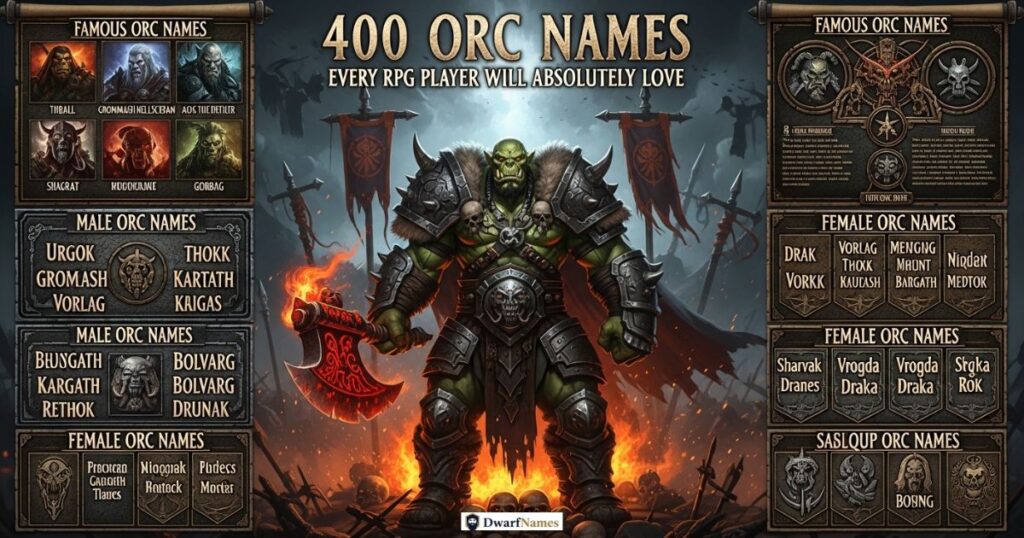

There is something primal about an orc. When an orc steps onto the battlefield — tusks gleaming, waraxe in hand, a war cry tearing through the morning fog — you feel it in your bones. Orcs are not merely villains to be defeated or brutes to be bargained with. In the richest corners of fantasy fiction, tabletop RPGs, and worldbuilding lore, they are a people — ancient, proud, and fierce. And like every people, they carry their identity in their names.
A name is never just a sound. For orcs, a name is a battle scar. It is a lineage, a declaration, a challenge hurled at fate itself. Whether you are crafting a campaign in Dungeons & Dragons, writing a dark fantasy novel, or breathing life into a new world, the orc names you choose will define the texture of your story. A poorly named orc fades into the background. A well-named one becomes legend.
This guide is your complete arsenal. We have gathered over 400 orc names — male, female, warrior, noble, traditional, and beyond — each one carved from the stone of fantasy tradition. You will also find naming lore, clan names, and cultural worldbuilding to help you understand not just what to call your orc, but why that name matters.
Whether you play a half-orc paladin, run a war-chief NPC, or are writing a saga set across vast fantasy continents, these names will serve you well.
Famous Orc Names From Literature and Games
Before we dive into the lists, it helps to look at the orcs who came before — the named ones, the ones whose identities shaped the entire genre.
Thrall (World of Warcraft) — Born Go’el, Thrall is perhaps the most iconic orc in gaming history. His name, meaning “slave,” was given to him by his human captors — a cruel irony for a warrior who grew up to free his entire people. His arc demonstrates how a name can be both a wound and a weapon. Players who encountered Thrall understood immediately that orc identity runs deeper than brute strength.
Grommash Hellscream — The legendary warchief of the Warsong Clan carries a name that thunders with intent. “Hellscream” is not just a surname — it is a promise of what happens when this orc enters battle. Grom was impulsive, passionate, and ultimately sacrificial, and his name captures all of that furious energy in two syllables.
Azog the Defiler (The Hobbit) — Tolkien’s orcs and goblins laid the groundwork for the entire genre, and Azog represents the cold, calculating cruelty that makes certain orcs terrifying beyond mere physical threat. His name — sharp, with that jagged z cutting through — feels inherently hostile.
Shagrat and Gorbag — These two orc lieutenants from The Lord of the Rings are fascinating precisely because Tolkien gave them names that sound guttural and Orcish while still being fully distinct characters with their own squabbling loyalties. Their names feel like they were grown in darkness.
These examples show that the best orc names carry story inside them. They suggest violence, pride, history, and sometimes tragedy. Just as DnD Dragonborn names carry the weight of draconic heritage, orc names carry the weight of war.
Male Orc Names
Male orc names tend to favor hard consonants, short punchy syllables, and sounds that are easy to bellow across a battlefield. They often end in strong stops — -ug, -ak, -or, -om — and are built for impact rather than elegance.
- Urgok
- Drak
- Grombash
- Thokk
- Vorlag
- Muzgash
- Kargath
- Bolvarg
- Rethok
- Drunak
- Skorgul
- Voktar
- Thrukk
- Malgor
- Zorgath
- Brugnak
- Gordak
- Umvash
- Rekkar
- Dolgrum
- Narthok
- Brak
- Skuldrak
- Gormak
- Thargh
- Vrusk
- Molok
- Kragnar
- Duskath
- Ulvarg
- Greshnak
- Bormak
- Zhugrak
- Talvrak
- Khord
- Drovak
- Murghash
- Grakh
- Solvorn
- Targrak
- Vuldur
- Korzak
- Blorgath
- Rukvash
- Drognak
- Norgas
- Skarzak
- Gothrak
- Golvash
- Murk
Female Orc Names
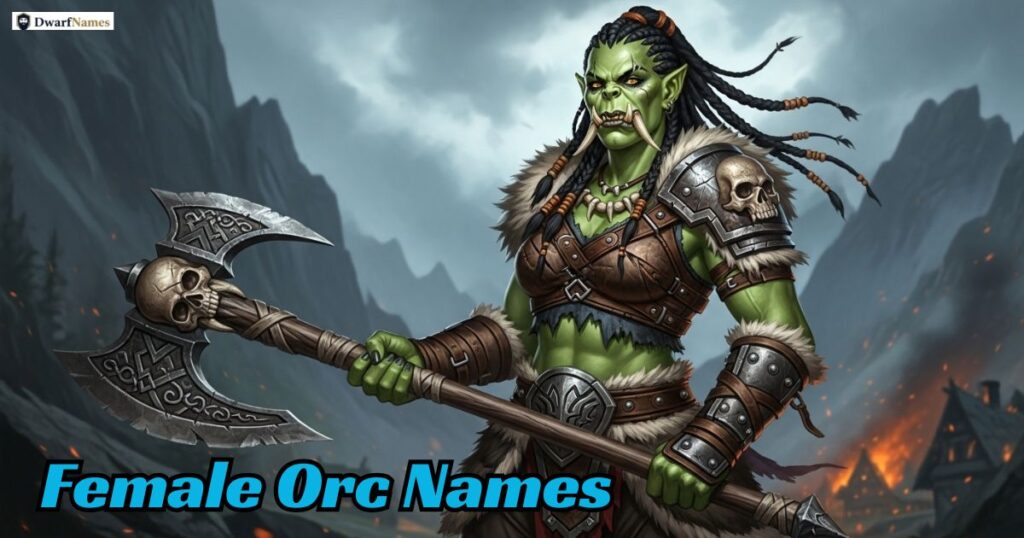
Female orc names carry just as much power as their male counterparts, but often flow with a slightly different rhythm — not softer necessarily, but layered with a certain dangerous elegance. They can be sharp and clipped or rolling and fierce, reflecting cultures where women are warriors, shamans, and chieftains in equal measure.
- Sharvak
- Vrogda
- Kelmash
- Urzha
- Draka
- Rokshar
- Nulgra
- Thrashka
- Volmira
- Groksha
- Durtha
- Skalmira
- Bolvira
- Zulgra
- Raknash
- Murgra
- Kessara
- Dravka
- Voshka
- Thraksha
- Ulnara
- Grubka
- Korsha
- Norva
- Rashka
- Drekmira
- Borgsha
- Malthra
- Vorlka
- Druvsha
- Karvak
- Skolgra
- Narthka
- Rolgra
- Gothsha
- Mulvira
- Blaska
- Torgsha
- Urvaka
- Gresha
- Zarsha
- Molkra
- Reksha
- Bruvka
- Dulgra
- Skarvika
- Gothvira
- Nursha
- Vralksha
- Thulvira
Cool and Unique Orc Names
Sometimes you want a name that does not fit neatly into tradition — one that has an unexpected sound or carries a quality that makes it memorable the moment it is spoken. These unique orc names are designed for characters who stand apart from the horde.
- Zravok
- Khethul
- Orkath
- Vhuldrak
- Nyx’gar
- Tholvak
- Skrael
- Gorzun
- Dravkoth
- Urghast
- Krathvul
- Blodrak
- Mordvash
- Skerath
- Vrothok
- Nakrath
- Umbral
- Shokrul
- Gorethak
- Drekzar
- Khauvrak
- Velgrath
- Zuvrath
- Drothmal
- Orvathak
- Threzak
- Grokhul
- Skarneth
- Vuldrath
- Rorgast
- Krelvash
- Bolgrak
- Zhenrak
- Skolvek
- Orghnak
- Dravethak
- Thurvak
- Morghast
- Zreknar
- Solvornak
- Kravthul
- Druskvak
- Nethrak
- Thornvash
- Grolvash
Warrior and Badass Orc Names
These are the names that belong on the lips of soldiers, on war banners, and in the mouths of enemies who speak them with dread. Warrior orc names are raw power distilled into sound — hard, fast, and final.
- Bloodtusk
- Warcry
- Grimfang
- Skullrender
- Boneshatter
- Ironsnarl
- Deathgrip
- Ravenfury
- Stormhowl
- Axeborn
- Blackthorn
- Bladewrath
- Crowmane
- Duskrender
- Gorefist
- Hammerfall
- Ironhide
- Jaggernak
- Killshout
- Lakrath
- Manhewer
- Nightcleave
- Oblak
- Paincaller
- Quickblade
- Ragefist
- Slaythorn
- Throatcutter
- Umbrakk
- Vulrath
- Warmourn
- Xekhrath
- Yarakh
- Zergath
- Achrak
- Bludgrak
- Crushborn
- Duskfang
- Earthsmasher
- Fleshrender
- Goreknee
- Hateborn
- Ironjaw
- Jakkrath
- Knotbone
Royal and Noble Orc Names
Not every orc is a footsoldier. Warlords, clan chieftains, shamanic elders, and orc royalty require names with gravity — names that suggest authority, lineage, and the weight of command. These noble orc names carry the dignity of long bloodlines and ancient power. They pair well with DnD Aasimar names when building a diverse cast of noble characters across fantasy races.
- Gorethul the Unbroken
- Malvador
- Karthax
- Dregmohr
- Vulgaren
- Thurvash the Elder
- Zolvrak
- Morganthas
- Keldrath
- Valdorak
- Thrakvesh
- Orzimul
- Golvarius
- Uldravak
- Kronath the Grey
- Borvathak
- Solvrek
- Malthrak
- Grothdal
- Ulgravash
- Veldrak the Wise
- Drogathul
- Urthvak
- Narvash
- Grothak the Unyielding
- Kolvathrak
- Mordgaren
- Zulvarak
- Throldak
- Blekvash the Old
Traditional and Classic Orc Names
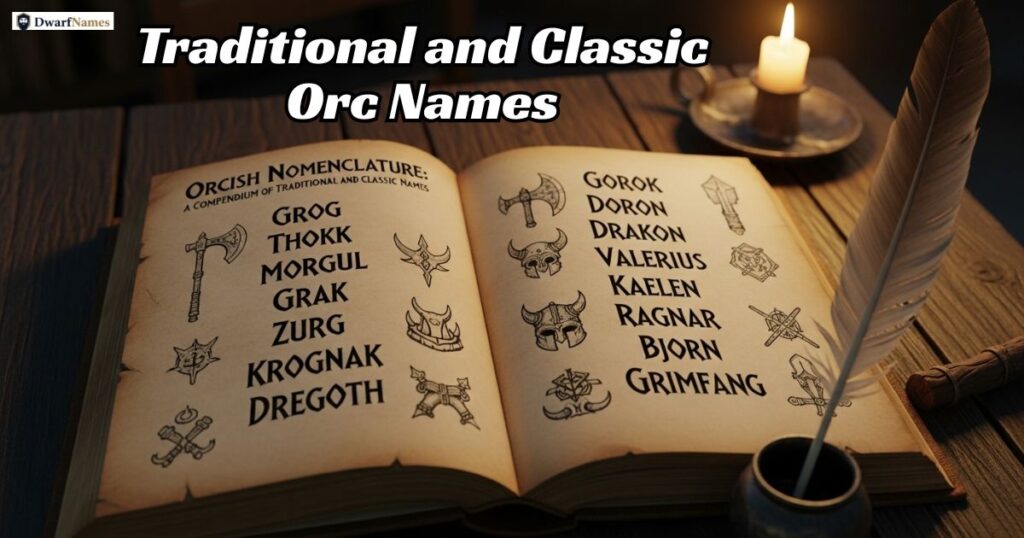
These are the names that echo through the oldest orc stories — names built from the bones of fantasy tradition. If you need something that sounds like it belongs in a worn-leather campaign book or a dark high-fantasy novel, these are the classics.
- Grak
- Throk
- Bolg
- Morgash
- Ulgak
- Drak
- Gronak
- Skarg
- Vrak
- Thurk
- Kragg
- Morg
- Dolg
- Urk
- Garrosh
- Zhak
- Korg
- Brak
- Dorg
- Narg
- Skrak
- Grut
- Ulg
- Thar
- Mog
- Drul
- Vorg
- Krak
- Grash
- Thurm
- Bolg
- Narsh
- Gordak
- Skarg
- Vroth
- Drugg
- Zar
- Mord
- Krug
- Ograth
- Gurk
- Darz
- Kraag
- Skul
- Rorg
Orc Naming Traditions — A Lore Guide
Understanding how orcs name themselves can transform your worldbuilding from a list of words into a living culture. Here is a framework used across many fantasy traditions, adapted for maximum immersive depth.
Names Are Earned, Not Given
In many orc cultures, the birth name is only a placeholder — a temporary label assigned by a parent or elder at birth. It is often short, functional, and generic. A young orc named “Rak” becomes “Rakhammer” only after proving themselves in battle. The second name is the real name, and it cannot be given — only witnessed.
The Naming Ceremony
After a significant feat — killing a dangerous beast, surviving a rite of passage, leading a successful raid — an orc earns their true name before the clan. The eldest shaman speaks it aloud, and from that moment forward, the birth name is retired. Using an orc’s birth name after they have earned their war name is considered a grave insult.
Clan Names as Titles
Clan names function less like family surnames and more like military designations. To say you are of the Ironjaw Clan or the Ashspear Clan tells other orcs exactly what kind of warrior you are, where you trained, and what oaths you are bound by. Clan names carry enormous social weight. Losing your clan name — through exile or disgrace — is considered worse than death.
The Role of Sounds
Orc linguists (in-world) would note that the harshness of a name signals its social class. Common soldiers favor names with hard stops: Krak, Throk, Grash. Shamans and spiritual leaders often have names with more flowing syllables: Vulurak, Zelgrasha, Morvathul. Noble lineages blend both — hard on the outside, complex within, suggesting both martial prowess and strategic depth.
Female Names and the Shaman Tradition
In many orc societies, the most powerful shamans are women. Female names in spiritual roles often incorporate breath sounds — sh, v, th — and open vowels that suggest a connection to wind, spirit, and the ancestors. A female shaman named Voshkarath carries very different cultural weight than a warrior named Sharvak.
Orc Clan Names
Clan names are the banners under which orc warriors march and die. They are compound words forged from two meaningful concepts — a material and an action, an element and a body part, a creature and a fate. These names are shouted in war cries, painted on shields, and carved into stone markers at the edges of territory.
Just as certain fantasy races have clans and bloodlines — think of the structured naming conventions in Oni names or the celestial lineages behind angel names — orc clans carry their entire identity in two words.
- Ironjaw Clan
- Stonegrip Clan
- Bloodfang Clan
- Ashspear Clan
- Skullrender Clan
- Duskbone Clan
- Greymaw Clan
- Thornhide Clan
- Ravenfist Clan
- Ironfoot Clan
- Warscar Clan
- Bonemaw Clan
- Darkstone Clan
- Grimtusk Clan
- Slagfist Clan
- Crackedhelm Clan
- Rustveil Clan
- Battleborn Clan
- Coldtusk Clan
- Ogrebone Clan
- Murkfang Clan
- Blazehowl Clan
- Scorchedmane Clan
- Dirgehowl Clan
- Ashgrip Clan
- Deathcrest Clan
- Shatterbone Clan
- Stonecleave Clan
- Wolfmaw Clan
- Sootshield Clan
- Gravelthorn Clan
- Cragspine Clan
- Ember Claw Clan
- Scarred Crown Clan
- Splitskull Clan
- Brimstonehold Clan
- Ironveil Clan
- Gorgash Clan
- Slagtide Clan
- Stormtusk Clan
- Redmaw Clan
- Nightspine Clan
- Dungrak Clan
- Wolfhide Clan
- Ashbane Clan
- Coldgore Clan
- Darkspine Clan
- Ironmoot Clan
- Crumblefist Clan
- Greengore Clan
- Boulderback Clan
- Charbone Clan
- Rivenjaw Clan
- Dreadthorn Clan
- Forgebreaker Clan
- Stonetide Clan
- Ironblood Clan
- Scorchgrip Clan
- Ragefang Clan
- Ashclaw Clan
Orc Last Names and Surnames
Some orc societies — particularly those that have built empires, traded with other races, or developed complex political structures — adopt surnames. These function differently from clan names. They are inherited, not earned, and they trace bloodlines rather than battlefield allegiances.
- Graktor
- Bolvak
- Drogath
- Skrenath
- Vorvash
- Molgrak
- Ulvrak
- Thorkath
- Drevash
- Kolvrath
- Zulgath
- Brethnak
- Shadrak
- Marvoth
- Skrenash
- Dolvak
- Ulgrath
- Gormath
- Skrinak
- Drolvak
- Karthnak
- Blodvash
- Veskrath
- Normath
- Grothnak
- Umvrath
- Skuldath
- Drothvak
- Zorghath
- Murkvash
- Tharnak
- Solvrath
- Blugrath
- Drekmath
- Grolvak
- Korghath
- Bolvrath
- Drukhath
- Skarkath
- Nardvash
- Thergrath
- Volkhath
- Grushnak
- Baldrath
- Mordvak
Conclusion — The Name Is the Weapon
In a world built on imagination, names are never just labels. For orcs — warriors carved from flint and fury, bound by blood oath and clan pride — a name is the first strike in every battle. It is what survives when the orc does not. It is chanted by shamans, screamed by charging soldiers, whispered by enemies who know better than to say it too loudly.
Whether you have found the perfect name for your half-orc ranger, your villainous warlord, your clan of desert nomads, or the ancient orc empire crumbling at the edges of your map, these 400 orc names are yours to command. Take them, shape them, break them apart and rebuild them. The best worldbuilders treat name lists as raw ore — and forge something of their own.
Your orc waits. Give them a name worthy of the legend they are about to become.