
Every great world begins with a name.
Before a single city is built or a war is fought, before maps are drawn or legends are sung, a continent must be called something. That name carries the weight of oceans, the memory of ancient peoples, and the raw energy of geography itself. Whether you’re crafting an epic fantasy novel, designing the next legendary tabletop campaign, or simply searching for a name that sounds like it belongs on the edge of a world-ending map — the right continent name can change everything.
Continent names are not merely labels. They are declarations. They whisper of the cultures that rose upon their shores, the climates that shaped their peoples, and the myths that first gave those lands meaning. Think of how “Valyria” feels like melting gold and empire, or how “Mordor” conjures smoke and dread without needing a single sentence of description. That is the power of a well-named landmass.
In the world of fantasy worldbuilding, games, and storytelling, continent names set the entire tone. They come before kingdoms, before dynasties, before heroes and monsters. A continent name is the first sentence of your world’s story. This guide presents over 400 continent names organized by theme, tone, culture, and lore — alongside fun geography-inspired facts, naming traditions, and creative inspiration to help you build something truly unforgettable.
Famous Continent Names From Literature and Games
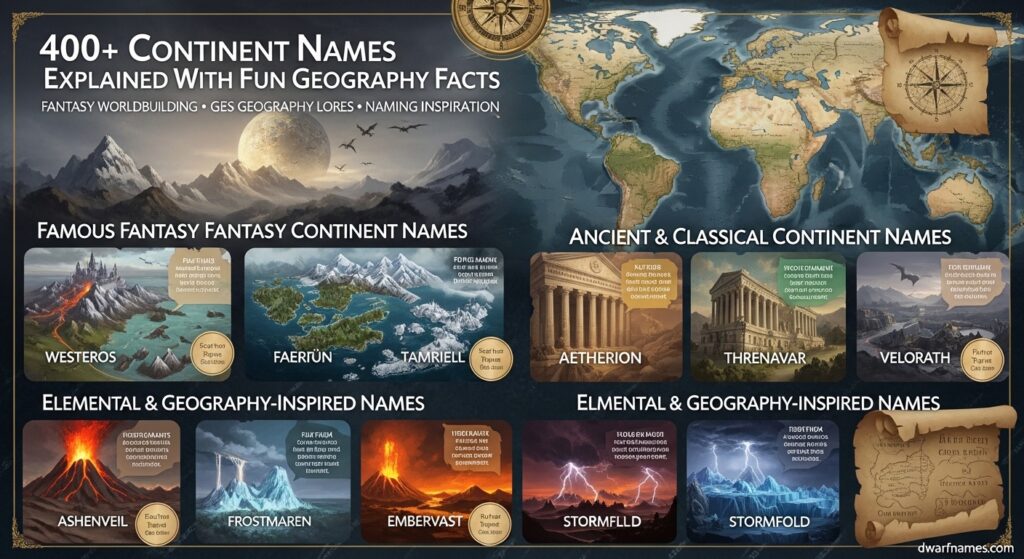
Before we dive into the name lists, it’s worth honoring the great continent names that have already become legendary. Understanding why they work helps you build your own.
Westeros (A Song of Ice and Fire) — George R.R. Martin’s continent is named with elegant simplicity: it lies to the west, and it echoes the Latin terra, meaning land. That blend of direction and geography gives it immediate believability. Westeros feels like a real place on a map you’ve never seen.
Faerûn (Forgotten Realms) — The central continent of D&D’s most beloved setting carries a name that feels ancient and elvish, rolling off the tongue with the cadence of something half-remembered. It doesn’t explain itself — it simply is, and that mystery gives it gravitas. If you enjoy building fantasy races to populate your continents, pairing them with strong place names makes the world exponentially richer. A guide to DnD Dragonborn names can offer excellent parallel inspiration for naming cultures that might inhabit your world.
Tamriel (The Elder Scrolls) — Meaning “Dawn’s Beauty” in the in-universe Aldmeri language, Tamriel demonstrates how a continent name can encode myth directly into syllables. The name is both beautiful and ancient-sounding, with that perfect fantasy rhythm of two soft consonants flanking open vowels.
Hyrule (The Legend of Zelda) — Though technically a kingdom rather than a continent, Hyrule’s naming tradition shows how softened, lyrical syllables convey a sense of legend without needing harsh consonants. It sounds like something that was always there, older than memory.
The lesson from all of these: the best continent names feel earned. They have texture. They hint at history. They make you want to unfold the map.
Ancient and Classical Continent Names
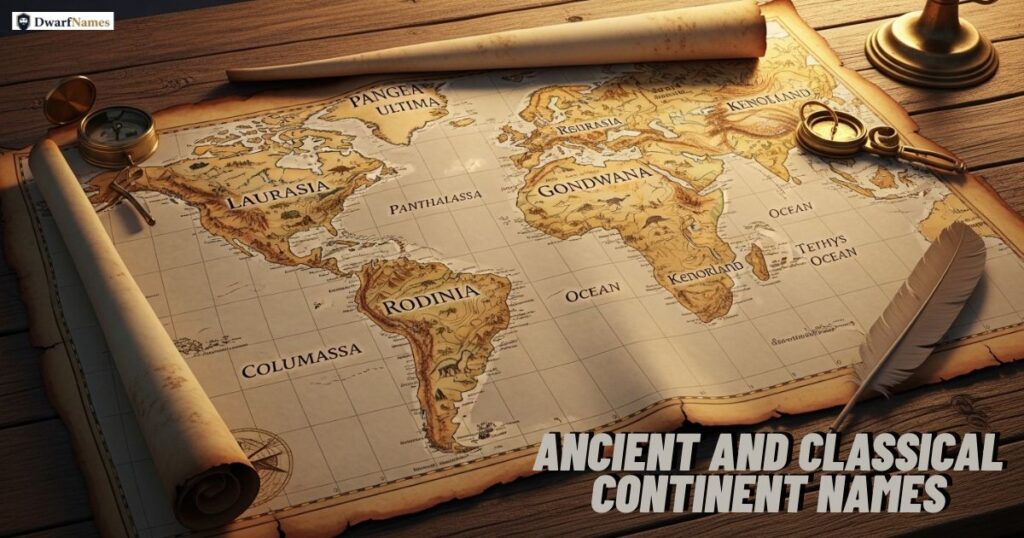
These names draw from the deep well of ancient myth, classical language, and the kind of geography that feels like it was carved by gods rather than glaciers. Use these when your continent needs weight — when it should feel like it has been there since the world was young.
- Aetherion
- Veldramis
- Solundra
- Caeloria
- Threnavar
- Orvathis
- Pelundis
- Aurenmoor
- Valdreith
- Solcressa
- Korinthael
- Thymberon
- Eldravar
- Sancthoria
- Calumneth
- Velorath
- Tharrenix
- Ornathis
- Pyrethon
- Calidris
- Sundareth
- Helvornis
- Arantheum
- Issoleth
- Quelindra
- Morvethis
- Altharion
- Celibrax
- Dawnethis
- Valdumeth
Elemental and Geography-Inspired Continent Names
Named for the forces that shaped them — fire-forged coasts, frozen tundra, drowned river deltas, or volcanic ridges. These names carry the flavor of terrain and climate, making them ideal for worlds where geography determines destiny.
- Ashenveil
- Frostmaren
- Stonehallow
- Tidescar
- Embervast
- Greymantle
- Ironveil
- Thornmire
- Cinderholt
- Duskmere
- Salthaeven
- Rimecrag
- Blazentide
- Murkandis
- Stormfold
- Deepcrater
- Brimshore
- Ashenvast
- Coralshend
- Hazelmoor
- Driftveil
- Shaleshard
- Boulderfen
- Frostgate
- Cinderpeak
- Tidewrack
- Emberdrift
- Stonefallow
- Glacierend
- Cavenmire
- Magmathorn
- Thunderfen
- Dawnrift
- Hollowscar
- Mareweld
Mystical and Arcane Continent Names
For continents where magic is a geological force — where ley lines run like rivers and ancient spells have calcified into mountain ranges. These names suggest mystery, forbidden knowledge, and the presence of the numinous. They pair wonderfully with celestial beings; if you’re building the divine inhabitants of such a land, exploring angel names might spark inspiration for the higher powers that shaped the continent’s magical geography.
- Aetherveil
- Runeharrow
- Mirethis
- Spellmere
- Voidscar
- Gloomward
- Arcenvast
- Spectreholt
- Shimmerfen
- Mystralion
- Wraithbound
- Echoveil
- Lunethris
- Phantomrift
- Sorcelvane
- Glintmere
- Whisperfen
- Oracleholm
- Dreamvast
- Etherand
- Riftvale
- Nexusholm
- Lunareach
- Voidhallow
- Seersgard
Warrior and Conquest Continent Names
These names carry iron and blood. They belong to continents forged by war, conquest, or the sheer ferocity of the civilizations that claimed them. These are the continents you find on the maps of empires — bold, hard-sounding, and unforgettable.
Warriors need homelands with names as fierce as their battles. Much like the savage naming traditions found in orc names or the terrifying weight carried by oni names, warrior continent names should feel like a battle cry when spoken aloud.
- Ironclave
- Battleshear
- Warbrand
- Ravenmarch
- Bladecroft
- Skullmere
- Grimhallow
- Warshend
- Cragemoor
- Bloodthorn
- Slagreach
- Strikevast
- Conquerath
- Hammercrest
- Vaultbrand
- Irontrench
- Bonewatch
- Ravageld
- Slatemarch
- Shatterfen
- Siegeholt
- Ragemire
- Stonewrath
- Doombrand
- Ashstrike
- Ruinmark
- Cleavecrest
- Thornwrath
- Forgemark
- Havocshend
Royal and Noble Continent Names
Not every continent is born in fire. Some rise through diplomacy, architecture, and the long patience of dynasties. These names evoke gold-leafed maps, royal cartographers, and the kind of civilization that measures itself in centuries.
- Aurenthal
- Sovereignmere
- Crownveil
- Goldenholt
- Imperiand
- Regalmoor
- Noblecrest
- Dynastheon
- Celestiand
- Majestica
- Verdanthrex
- Palatinus
- Magnolias
- Glorivast
- Sceptreholt
- Regnumshire
- Dominivale
- Laurenthal
- Pearlengard
- Verdania
- Silkenveil
- Aurelion
- Palatheand
- Royalshend
- Eternalcroft
- Goldenmere
- Crownriff
- Sealandis
- Throneholm
- Emblreth
Dark and Cursed Continent Names
Some continents are not meant to be entered lightly. These names signal corruption, ancient wrongness, or the kind of geography that makes compasses spin and sailors pray. They are the continents in the bottom-left corner of the map, labeled only with a skull and a warning.
- Dreadmire
- Shadowfen
- Blightharrow
- Vilecrast
- Cursehollow
- Grimvast
- Necroven
- Withermoor
- Blackthren
- Ashenfell
- Plaguerift
- Shadowmark
- Rotenveil
- Scourgeholt
- Duskbrand
- Malethren
- Vexmire
- Wraithmoor
- Pestilond
- Oblitherax
- Sorrowfen
- Doomsveil
- Blightvast
- Hexenmoor
- Gloomthren
- Shadowrift
- Grievemoor
- Tormentholm
- Dreadshend
- Voidmark
Serene and Sacred Continent Names
Balance demands that for every dark continent there be one of light and peace. These names belong to lands of spiritual significance, sacred geography, and the kind of quiet power that doesn’t need to raise its voice.
Continents of this kind often shelter blessed lineages — races touched by divinity or cosmic fate. If you’re building the inhabitants of such a sacred land, the tradition of DnD Aasimar names offers beautiful naming patterns for those born under the light of higher powers.
- Serenholm
- Blessedveil
- Sacredfen
- Peacebrook
- Eternalmere
- Dawnholm
- Hallomark
- Luminvast
- Solaceria
- Tranquiland
- Sacrosheim
- Whisperholm
- Pilgrimveil
- Gracefen
- Sanctmere
- Pureharrow
- Holyshend
- Blessedcroft
- Seraphveil
- Angelholm
- Dawncroft
- Lighthallow
- Calmenvast
- Spiritfen
- Godshaven
- Divinethren
- Crestolite
- Celestholm
- Harmonyfen
- Aurorate
Oceanic and Island-Chain Continent Names
For worlds where the sea is as much a civilization as any landmass. These names carry salt and wind, the creak of ships, and the mythology of navigation.
- Tidalvast
- Seafollow
- Coralmire
- Deepshend
- Wavecroft
- Islandreach
- Pearlfen
- Saltenveil
- Oceanclave
- Tidemark
- Shorethren
- Marinevast
- Driftholm
- Reefscar
- Lagoonholm
- Tideshard
- Shallowveil
- Deepharrow
- Abyssholm
- Waverend
- Coralcroft
- Seafarend
- Mareweld
- Currentfen
- Tidebound
Traditional and Classic Continent Names
These are the workhorses of fantasy cartography — names that feel immediately at home in any world, that sound like they belong on a tavern map or a crumbling scroll. Timeless, versatile, and universally readable.
- Aldenmoor
- Veldrath
- Thornhaven
- Graymere
- Coldenveil
- Westernholm
- Easternvast
- Northenfen
- Southengard
- Highlandis
- Lowenveil
- Middaland
- Farreachend
- Wildenvast
- Greenmere
- Stoneshire
- Woodenholm
- Riverend
- Mountainfen
- Valleyholm
- Plainshend
- Forestveil
- Heathenmoor
- Hillgard
- Bogenveil
- Marshend
- Cragholm
- Mistenvast
- Heatherfen
- Timberholm
- Ruinsveil
- Ancientmere
- Oldenholm
- Pastholm
- Forgottenveil
Cool and Unique Fantasy Continent Names
Sometimes you want a name that doesn’t fit into any category — one that defies easy explanation and lodges itself permanently in the imagination. These are the outliers, the names that make readers stop and say: I want to know more about that place.
- Vexandrium
- Quorihelm
- Zelthavar
- Ixandris
- Phandirex
- Quelthoren
- Umbraheim
- Noctivalis
- Zarethmoor
- Xolvandis
- Threxovar
- Quelimbre
- Vaundrix
- Ixtheran
- Zolmavast
- Nexolvane
- Phyrethion
- Quandimor
- Uxelheim
- Thyxander
- Vorthelion
- Zelithvaur
- Kroxendar
- Jhovethis
- Ymphorial
- Wexathren
- Draxoltheim
- Queliovar
- Nolvethis
- Axendrim
The Lore of Continent Naming — Cultural Traditions
In fantasy worldbuilding, the how of naming matters as much as the name itself. Real-world geography offers fascinating models for how cultures name the land beneath their feet — and those models translate beautifully into fiction.
Direction-Based Naming. Many cultures name continents by their position relative to a known center. “Westeros” does this literally. In your world, an ancient empire might have named all surrounding continents in relation to its own capital: Northenvast (to the north), Sunsetholm (to the west), Dawnmere (to the east). This creates a sense of old cartographic authority — as if the empire believed itself the center of the world.
Feature-Based Naming. The most enduring continent names often describe what travelers first saw when they arrived. Great plains, towering spines of mountains, volcanic coasts, or endless fog. A continent first encountered through storm-wracked seas might be named “Greymantle” or “Stormfold.” One seen from the air (perhaps by dragon riders) might be named for its shape: “Clawland” or “Serpentine.”
Sacred or Mythological Naming. In cultures with strong religious traditions, continents are often named after gods, creation myths, or divine events. “Sacrosheim” might be the land where a deity first set foot. “Lunethris” might be named for a moon-goddess who allegedly shaped its coastline with her hands. These names carry weight because they remind inhabitants that the land itself is holy.
Conqueror Naming. When one culture overtakes another, they often rename the continent in their own tongue — but old names persist in the mouths of the original people. This creates powerful narrative tension. A continent might be officially called “Imperiand” by the ruling class while the indigenous population still calls it “Veldrath” — and that conflict in naming is itself a story.
Descriptive Compound Naming. Many fantasy cultures combine two meaningful words to create a continent name. This is especially common in Norse-influenced, Germanic, and Tolkien-inspired traditions. Words like “moor,” “veil,” “fen,” “croft,” “holm,” and “vale” carry geographical meaning. Pairing them with descriptive adjectives (grey, iron, ash, gold, thorn) creates names that feel both original and deeply rooted.
Continent Clan and Region Names — The Sub-Divisions
Every great continent needs internal geography. Regions, clan territories, old provinces, and sacred zones all need names that feel consistent with the continent’s overall naming tradition. Here are 50 region/clan names suitable for sub-divisions within your continents:
- Ironclave
- Stonebreaker Hold
- Ashenveil Quarter
- Duskmarsh Province
- Thornmire Territory
- Goldenveil Reach
- Shadowfen Vale
- Emberthorn Region
- Cragenmoor District
- Mistborne Lands
- Saltfen Coast
- Hollowstone Ward
- Dawnrift Territory
- Greymantle Province
- Warbrand Reach
- Bonewatch Territory
- Sealandis Expanse
- Solaceria Domain
- Lunethris Hollows
- Vexmire Flats
- Dreadveil Passage
- Strikevast Frontier
- Coralholm Bay
- Thornhaven Reach
- Grimfen Lowlands
- Runescar Highlands
- Mirethis Deep
- Driftholm Coast
- Ashgate Province
- Wavebreak Shore
- Ancientveil Ruins
- Goldenholm Estates
- Sundareth Plains
- Gravelmoor Passage
- Ironmark Territory
- Celestholm Peaks
- Shadowrift Valley
- Steelfen Border
- Havenshire Interior
- Dawnveil Margins
- Thornwatch Outpost
- Embervast Heartland
- Stonecroft Lowlands
- Tidebound Isles
- Grimvast Wastes
- Pearlfen Lagoons
- Crystalholm Peaks
- Wraithfen Bogs
- Solengard Uplands
- Firescar Delta
Continent Naming Generator Ideas — Build Your Own
The richest continent names often emerge from systematic combination. Here is a builder’s framework using components drawn from geography, mythology, and tone:
Prefix Pool (Tone-Setters): Ash, Blaze, Crag, Dawn, Ember, Frost, Gold, Grey, Iron, Lone, Mist, Night, Pale, Rune, Salt, Stone, Storm, Thorn, Vale, Void
Suffix Pool (Geographic Anchors): -brand, -croft, -fell, -fen, -gard, -hallow, -helm, -hold, -holm, -moor, -mere, -reach, -scar, -shend, -thren, -vale, -veil, -vast, -ward, -wrack
Linking Middle Words (Optional): -en-, -and-, -eth-, -ian-, -on-, -or-, -um-
Combine any prefix with any suffix to generate thousands of unique options. Add a middle connector for longer, more lyrical names: “Ash” + “-en-” + “veil” = Ashenveil. “Stone” + “-or-” + “thren” = Stonorthren.
The key is to say the name aloud before committing. A great continent name has rhythm — it sits comfortably in the mouth, sounds natural when shouted across a battlefield, and reads beautifully carved into a stone map.
Conclusion — Name the World, Shape the Story
A continent is more than geography. It is the first myth of your world.
The 400+ names in this guide are invitations — starting points for stories that have not yet been told, maps that have not yet been drawn, civilizations that have not yet risen and fallen. Every name here carries the potential for an entire history: the wars fought over it, the people who loved it, the gods who claimed it, and the wanderers who crossed it in search of something they couldn’t name.
Whether you use these names for a sweeping fantasy novel, a sprawling D&D campaign, a video game world, or simply the satisfaction of seeing a beautiful map take shape — remember that the name you choose will echo through everything else. Name the continent well, and the rest of the world will follow.
And when the time comes to populate your lands with the peoples who will carry its legacy forward — whether they are proud dragon-kin tracing Dragonborn lineages, holy warriors bearing Aasimar names, divine messengers with angel names etched into their souls, terrifying warlords drawn from orc naming traditions, or shadow-born creatures carrying the weight of oni names — let the continent’s name be the heartbeat beneath all of it.
The world is waiting to be named. Begin.