
There is something primal about a name that feels dangerous. When a storyteller introduces a villain whose very name seems to scrape against the tongue like gravel and shadow, readers lean closer. The hair rises. The world tilts. That is the power of a devil name done right — it does not merely identify a character, it announces one.
Devils hold a uniquely seductive place in fantasy literature, mythology, and games. They are not mere monsters lurking in dungeons. They are ancient intelligences, architects of ruin, sovereigns of suffering, and occasionally, reluctant allies. They whisper promises in the dark and collect souls like a miser collects coins. They are the oldest antagonists in every culture’s imagination — and in fantasy worldbuilding, they deserve names worthy of that legacy.
Whether you are crafting a dark RPG campaign, building a grim fantasy novel, designing a tabletop villain, or simply filling the pages of a worldbuilder’s grimoire, the right devil name can transform your creation from a generic antagonist into something genuinely unforgettable. A name like Zar’athiel carries weight. A name like Malgrevane sounds like a curse spoken backward. These are not accidents — they are craft.
This guide is your vault of infernal nomenclature. Inside you will find over 400 devil names organized by theme, gender, power archetype, and cultural lore tradition. We have also woven in naming traditions, clan structures, and worldbuilding lore so your devil is not just named — it is known. If you enjoy building mythic characters, you may also find inspiration in DnD Elf Names and DnD Dwarf Names for contrast — because sometimes a world’s darkness is best understood beside its light.
Famous Devil Names From Literature & Games
Before we descend into the lists, let us honour the names that forged the archetype — the devils of fiction, myth, and game design whose names became legend.
Mephistopheles — Perhaps the most elegantly sinister devil name ever conceived, Mephistopheles appears in Marlowe’s Doctor Faustus and Goethe’s Faust as a devil who is not merely evil but wearily intelligent. His name carries Germanic and Hebrew roots twisted into something alien and musical. He is the devil who offers everything and takes the only thing that matters. His name alone evokes cold intelligence and bitter irony — the ideal model for a cunning devil character.
Asmodeus — In Dungeons & Dragons lore, Asmodeus reigns as the Lord of the Nine Hells, a lawful evil archdevil of terrifying sophistication. Drawn from Judeo-Christian demonology, his name has a hard, regal rhythm that sounds like a gavel coming down in a courtroom of the damned. He does not rage — he adjudicates. His name influenced an entire generation of tabletop antagonists.
Diablo — The Lord of Terror from Blizzard’s iconic Diablo series is a masterclass in naming economy. Simple. Brutal. Unmistakable. His name is the Spanish word for devil, yet in context it becomes something far grander — a title, a prophecy, a warning. His name shows that devil names need not always be elaborate to be devastating.
Lucifer Morningstar — Whether from Paradise Lost, biblical tradition, or the modern television adaptation, Lucifer’s name is the ultimate example of a devil name that carries entire mythologies within it. “Light-bringer” in Latin — a name that encapsulates the tragedy of the fallen. Writers who understand this paradox can use devil names to build characters of genuine depth, not just darkness.
These examples share something important: their names sound like what they are. Harsh consonants, long vowels, strange syllabic rhythms. They feel ancient and deliberate. That is your design compass.
Male Devil Names
Male devil names often carry authority, age, and predatory patience. These names suggest power that has been accumulating for millennia — names that servants whisper and mortals dread.
- Azrathon
- Malgrevane
- Voriketh
- Zariphon
- Belrathus
- Dravokiel
- Seraphon
- Nocthariel
- Ithurex
- Darnaveth
- Solverath
- Korvinal
- Xanthariel
- Lucivayne
- Belpherak
- Dreadmoryn
- Vorthanel
- Zharakh
- Thessalor
- Crimoveth
- Mordanex
- Balthezar
- Nyxaroth
- Valdrigon
- Inferrath
- Sorethane
- Gravemoryn
- Thalidrak
- Xerithan
- Malzorath
- Vexinor
- Shadraken
- Gothraviel
- Drakmoryn
- Belzorath
- Nytharax
- Corvirath
- Drakhanel
- Zarvex
- Molvindrak
- Ashtariel
- Vexomoryn
- Therridax
- Zorvanel
- Sulfarax
- Draviknel
- Morvenax
- Nythorath
- Keldravek
- Xaravel
Female Devil Names
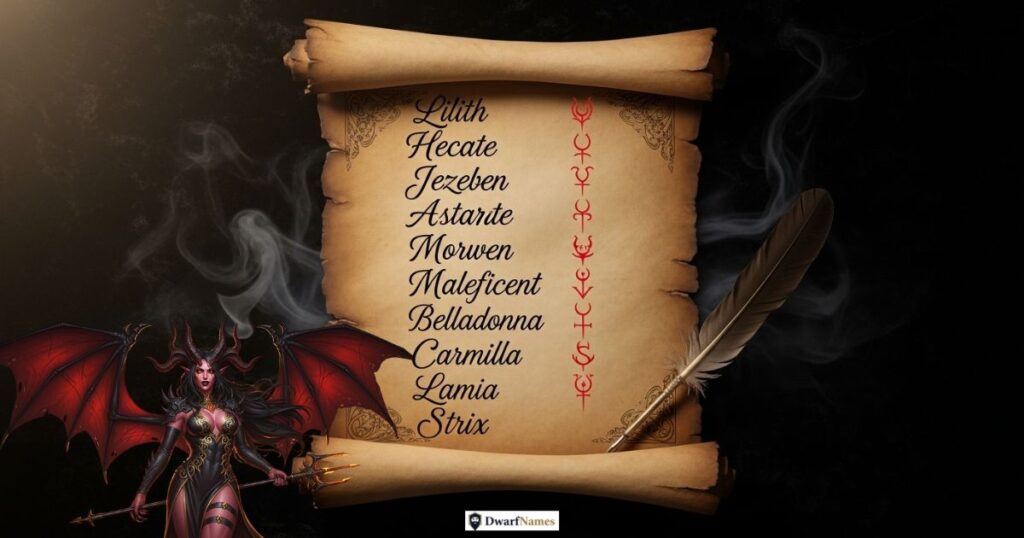
Female devils in fantasy carry a different current of menace. Where their male counterparts often dominate through authority and force, female devil names frequently suggest seduction, prophecy, and a cold grace that cuts more deeply than any blade. They are the architects of whispered catastrophes.
- Serethnai
- Morgavaine
- Luxifara
- Vaelithra
- Nyxareth
- Zharinae
- Belladrix
- Sorvitha
- Dravenai
- Malthariel
- Vespernai
- Noctharyn
- Ashvaleen
- Zeravine
- Mordelith
- Inferrael
- Xarythia
- Crimovael
- Darnavine
- Thornithael
- Valdrithia
- Solfaris
- Luxavaine
- Maldriveth
- Zarvithra
- Belrathael
- Nytherael
- Korvinae
- Seraphinyx
- Dravonael
- Vorvithai
- Thessariel
- Xanthimel
- Ashtarinae
- Volnithael
- Sulevaine
- Necrythia
- Gravesthia
- Zherithael
- Morvidrix
- Valdraphel
- Nyctharael
- Seledrix
- Vexonael
- Darinthael
- Lythravaine
- Belzorael
- Molvinae
- Sufariel
- Therridael
Cool and Unique Devil Names
These are names designed to stand out — names with unusual phonetics, unexpected syllable patterns, or sounds that feel genuinely otherworldly. These are perfect for writers who want their devil to feel like no devil seen before. For similarly distinctive naming styles, you might explore DnD Goliath Names — a race whose names share that same quality of raw, elemental power.
- Vox’ethar
- Kryzzavel
- Threx’imor
- Ulvikrath
- Zyxorath
- Grav’ithael
- Brezzivorak
- Shaxoleth
- Quorrivane
- Nyx’avel
- Vrivethax
- Drav’inael
- Ixx’orath
- Cryxivane
- Ulzareth
- Mozzivrak
- Zyx’harael
- Grexivorn
- Sholvivrak
- Trix’omael
- Ulvorex
- Kyxoravine
- Vrazixath
- Brolvimael
- Ozzivrath
- Drix’imor
- Zyxoravael
- Nolvixrath
- Grazzivane
- Trixalvorn
- Olvikrael
- Shezzivark
- Brux’orael
- Xyxivrath
- Quolzimael
- Nrex’ithael
- Olvazivorn
- Zrix’ithael
- Krazzimorvane
- Brex’olaeth
Warrior Devil Names — Powerful and Badass
These are the names carried by devil-generals, infernal knights, and warlords of the abyss. They are names that belong to devils who do not negotiate, do not whisper, and do not wait. They march. They destroy. They are remembered not in prayers but in the silence after the battle ends.
- Vorak’thane
- Ironvex
- Graverender
- Zharkon
- Malmortis
- Bladesorath
- Kragvarak
- Infernus Rex
- Warkolveth
- Darkmorthan
- Vexirath
- Bloodgoryn
- Ragnarevex
- Zhor’thane
- Crushvakiel
- Ironfang Zar
- Veldrakon
- Ravengrim
- Kolgravith
- Ashenwar
- Zhorvarek
- Grimvaldex
- Darethvorn
- Slavorn
- Flamedrakath
- Warsolve
- Nexavrak
- Ashgrimorath
- Krevithan
- Ironvalketh
- Dreadvoryn
- Skullrathon
- Blazevarak
- Grimraveth
- Necrosvar
- Vexikorath
- Thornvaldrak
- Devasthar
- Crushmoryn
- Zorgavrak
- Slagrithak
- Ironsovrath
- Grimvekath
- Deathorvak
- Warmorvek
Royal and Noble Devil Names
Not all devils command through violence. Some rule through law, pact, and cold aristocratic authority. These are the names of archdevils, infernal lords, and devil nobles who wear their power like a crown — titles that demand kneeling.
- Lord Malthezor
- Prince Vaelithron
- Archdevil Serethan
- Duke Infernal Zharavel
- Baron Corvithorn
- Emperor Noctharion
- Sovereign Dravelthas
- Grand Belthazar
- High Infernal Zorvek
- Warlord Arethon
- Duke Molvithor
- Viscount Xarathion
- Regent Therridavex
- Patriarch Keldravion
- Cardinal Sorvithorn
- Overlord Morvethas
- Infernal Consul Zaravel
- Prince Balthezan
- Archon Xarithion
- Dread Emperor Volvithar
- Lord Brimsthoryn
- Sovereign Drelvathas
- King of Embers Ashvoran
- Warden Nythalvion
- Grand Duke Belvethran
Traditional and Classic Devil Names
These names draw on centuries of demonological tradition from Judeo-Christian, Babylonian, Sumerian, and medieval European sources reimagined for fantasy use. They carry the weight of ancient myth — names that feel older than the worlds they inhabit. If you appreciate ancient and culturally resonant naming traditions, the African Names collection offers a similarly rich archive of names with deep historical roots.
- Asmodian
- Belphegon
- Mammoneth
- Astarothen
- Belthalaz
- Beliarex
- Levioth
- Abraximax
- Samael Rex
- Molochian
- Baalverath
- Azaziel
- Lilitharn
- Ahrivan
- Demonaxor
- Beltharoth
- Abyssoniel
- Marchosian
- Phenexiel
- Uragorex
- Barbathorian
- Zeimorn
- Bathalion
- Murmuriel
- Stolas Rex
- Valefaroth
- Pursoniel
- Bimethron
- Caaxiel
- Haagenthor
Devil Naming Traditions — A Lore Guide for Worldbuilders
In the great infernal chronicles imagined by worldbuilders across ages, devil names are not randomly assigned. They are earned, given, and sometimes stolen. Understanding how devils name themselves and each other transforms a simple name list into living lore.
Names of Birth and Binding
In most infernal traditions, a devil receives its True Name at the moment of its emergence from the void — a name spoken once by whatever dark force called it into being. This True Name is the devil’s most dangerous possession. If a mortal learns it and speaks it correctly in a binding ritual, the devil is compelled. Most devils guard their True Names with paranoid ferocity, taking on a Use Name — a secondary identity — for all dealings with mortals and lesser beings.
Names as Titles
As a devil rises in power, it accumulates titles that become part of its name. A minor imp called Vexor might become Vexor the Unseen, then Lord Vexor of the Seventh Spiral, then finally the Dread Sovereign Vexorath, Keeper of Broken Oaths. This layering is deliberate — each title is a scar of conquest, a piece of identity forged from acts of power.
Clan and Lineage Names
Greater devils often carry a clan or house name that precedes their personal name, similar to how mortal nobility carry family names. The House of Zaravel, the Bloodline of Grimvaldex, the Infernal Order of Morvethas — these identifiers signal alliance, obligation, and ancient hatreds between devil factions. When building an infernal character, giving them a house name instantly implies history and political stakes.
Names That Mortals Cannot Pronounce
The most ancient and powerful devils often possess names with sounds that mortal vocal cords were not designed to produce — clicks, subsonic rumbles, harmonic layering. When written, these names often appear as approximations with apostrophes indicating phonetic breaks, as seen in names like Vox’ethar or Trix’omael. Mortals who attempt to speak these names correctly sometimes suffer consequences. This is excellent narrative flavor for any dark fantasy world.
Forbidden Names
Some devil names are forbidden from being spoken aloud by pact or ancient law. These names typically belong to devils who were bound, destroyed, or banished — saying the name risks summoning attention from the entity or its remnant essence. Worldbuilders can use this tradition to create extraordinary dramatic tension. A character who learns a forbidden name suddenly possesses terrifying power and terrifying danger simultaneously.
Devil Clan Names and Infernal House Surnames
Every great devil belongs somewhere — a lineage of darkness, a house of ruin, a clan bound by infernal blood and shared ambition. These compound clan names and surnames work beautifully as family identifiers in your worldbuilding, and many can double as descriptive titles for independent characters. If you enjoy compound and evocative naming for mythic beings, the DnD Fairy Names collection offers a fascinating contrast — names born of light to set against these names born of shadow.
- Ashenveil
- Gravewhisper
- Ironsorath
- Flamerender
- Darkhallow
- Cinders Pact
- Thornchain
- Brimstone Ward
- Hellsford
- Ashen Covenant
- Soulsunder
- Voidweaver
- Grimfetter
- Duskcrown
- Emberthorn
- Blackspire
- Soulbreaker
- Ashgraven
- Infernokin
- Shadowbrand
- Cragsorath
- Darkweald
- Vexchain
- Scorncrest
- Nightfetter
- Hellmark
- Soulwarden
- Crimsonthorn
- Grimhallow
- Darktide
- Embergrave
- Voidcrown
- Ashrender
- Infernmark
- Sombrecrest
- Shadowwarden
- Ashfall Kin
- Covenweave
- Grimsorath
- Dreadpact
- Nightrender
- Scornveil
- Hellweald
- Vexcrown
- Ashkindred
- Flamewarden
- Soulscar
- Darkfetter
- Thorn Kin
- Grimveil
- Cragcrest
- Embercrown
- Nightsorath
- Voidfetter
- Hellkindred
- Ashveil Ward
- Shadowpact
- Dreadcrown
- Scornsunder
- Grimscar
Conclusion — Why a Name Is Never Just a Name
In the end, a devil without a name is only a monster. A devil with a name is a mythology.
The act of naming your infernal character is the act of making it real — giving it weight, history, and the kind of presence that lingers after readers put your book down, after players leave the game table, after the campaign ends and the world fades back to ordinary light. The right name does not describe your devil. It conjures it.
Whether you are writing a novel in which a fallen angel brokers the end of civilization, running a D&D campaign with an archdevil pulling strings from the Ninth Hell, or simply building a world so rich that its villains feel like they existed before the story began — these names are your starting point. Take them, twist them, layer them with titles and clan names and forbidden syllables. Let them become something entirely your own.
The greatest writers in dark fantasy have always understood this: names carry power. They carry fear. They carry the echoing resonance of things older and stranger than the world that contains them.
Now go name your devil. And make it one the world will not soon forget.