
In the shadowed alleyways of fantasy cities and the fog-drenched ruins of forgotten civilizations, a cloaked figure tilts its feathered head and repeats your last words back to you in your own voice. No greeting, no introduction, just an echo. That is the Kenku, one of Dungeons and Dragons’ most hauntingly unique races, and finding the right name for one of these cursed mimics is an art all its own.
Kenku are corvid-like humanoids, feathered, beaked, and brilliant, forever silenced by an ancient curse that robbed them of their original voices and their ability to fly. They communicate through mimicry, stitching together sounds, voices, and ambient noises to form meaning. Their culture is built on memory, craft, and survival in the cracks of society. They are thieves, scholars, assassins, and artists, all shaped by a tragedy they carry in their hollow bones.
Naming a Kenku character is not simply a mechanical task. It is an act of storytelling. Unlike most races, Kenku do not choose names the way elves or humans do. Their names are often the sounds that defined them, a dripping faucet, a shattering blade, a merchant’s laugh, or a child’s cry. Translated into written form for players and storytellers, these names carry weight, mood, and memory. Whether you are building a rogue for your next campaign or crafting a Kenku NPC for a dark urban setting, the right name transforms a character from a stat block into a soul.
This guide brings you over 250 DnD Kenku names across dozens of categories, along with cultural lore, naming traditions, and clan surnames to inspire any player, writer, or worldbuilder. If you love exploring races with rich naming lore, you might also enjoy our collection of DnD Kobold names or the gritty power behind DnD Orc names.
Famous Kenku Names From Literature and Games
Before diving into the name lists, it helps to look at how memorable Kenku characters have been portrayed across fantasy media. Their names tell stories before a single word of backstory is spoken.
Sketch: is perhaps the most iconic Kenku name in tabletop culture. Simple, evocative, and tied to craft. A Kenku rogue who earned the name by leaving charcoal marks at every crime scene, Sketch represents the dual nature of the race, criminal and artist at once. The name carries both danger and beauty.
Clatter: appears in several published DnD adventures as a street-level Kenku fence and information broker. The name mimics the sound of coins hitting cobblestone, which is said to be the first sound this particular Kenku ever memorized. It perfectly reflects how Kenku names are born from experience rather than tradition.
Whisperbeak: is a name found in fan-created Kenku lore and community-built settings. Noble in structure yet eerie in tone, it suggests a Kenku of refinement and secrecy, perhaps a spy or a courtly advisor who moves through high society like smoke through a keyhole.
Echo: remains one of the most emotionally resonant Kenku names in fiction. Tied directly to the race’s curse, it is both a description and a lament. A Kenku named Echo is one who has accepted their nature and turned mimicry into identity.
These names show us that the best Kenku names feel earned. They reflect personality, occupation, and origin in equal measure.
Male Kenku Names
Male Kenku names in most campaign settings tend toward sharp consonants and short, punchy sounds. They often come from mechanical noises, battle sounds, or the ambient noise of whatever environment shaped the Kenku during his formative years.
- Rattlewing
- Grim
- Cawven
- Skrix
- Korruk
- Talon
- Dusk
- Flinch
- Ashbeak
- Cinder
- Gravelvoice
- Peck
- Stoneclaw
- Dreg
- Vexen
- Murk
- Slathen
- Gravel
- Thorn
- Rookward
- Snatch
- Dirge
- Husk
- Blot
- Gloom
- Crag
- Wren
- Thresh
- Flint
- Scrape
Female Kenku Names
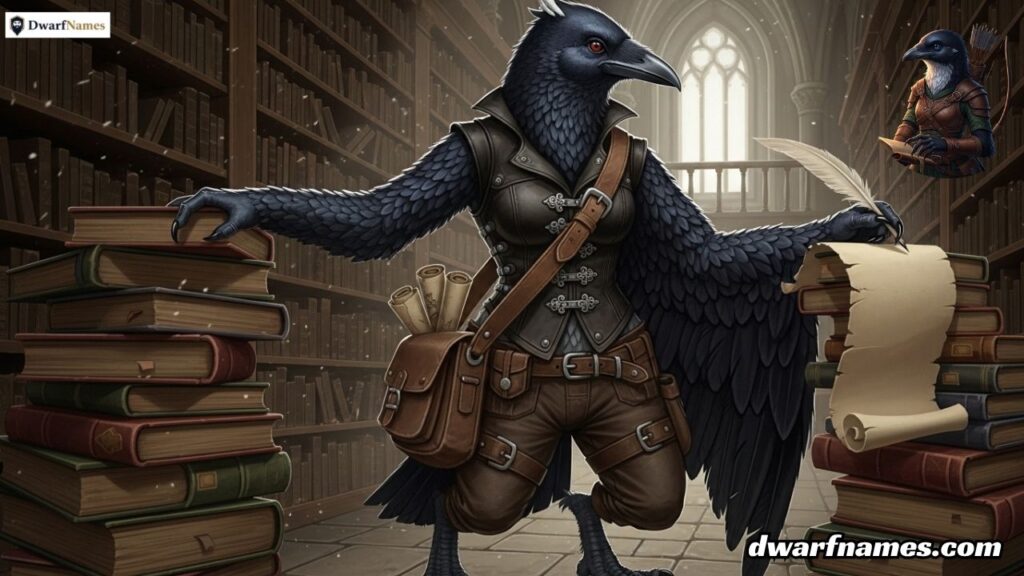
Female Kenku names often carry a softer but no less eerie quality. They tend to evoke wind, water, distant music, or the natural sounds of the world. These names feel haunting and beautiful, like something half-remembered from a dream.
- Whisper
- Mirren
- Silkwing
- Sable
- Dawnecho
- Trill
- Vex
- Shriek
- Lace
- Mournveil
- Hollow
- Nyx
- Skitter
- Fable
- Driftsong
- Awen
- Vesper
- Coalfeather
- Sorrow
- Lull
- Shimmer
- Mist
- Cressida
- Brine
- Tanglefoot
- Elegy
- Shade
- Wisp
- Crinkle
- Rustling
Cool and Unique Kenku Names
These names break from pure mimicry and venture into something more mythic and strange. They are the names of Kenku who have become legends in their own right, too distinctive to blend into the background.
- Voidwing
- Echoshard
- Nightcaller
- Fracture
- Darkfeather
- Quillstrike
- Ashenscrawl
- Silentblade
- Gloomcry
- Ruinbeak
- Crypttalk
- Duskwhisper
- Marrowed
- Scatterbone
- Shaderift
- Thornchant
- Plaguewing
- Obsidian
- Wraithcall
- Slateborn
- Riftclaw
- Mirrorvoice
- Emberveil
- Dreadtrill
- Hollowmark
For more names with that same dark fantasy flavor, explore these DnD Warforged names that carry a similarly constructed, identity-driven weight.
Warrior and Badass Kenku Names
Not every Kenku skulks in the shadows counting stolen coin. Some carry blades, lead ambushes, or serve as silent executioners in the employ of guilds and warlords. These names carry threat.
- Ironbeak
- Graveclaw
- Razorwing
- Slaughtercrow
- Bloodfeather
- Bonecall
- Warscream
- Shatterwing
- Deathsound
- Splitbeak
- Blacktalon
- Ruinstrike
- Cleavecry
- Grimblade
- Skullecho
- Fenwick
- Ravageclaw
- Corpsewing
- Hackthorn
- Steelbeak
- Ashstrike
- Grimtide
- Dreadkill
- Maulingtide
- Vexcrow
- Clatterfang
- Warbeak
- Shatterthorn
- Ironscream
- Doomwing
Royal and Noble Kenku Names
Though rarely associated with nobility, some Kenku have clawed their way into positions of power, founding guilds, criminal empires, or even legitimate governing councils in city-state settings. Their names carry weight and ceremony.
- Silverbeak
- Eclipsewing
- Noctuary
- Ashenveil
- Obsidiancrest
- Hollowcrown
- Dusklord
- Ebonfeather
- Vaultwhisper
- Nightseal
- Crimsonclaw
- Stonemirror
- Verdantbeak
- Ironvault
- Grimshadow
- Crownecho
- Shadowmark
- Dawnless
- Sablecrest
- Emberthrone
Traditional and Classic Kenku Names
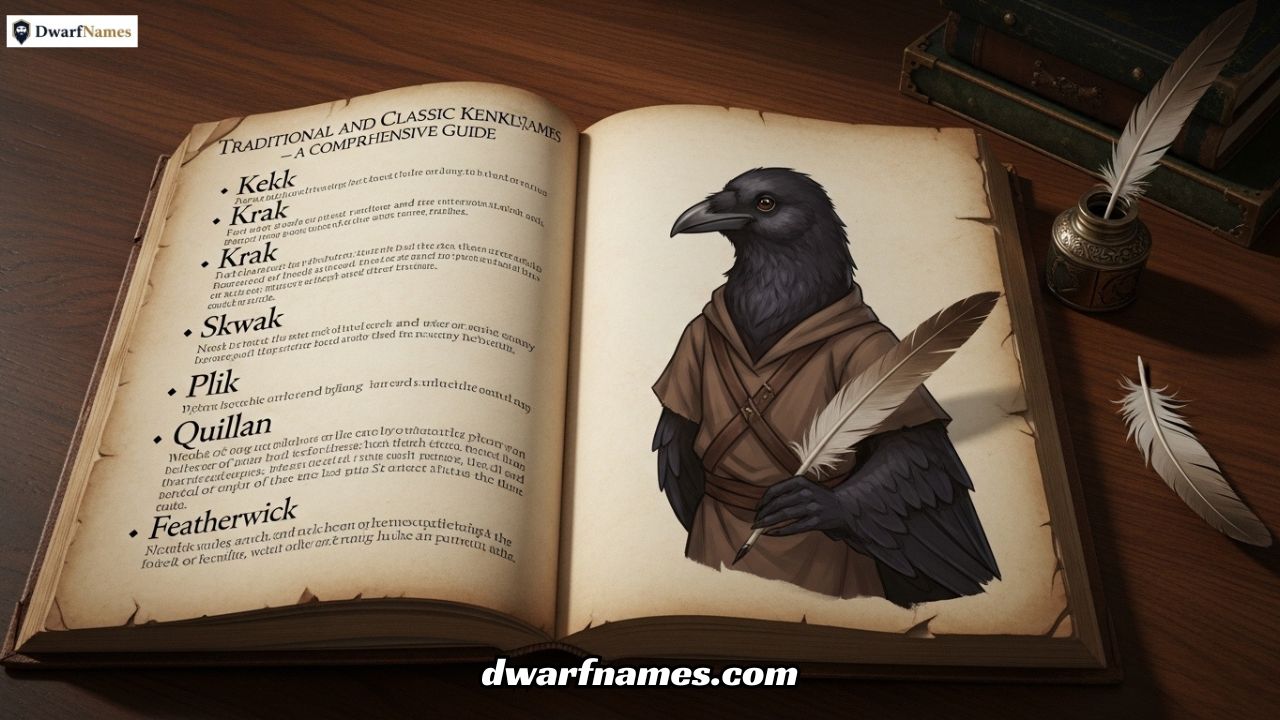
These names draw from the oldest traditions in Kenku communities, passed between generations through mimicry of mimicry, sounds that have been layered so many times they have taken on mythic resonance. They feel timeless and rooted.
- Cawrun
- Vrex
- Skren
- Tiku
- Chara
- Brek
- Fesk
- Niku
- Vranu
- Skava
- Tikku
- Choruk
- Drevin
- Bixel
- Kavan
- Freva
- Skoru
- Thren
- Rukka
- Divu
- Preva
- Skren
- Nuvik
- Chirak
- Vesku
The Art of Kenku Naming: Cultural Lore and Traditions
Understanding how Kenku receive and use names transforms a simple label into a piece of living lore. Few races in the DnD multiverse have a naming tradition as philosophically rich as the Kenku, and diving into it adds immense depth to any character or setting.
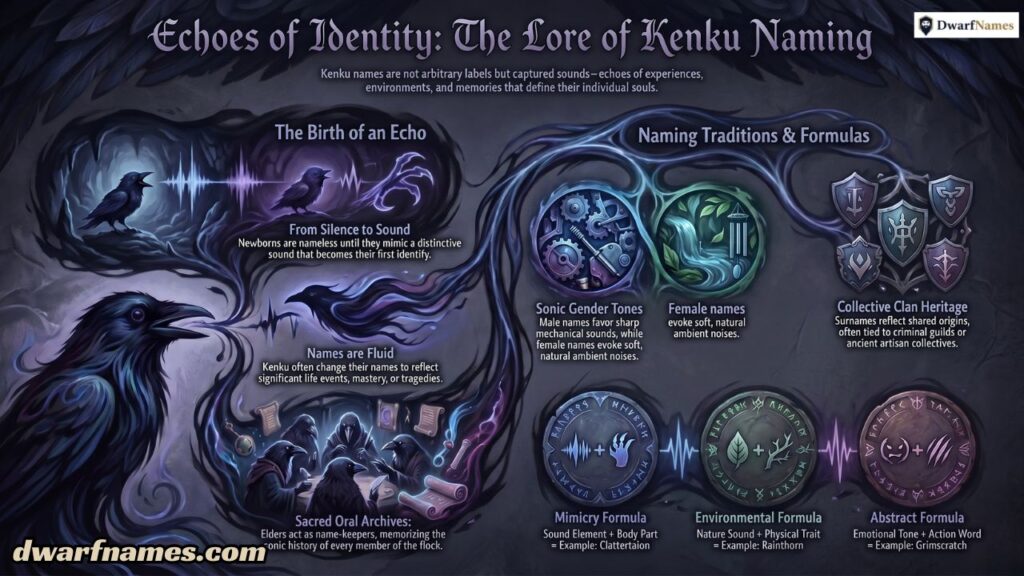
Kenku do not receive names at birth in the way humans or elves do. A newborn Kenku is simply known by generic calls until they begin to develop their own sonic identity. The first distinctive sound a young Kenku reliably reproduces becomes the seed of their name. A fledgling who consistently mimics the sound of a market bell might become “Belltone.” One who recreates the creak of a certain tavern door could be “Grimhinge.”
Names are fluid and can shift across a lifetime. A Kenku who undergoes a significant transformation, surviving a war, losing a mentor, achieving mastery in a craft, may take on a new name that reflects their evolved identity. Old names are not abandoned but archived, referenced in story and song as the “first voice” of a person.
Within communities, Kenku elders serve as name-keepers, memorizing the sonic history of every member. These oral archives are considered sacred, and a name-keeper who dies without passing on their knowledge is mourned as a catastrophic loss.
Kenku names also carry occupational weight. Guild affiliation, criminal specialty, or artistic mastery can shift a name slightly. A thief named “Clatter” who becomes a fence might be called “Silverclatter” by their peers, the addition of a prefix signaling their elevated status.
Much like how Arabic names often carry embedded meaning tied to virtues, nature, or ancestry, Kenku names encode biography and social standing in their very syllables.
Clan Names and Kenku Surnames
While individual Kenku names reflect personal sonic identity, clan names represent collective memory and shared origin. Kenku clans form around criminal guilds, artisan collectives, or the remnants of ancient flocks, and their surnames carry that heritage.
These compound clan names blend imagery from the natural world with the themes of silence, craft, and shadow that define Kenku culture.
- Ashcrowden
- Blackfeather Hall
- Bone Silence
- Clattermere
- Crimsonveil
- Darktide Flock
- Dreadwing Circle
- Driftstone
- Duskcaller
- Dustwing
- Ebonroost
- Echoburn
- Fallenfeather
- Gloomcroft
- Gravecalling
- Grimroost
- Hollowbeak Guild
- Ironscream Lodge
- Lostvoice
- Mirrorwing
- Mournsong
- Nightfeather
- Obsidian Claw
- Plaguecall
- Quiet Flock
- Ravenscrawl
- Rimcrow
- Shadowveil
- Shatterwing
- Silentbeak
- Siltfeather
- Skullcalling
- Slateborne
- Smokefeather
- Sorrowcall
- Stormbeak
- Taloncrest
- Thornbeak
- Voidcalling
- Warscream Clan
- Wren Hall
- Ashwing Collective
- Bonering
- Cawstone
- Darksound
- Driftveil
- Embercall
- Ghostfeather
- Grimflock
- Nightthorn
Kenku Naming Generator Ideas
If you want to create your own Kenku names on the fly, understanding the building blocks makes the process intuitive. Kenku names almost always follow one of these patterns and mixing elements from each column creates names that feel authentically avian and appropriately eerie.
Sound Element + Body Part: Clattertalon, Screechbeak, Whisperclaw, Crinklefeather
Environmental Sound + Physical Trait: Rainthorn, Dustwing, Ashbeak, Mudclaw
Emotional Tone + Action Word: Grimscratch, Sorrowpeck, Bleakcall, Silentscrape
Color or Material + Avian Feature: Ironwing, Coalfeather, Silverclaw, Ebonbeak
Abstract Concept + Physical Descriptor: Voidthorn, Echobone, Gloomtalon, Silencemark
These naming formulas are not rigid rules but creative springboards. The best Kenku names feel discovered rather than constructed, as if the sound simply insisted on attaching itself to the creature who carries it. You might draw similar inspiration from the structured elegance of Greek names, which carry meaning, mythology, and resonance in each syllable.
Conclusion
A Kenku without a name is just a bird in a cloak. A Kenku with the right name is a story waiting to be told. Every name in this guide is a doorway into a character, a glimpse of a life built in silence, shaped by sound, and defined by loss and resilience in equal measure.
Whether you are choosing a name for your next rogue build, populating a dark fantasy city with fascinating NPCs, or crafting a novel set in a world where corvid scholars haunt moonlit libraries, the name you choose will echo through every scene that follows.
Kenku names remind us that identity is not always given. Sometimes it is earned, stolen, discovered, or simply heard in the right moment and never forgotten. In a game defined by imagination, that is the most powerful kind of name there is.
Use these names freely. Let them breathe. Let them carry weight. And if you find yourself building a whole world, remember that great characters start with great names.
Frequently Asked Questions
What are Kenku names based on in DnD?
Kenku names are typically inspired by sounds the Kenku mimics, like ambient noises, battle sounds, or voices they heard during formative experiences in their lives.
Can Kenku have traditional fantasy names?
Yes, especially in homebrew settings. While lore suggests sound-based names, players often choose phonetically avian names that feel fitting for a bird-like race.
How do you pronounce Kenku names?
Most Kenku names use short, clipped sounds with hard consonants. Pronounce them quickly and sharply, as if imitating a crow’s call or a sudden mechanical noise.
Are Kenku names gendered in DnD lore?
Officially, Kenku names are not gendered. The sounds they mimic have no inherent gender, though players often assign names with softer or harsher tones to reflect character personality.
What makes a good Kenku name for a rogue?
A good Kenku rogue name should feel sharp, fast, and slightly unsettling, like Clatter, Snatch, or Silentblade, names that imply speed, deception, and urban survival.
How many Kenku are in a typical flock or clan?
Kenku clans in most DnD settings range from small groups of five to twenty, operating as tight-knit guilds where names and histories are shared and preserved by elders.
Can Kenku names change over time?
Yes. Kenku naming traditions allow for name evolution when a character undergoes significant change. New experiences, traumas, or achievements can inspire a new or modified name.