
The ancient sands of Egypt have always whispered secrets to those willing to listen. Among those secrets are names so powerful, so loaded with cosmic meaning, that priests would carve them into stone, warriors would cry them in battle, and pharaohs would wear them like divine armor. Egyptian god names are not mere labels. They are identities forged from the raw forces of the universe: the blazing sun, the flooding Nile, the shadow-world of the dead, and the chaos that existed before creation itself.
For writers, game masters, and worldbuilders, tapping into this mythological wellspring is unlike reaching for any other naming tradition. Egyptian divine names carry a weight that feels ancient, otherworldly, and deeply resonant. They blend hard consonants with flowing vowels in ways that feel both foreign and hypnotically familiar. A character named Khentkaus or Sobkeneferu does not simply exist in a story. They arrive like a force of nature.
Whether you are crafting a fantasy novel set in a desert empire, building a deity pantheon for your tabletop RPG campaign, or searching for a unique Egyptian-inspired name for a game character, this guide is your complete reference. Below you will find over 200 Egyptian god names, organized by theme and type, alongside worldbuilding lore, cultural context, and naming inspiration to spark your creativity.
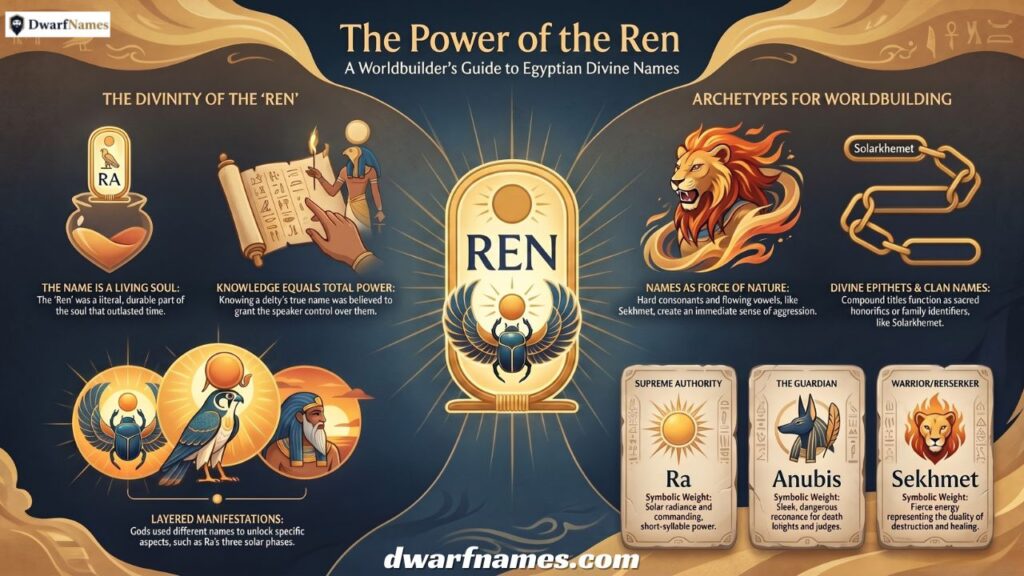
Names are never just words. In Egyptian theology, a name was a living part of the soul itself, called the Ren. To know someone’s true name was to hold power over them. To erase a name from history was to destroy a person’s very existence. That philosophy alone tells you everything about why Egyptian names make such extraordinary fantasy material.
Famous Egyptian God Names From Literature and Games
Before diving into the full list, it helps to look at how iconic Egyptian divine names have already made their mark on fantasy culture. These examples show how names reflect character, destiny, and symbolic weight.
Ra stands as perhaps the most recognized name in all of Egyptian mythology. The sun god, the eye that watches the world from above, Ra’s name is short, sharp, and utterly commanding. In fantasy games and fiction, characters named Ra or Ra-derived names tend to be figures of supreme authority, blazing power, and solar radiance. The brevity of the name makes it unforgettable.
Anubis has enjoyed a lasting presence in modern fantasy and games, from action-adventure titles to urban fantasy novels. The jackal-headed guardian of the dead carries a name that sounds sleek and slightly dangerous, with a soft opening syllable that transitions into a resonant hiss. Writers often use Anubis-inspired names for death knights, soul reapers, and underworld judges in their fiction.
Sekhmet, the lioness goddess of war and healing, is a name that crackles with fierce energy. The hard “k” and the sharp “t” ending make it feel aggressive, perfect for warrior characters and berserker archetypes. Sekhmet has appeared in countless fantasy games, often representing the duality of destruction and protection that makes for compelling character complexity.
Thoth, the ibis-headed god of wisdom and writing, lends his name to scholarly archetypes across fantasy media. Short and resonant, Thoth has inspired names for wizard characters, lore-keepers, and divine scribes in everything from tabletop RPGs to epic fantasy novels. If you enjoy naming traditions rooted in ancient wisdom, you might also find inspiration in Celtic names, which share a similarly layered mythological heritage.
Male Egyptian God Names
Male Egyptian divine names often carry associations with power, cosmic order, creation, and the forces of nature. These names tend to blend regal authority with mystical depth.
- Amun
- Ra
- Osiris
- Horus
- Thoth
- Ptah
- Seth
- Sobek
- Khnum
- Montu
- Atum
- Shu
- Geb
- Nefertem
- Khons
- Min
- Anhur
- Wepwawet
- Bes
- Hapy
- Ihy
- Onuris
- Tatenen
- Meritum
- Neferkara
- Sepa
- Khepri
- Rahotep
- Amenhotep
- Userhat
- Nebhepet
- Menkauhor
- Djedhor
- Khakare
- Usermaatre
- Nebkaure
- Semenkhkare
- Raemka
- Amenmes
- Amenhotpe
- Sethos
- Meryptah
- Khaefre
- Nebwenenef
- Menkheperre
- Rahotpe
- Khnumhotep
- Amenemhat
- Sobekhotep
- Wahankh
Female Egyptian God Names
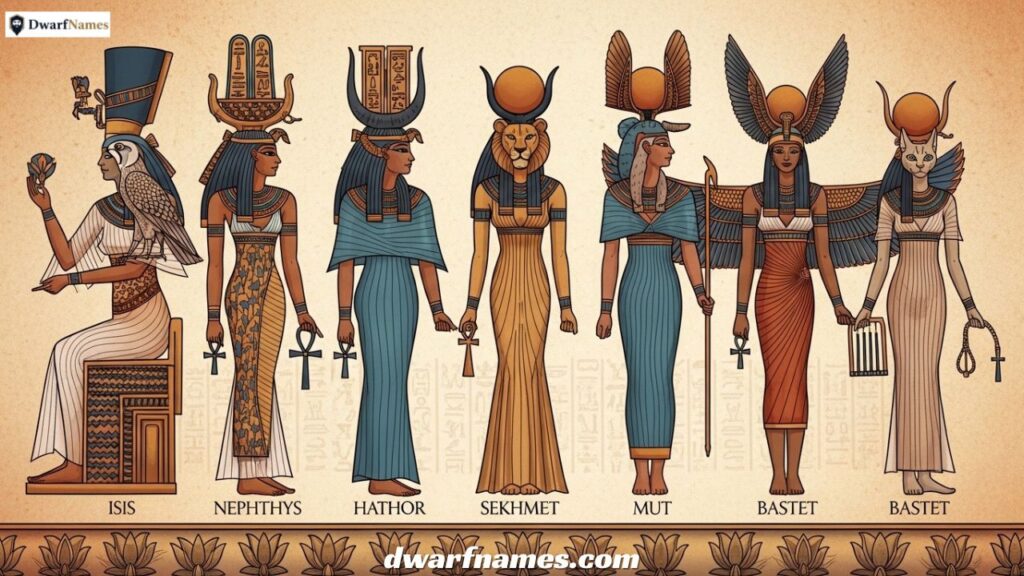
The goddesses of ancient Egypt were forces unto themselves: creators, destroyers, healers, and judges. Female Egyptian god names often have a lyrical, flowing quality that conceals immense inner strength.
- Isis
- Hathor
- Sekhmet
- Nephthys
- Nut
- Bastet
- Neith
- Seshat
- Maat
- Selket
- Renenutet
- Wadjet
- Nekhbet
- Mut
- Taweret
- Heqet
- Tefnut
- Meretseger
- Menhet
- Qadesh
- Pakhet
- Raet
- Nefertem
- Amunet
- Iusaaset
- Nebethetepet
- Meresankh
- Nefertari
- Ankhesenamun
- Sitamun
- Kiya
- Neferneferuaten
- Tiaa
- Nebettawy
- Henuttawy
- Merytaten
- Ahset
- Satiah
- Sitkamose
- Mutnofret
- Nebwenet
- Henutsen
- Khentkaus
- Sobkeneferu
- Neithotep
- Tiye
- Meritaten
- Khenemet
- Nubkhas
- Reniseb
Cool and Unique Egyptian God Names
These names sit at the intersection of the unusual and the unforgettable. They come from minor deities, obscure cosmic forces, and lesser-known divine figures that rarely appear in mainstream retellings, making them perfect for original fantasy characters.
- Khepri
- Naunet
- Hauhet
- Kauket
- Amaunet
- Tatenen
- Tenenet
- Banebdjedet
- Kherty
- Kebehwet
- Nemty
- Shesmu
- Heryshaf
- Meskhenet
- Shai
- Renpet
- Khonsu
- Inenek
- Tutu
- Menhit
- Wosret
- Imentet
- Nefertum
- Heka
- Sia
- Hu
- Werethekau
- Nefertum
- Iabet
- Kheperkare
- Ranetjeru
- Duamutef
- Imsety
- Qebehsenuef
- Hapi
- Sobkeneferu
- Nebhepetre
- Userkaf
- Mentuhotep
- Seankhibre
Warrior and Badass Egyptian God Names
These names belong to the fierce, the relentless, and the divine combatants of the Egyptian cosmos. Perfect for battle mages, war gods, and legendary champions in any fantasy setting.
- Montu
- Sekhmet
- Maahes
- Anhur
- Horus
- Seth
- Onuris
- Pakhet
- Neit
- Sobek
- Wepwawet
- Khenty-irty
- Menkheperre
- Rahotpe
- Kha
- Dedun
- Menthu
- Amenhotep
- Djedkare
- Usertesen
- Raemkes
- Sethnakht
- Merneptah
- Kamose
- Ahmose
- Thutmose
- Ramesses
- Seti
- Horemheb
- Tutankhamun
Royal and Noble Egyptian God Names
These names carry the weight of divine kingship, celestial courts, and the sacred bloodlines of the gods themselves. Use them for rulers, high priests, divine heirs, and noble characters in your fantasy world.
- Amenhotep
- Thutmose
- Ramesses
- Nefertari
- Meritaten
- Ankhesenamun
- Khaemwase
- Nebhepetre
- Smendes
- Pinedjem
- Amenemopet
- Psusennes
- Taharqa
- Shabaka
- Aspelta
- Senkamanisken
- Anlamani
- Harsiyotef
- Nastasen
- Arkamani
- Amanishakheto
- Amanitore
- Natakamani
- Teqorideamani
- Shorkaror
- Tantamani
- Irdike
- Malonaqen
- Karkamani
- Amenirdis
Traditional and Classic Egyptian God Names
If you want names that feel immediately recognizable as Egyptian divine in origin, these classics carry that iconic mythological energy that most readers and players will respond to instinctively.
- Ra
- Osiris
- Isis
- Horus
- Seth
- Thoth
- Anubis
- Bastet
- Hathor
- Nephthys
- Nut
- Geb
- Shu
- Tefnut
- Amun
- Ptah
- Sobek
- Sekhmet
- Neith
- Maat
- Khnum
- Nefertem
- Hapy
- Khons
- Bes
- Taweret
- Wadjet
- Nekhbet
- Min
- Seshat
The Lore of Egyptian Divine Naming
In the great temples of Karnak and Luxor, names were more than identity. They were cosmic contracts. Every god in the Egyptian pantheon carried multiple names, each one unlocking a different aspect of their divine nature. Ra was also called Khepri at dawn, Ra at midday, and Atum at sunset. Three names, three manifestations, one eternal being.
This concept of the layered name is extraordinary fuel for fantasy worldbuilding. Imagine a deity in your world whose war name, healing name, and true name are three entirely different words, each one granting the speaker a different kind of power or access. A character who discovers a god’s true name holds a key that can reshape reality itself.
Egyptian naming traditions also wove occupation and divine patronage directly into names. A child born under the protection of Ra might be named Rahotep, meaning “Ra is satisfied,” while a warrior blessed by Montu might carry a name evoking the fierce desert heat of the war god’s domain. If you enjoy how cultural depth shapes naming traditions, exploring Turkish names is another fascinating study in how history, religion, and identity fuse into a single word.
Clan identity was expressed through epithets and divine associations rather than family surnames in the modern sense. A noble family might describe itself as “those who walk under the wing of Horus” or “the children of the Sacred Eye,” and those epithets would eventually crystallize into naming traditions passed down through generations.
Priests occupied a particularly special naming position. A high priest of Amun would sometimes receive an additional sacred name upon initiation, one spoken only within temple walls and never written in a form the uninitiated could read. This tradition of the hidden sacred name remains one of the most intriguing aspects of Egyptian religious culture, and one with enormous potential in fantasy storytelling.
Egyptian God Clan Names and Divine Epithets
One of the most powerful tools a worldbuilder can use is the compound name or divine epithet. These function like clan identifiers, battle titles, and sacred honorifics. Here are 50 compound Egyptian-inspired clan names and epithets for your fantasy world.
- Solarkhemet
- Stonethrone
- Sandwalker
- Flamecrown
- Riverveil
- Desertborn
- Starwarden
- Goldscale
- Nighteye
- Dawnblade
- Ironscribe
- Shadowjaw
- Copperfang
- Silentserpent
- Blazingclaw
- Dustmantle
- Anchorstone
- Voidpillar
- Suncleaver
- Blackfeather
- Siltkeeper
- Emberthorn
- Hieroglyphseal
- Jackalbrand
- Lotusward
- Papyrusvein
- Kemetborn
- Obeliskhand
- Starmap
- Sphinxcrown
- Riverdawn
- Khemitscale
- Goldtide
- Nethermaw
- Tombwarden
- Firesand
- Celestialeye
- Scorpionmark
- Ironseal
- Ambertruth
- Dustpillar
- Moonscribe
- Ravenmantle
- Cobrathorn
- Falconwind
- Riftjaw
- Stonedawn
- Vaultkeeper
- Solarmark
- Necrobloom
Why Egyptian God Names Belong in Your Fantasy World
The naming traditions of ancient Egypt represent one of the richest veins of inspiration available to fantasy creators. These names are not merely exotic words borrowed for aesthetic flavor. They are the products of a civilization that understood names as living forces, as sacred architecture, as bridges between the mortal world and the divine cosmos above.
A fantasy deity named Kauket carries the immediate weight of Egyptian primordial darkness. A warrior named Montuhotep walks into any scene already trailing the shadow of divine war. A noble bearing the epithet Solarkhemet commands attention before a single line of dialogue is spoken.
Beyond individual characters, Egyptian divine names can shape the entire texture of a fictional culture. A kingdom whose royal family traces its lineage to the sun, where every ruler carries a Ra-derived name, tells its history through naming alone. A desert empire whose warrior clans bear scorpion epithets communicates volumes about its values and its relationship with the harsh world it inhabits.
For those building living fantasy worlds with animal companions or natural elements alongside the divine, considering names across different cultural traditions enriches the tapestry further. Whether you are naming the sacred horses of a sun god’s celestial chariot or the sacred lands of a divine farm dedicated to the harvest goddess Renenutet, every name you choose is a brushstroke in your world’s mythology.
Names define identity, signal destiny, and bind characters to the forces greater than themselves. In Egyptian theological tradition, the name was the soul’s most durable artifact, outlasting the body, outlasting memory, outlasting time itself. Give your characters that same immortality. Name them well.
Frequently Asked Questions
What are Egyptian god names commonly used for in fantasy writing?
Egyptian god names inspire deity characters, warrior titles, and royal lineages, giving fantasy worlds an air of ancient, mythological authenticity.
Are Egyptian god names good for RPG characters?
Yes, Egyptian god names work brilliantly for RPG characters, offering unique sounds, deep symbolic meaning, and an exotic feel that stands out.
What makes Egyptian god names different from other fantasy name traditions?
Egyptian names blend cosmic symbolism, divine roles, and layered meanings, making each name feel like a piece of living mythology rather than a simple label.
Can I use Egyptian god names for female fantasy characters?
Absolutely. Egyptian goddess names like Sekhmet, Bastet, and Isis are powerful, distinctive, and perfect for strong female fantasy characters of all archetypes.
How do Egyptian naming traditions inspire worldbuilding?
Egyptian naming traditions link identity to divine protection, occupation, and cosmic role, giving worldbuilders a rich framework for creating culturally deep fictional societies.
What are some cool unique Egyptian god names for games?
Names like Khepri, Naunet, Tutu, Heka, and Banebdjedet are lesser-known but deeply compelling choices for unique game character names.
Do Egyptian god names work for villain characters?
Yes, names like Seth, Apophis, Shesmu, and Kherty carry sinister or destructive associations that make them natural fits for compelling fantasy villains.