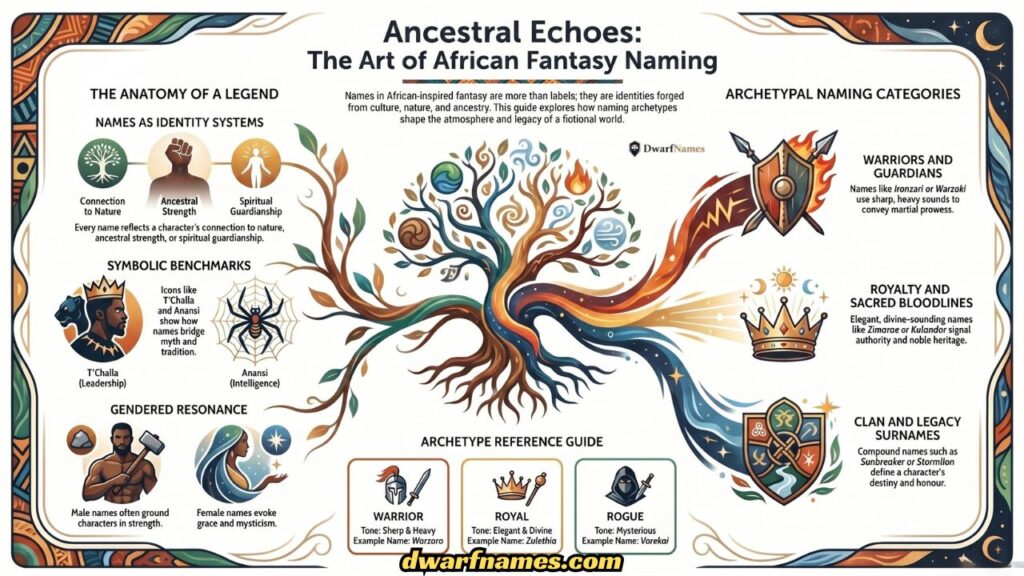

Across the vast and ancient continent of Africa, names are never merely labels. They are living relics — vessels carrying the weight of ancestry, the breath of spirits, the echo of storms that shook the savanna long before written record. A child named in an African village is not just identified; they are situated — placed within a lineage, a season, a cosmic story that stretches back to the first fires. In fantasy worldbuilding, RPG campaigns, and speculative fiction, few naming traditions rival the raw power and mythic depth of African names.
If you are a writer building a continent of dark towers and golden empires, a dungeon master shaping a world where gods walk among mortals, or simply someone searching for a name that carries genuine weight — African names offer something extraordinary. They sound like poetry. They carry meaning with economy. A single name like Chukwuemeka tells you that a god has done something great. A name like Zuberi announces that this person is powerful before a single action is taken. That is the magic of the African naming tradition: the name is already a story.
This article is your complete guide to African names — their sounds, their meanings, their cultural roots, and their immense potential in creative worlds. Whether you seek names for noble warriors, mystical seers, desert queens, or ancient sorcerers, you will find them here. We have gathered, organized, and breathed fantasy life into over 400 of the most resonant African names across dozens of linguistic traditions — Swahili, Yoruba, Igbo, Zulu, Hausa, Amharic, Akan, Shona, Wolof, and beyond.
Famous African Names From Literature and Games
Before diving into the vast name lists, it helps to see how African names function in the stories we already know and love — how a name can carry a character’s entire arc within its syllables.
Simba — The Lion King’s protagonist carries a name meaning lion in Swahili. Simple, primal, and perfectly matched to his destiny. The name doesn’t whisper his future; it roars it. In fantasy terms, Simba represents the archetype of the exiled heir — a name so fitting it feels like prophecy.
Nala — Also from the Lion King universe, Nala means successful or beloved in several African linguistic traditions. She is competent, fierce, and unbroken. Her name announces resilience before she speaks a word. For writers crafting strong female characters, Nala stands as a master class in name-as-identity.
Anansi — The spider trickster deity from Akan (Ghanaian) mythology, celebrated across the African diaspora and immortalized in Neil Gaiman’s American Gods. Anansi is cunning, ancient, and morally complex — a god of stories who proves that knowledge is the ultimate weapon. His name has become synonymous with wit and narrative power in fantasy circles.
Shaka — The legendary Zulu king and military genius, whose name has appeared in countless fantasy and historical fiction works as the archetype of the warrior-king. Strategic, visionary, and devastating in battle, Shaka represents the fantasy ideal of the born commander. If you want a character who reshapes the world through iron and will, Shaka is the template.
These names remind us that the African naming tradition has always produced characters larger than life — individuals whose identities were forged in the same fire as legends. The same power is available to every writer, gamer, and worldbuilder willing to explore it.
If your worldbuilding ventures beyond African names into other mythic traditions, you might find inspiration in DnD elf names for otherworldly resonance, or explore DnD dwarf names for a contrasting rugged, ancient sound.
Male African Names — Classic and Timeless
These are the foundational masculine names drawn from across the continent’s richest naming traditions. Each carries deep meaning, strong phonetics, and centuries of cultural resonance.
- Abara — One who overcomes; Igbo
- Adaeze — King’s daughter; also used as a masculine honorific in some dialects
- Adisa — One who is clear; Yoruba
- Adofo — Warrior; Akan
- Akachi — God’s hand; Igbo
- Akosua — Born on Sunday; Akan (also male in certain traditions)
- Amachi — Who knows what God has brought; Igbo
- Amara — Grace, eternal; Igbo/Hausa
- Amos — Carried by God; widespread across Eastern Africa
- Araba — One born on Tuesday; Akan
- Asante — Thank you, one who is blessed; Swahili/Akan
- Ayodele — Joy has come home; Yoruba
- Azikiwe — Full of vigor; Igbo
- Babatunde — Father has returned; Yoruba
- Baraka — Blessing; Swahili
- Bolade — Honor arrives with wealth; Yoruba
- Chidi — God exists; Igbo
- Chike — God’s power; Igbo
- Chisom — God accompanies me; Igbo
- Danjuma — Born on Friday; Hausa
- Diallo — Bold; Fulani
- Dingane — One who is in need; Zulu
- Dumisani — Praise; Ndebele/Zulu
- Emeka — Great deeds; Igbo
- Enoch — Dedicated; widespread
- Femi — Love me; Yoruba
- Gabra — Offering; Ethiopian/Amharic
- Hadebe — Name of ancestral clan; Zulu
- Idowu — Born after twins; Yoruba
- Jabari — Brave, fearless; Swahili
- Jabulani — Be happy; Zulu
- Kafele — Worth dying for; Malawian
- Kamau — Quiet warrior; Kikuyu
- Kelechi — Thank God; Igbo
- Kofi — Born on Friday; Akan
- Kwame — Born on Saturday; Akan
- Lethiwe — Given; Zulu
- Makena — Happy one; Kikuyu
- Mandla — Strength; Zulu
- Musa — Prophet; widespread across North and West Africa
- Nnamdi — My father lives; Igbo
- Obinna — Father’s heart; Igbo
- Odion — First of twins; Benin
- Olumide — God has arrived; Yoruba
- Osei — Noble; Akan
- Segun — Victory; Yoruba
- Sipho — Gift; Zulu
- Tafadzwa — We are pleased; Shona
- Tariq — Morning star; North African/Arabic influence
- Tendai — Be thankful; Shona
- Tunde — Returns; Yoruba
- Uche — Thought, mind; Igbo
- Wole — Enter the house of wealth; Yoruba
- Yaw — Born on Thursday; Akan
- Zuberi — Strong; Swahili
Female African Names — Graceful and Powerful
African female names carry immense variety — from names that celebrate a child’s beauty and brightness, to names that announce warrior spirits and divine favor.
- Abena — Born on Tuesday; Akan
- Adaeze — King’s daughter; Igbo
- Adaora — Daughter of all; Igbo
- Adiaha — First daughter; Ibibio
- Afua — Born on Friday; Akan
- Aisha — She who lives; widespread across Africa
- Akello — I have followed; Acholi (Uganda)
- Akosua — Born on Sunday; Akan
- Amaka — So good; Igbo
- Aminata — Trustworthy; Fulani/Mande
- Amira — Princess; widespread North Africa
- Asiya — One who tends to the weak; Swahili
- Ayasha — Life; Hausa
- Binta — With God; Fulani
- Bolanle — Find wealth at home; Yoruba
- Chiamaka — God is beautiful; Igbo
- Chidera — God has written it; Igbo
- Chisom — God follows me; Igbo
- Dalila — Gentle; Swahili
- Eku — Born on Wednesday; Akan
- Fatima — One who weans; widespread North Africa
- Funmilayo — Give me joy; Yoruba
- Hawa — Longing; Swahili/East Africa
- Imani — Faith; Swahili
- Iyanuoluwa — The miracle of God; Yoruba
- Jamilah — Beautiful; North and East Africa
- Jumoke — Everyone loves the child; Yoruba
- Kemi — To care for, pamper; Yoruba
- Kefilwe — I have been given; Tswana
- Lewa — Beautiful; Swahili
- Lumusi — Born face down; Ewe
- Makena — Happy one; Kikuyu
- Malaika — Angel; Swahili
- Moraa — Born during dry season; Kisii
- Nadia — Tender, delicate; North Africa
- Ngozi — Blessing; Igbo
- Niara — Of high purpose; Swahili
- Nkechi — God’s own; Igbo
- Nkiruka — What is ahead is greater; Igbo
- Nomvula — Mother of rain; Zulu
- Nozipho — Mother of gifts; Zulu
- Ode — Born along the road; Benin
- Oluwaseun — Thank the Lord; Yoruba
- Omolade — Child has wealth; Yoruba
- Rashida — Rightly guided; North Africa
- Sade — Crown brings honor; Yoruba
- Sanaa — Beautiful work, art; Swahili
- Seun — Do the right thing; Yoruba
- Taiwo — First to taste the world (twin); Yoruba
- Thandiwe — Beloved; Zulu/Ndebele
- Titilayo — Happiness is eternal; Yoruba
- Wanjiru — Associated with the fig tree; Kikuyu
- Yetunde — Mother has returned; Yoruba
- Zawadi — Gift; Swahili
- Zola — Quiet, tranquil; Zulu
- Zuri — Beautiful; Swahili
Cool and Unique African Names for Fantasy Characters
These names carry an otherworldly edge — phonetically striking, rare in common usage, and ideal for fantasy characters who stand apart from the crowd. Think ancient sorcerers, shadow-walkers, prophets, and wandering oracles.
- Abiodun — Born during a festival; Yoruba
- Abosede — Born on a Sunday of plenty; Yoruba
- Adaobiagu — Daughter of Agu the warrior; Igbo
- Afamefuna — My name shall not be lost; Igbo
- Akintunde — The brave one has returned; Yoruba
- Akunna — Father’s wealth; Igbo
- Andile — They have increased; Zulu
- Asantewaa — Warrior queen; Akan
- Ayodejí — Joy doubled; Yoruba
- Azubuike — The past is my strength; Igbo
- Babajide — Father wakes up; Yoruba
- Balogun — Warlord; Yoruba
- Chukwuebuka — God is great; Igbo
- Damola — Mix with wealth; Yoruba
- Dzodzinam — Stay with me; Ewe
- Ekundayo — Sorrow has turned to joy; Yoruba
- Emefiele — Worthy of honor; Igbo
- Enyinnaya — Father’s friend; Igbo
- Ewurabena — Born on Tuesday, pure; Akan
- Fatoumata — Variant of Fatima; Fulani
- Folashade — Honor walks with a crown; Yoruba
- Gbenga — Lift up with wealth; Yoruba
- Ibironke — The family consoles me; Yoruba
- Ifeanacho — What love seeks; Igbo
- Iheanacho — What the eagle brings; Igbo
- Ikenna — Father’s power; Igbo
- Izuchukwu — God’s thoughts; Igbo
- Kehinde — Second of twins to arrive; Yoruba
- Lihlithemba — They are our hope; Zulu
- Mawuli — God exists; Ewe
- Nwachukwu — Child of God; Igbo
- Obiageli — One who has come to enjoy wealth; Igbo
- Ochuko — God’s own; Urhobo
- Odunayo — The year brings joy; Yoruba
- Oghenerukewe — God is great; Urhobo
- Olawunmi — Wealth is mine to enjoy; Yoruba
- Oluwafunmilayo — God gives me joy; Yoruba
- Omowunmi — I desire a child; Yoruba
- Oreofeoluwa — God’s wish; Yoruba
- Orjiakor — One who fights for justice; Igbo
- Osasumwen — God’s love never ends; Benin
- Otitodilichukwu — Only God deserves praise; Igbo
- Ozoemena — May this not repeat; Igbo
- Tobiloba — To God belongs the crown; Yoruba
- Uchechukwu — God’s thought; Igbo
- Uloma — Beautiful home; Igbo
- Uzoamaka — The road is beautiful; Igbo
- Wuraola — Gold and honor; Yoruba
- Xolisile — They have been forgiven; Ndebele
- Yewande — Mother has returned to us; Yoruba
Warrior and Badass African Names
In the forge of African storytelling, the warrior has always held a sacred place. These names were given to those expected to stand between their people and destruction. If your character carries a blade or commands armies, these names announce them before they arrive.
- Adesola — The crown dignifies; Yoruba
- Afolabi — Born in wealth; Yoruba
- Agbor — Warrior spirit; Benin
- Agu — Leopard, fierce warrior; Igbo
- Ajayi — Born face down, warrior; Yoruba
- Akhigbe — Stronger than enemies; Benin
- Akintola — Bravery is sufficient; Yoruba
- Aregbesola — The crown fights for the home; Yoruba
- Balewa — By the flat rocks; Hausa (warrior lineage)
- Cetshwayo — He who harasses; Zulu warrior king
- Chukwunonso — God is near; Igbo (protector energy)
- Damilola — God enriches me; Yoruba
- Dingiswayo — Troubled; Zulu warrior chief
- Duku — Warrior who crushes; Akan
- Egwuonwu — Feared even by death; Igbo
- Ekwueme — Man of his word; Igbo
- Fadahunsi — Crown encounters difficulty; Yoruba (warrior resolve)
- Gowon — Rainmaker; Angas (warrior-king name)
- Hamisi — Born on Thursday; Swahili (warrior tradition)
- Ifeanyi — Nothing is impossible; Igbo
- Ijele — The great masquerade; Igbo
- Imhotep — He who comes in peace but is powerful; Ancient Egyptian
- Jaja — Honored; Ijaw warrior name
- Kamani — Man of the bow; Kikuyu
- Katungi — Rich, powerful; Kiganda
- Kgosi — Chief, king; Tswana
- Kimani — Sailor, explorer-warrior; Kikuyu
- Langa — Sun warrior; Zulu
- Latyr — Son of the spear; Serer
- Menelik — Son of the wise, warrior king; Ethiopic
- Mfalme — King, ruler of warriors; Swahili
- Mhlaba — Earth, one who stands firm; Zulu
- Mthokozisi — One who brings joy through strength; Zulu
- Mureithi — Herdsman-warrior; Kikuyu
- Mwamba — Strong as a rock; Swahili
- Ndeye — Mother of warriors; Wolof
- Ndidi — Patience — a warrior’s virtue; Igbo
- Nguni — People of the warrior lineage; Zulu
- Nkosi — Lion, king; Zulu
- Nkrumah — Ninth-born; Akan warrior tradition
- Obafemi — The king loves me; Yoruba
- Oduduwa — Father of the Yoruba nation; Yoruba
- Oghenerhoro — One destined for greatness; Urhobo
- Ojukwu — God’s sword; Igbo
- Okafor — One who creates; Igbo warrior tradition
- Okonkwo — Man of the wild; Igbo
- Osei Tutu — Warrior king of the Ashanti; Akan
- Shaka — The great reshaper; Zulu
- Sikhumbuzo — A reminder of power; Ndebele
- Thabit — Firm, resolute; North African
- Thamsanqa — Good fortune warrior; Zulu
- Tshaka — Variant of Shaka, the conqueror; Zulu
- Uthman — Baby bustard, strong; North Africa
- Vusi — Awakener of nations; Zulu
- Yohannes — God is gracious; Amharic (warrior saint tradition)
- Zwelakhe — Their nation; Zulu
Royal and Noble African Names
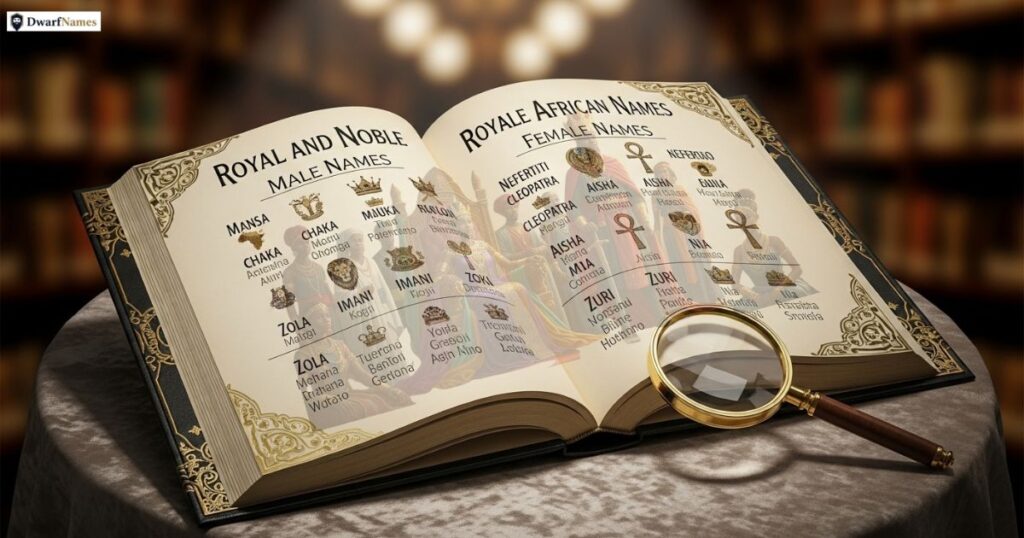
Royalty in African tradition is inseparable from spiritual authority. Kings and queens were intercessors between the physical and spirit worlds. These names carry that dual weight — the regal and the sacred combined.
- Abara Nri — Lord of the sacred earth; Igbo
- Abena Dufie — Tuesday-born queen; Akan
- Adaeze Nwankwo — Daughter of the king; Igbo
- Adesanya — The crown rewards suffering; Yoruba
- Adeyemi — The crown befits me; Yoruba
- Afi — Born on Friday, noble; Akan
- Akosua Asantewaa — Sunday-born queen warrior; Akan
- Amahle — Beautiful, royal; Zulu
- Amara Nwosu — Noble grace; Igbo
- Ase — Royal command; Yoruba
- Asiwaju — The one who leads from the front; Yoruba
- Atiku — Born prematurely but royal; Hausa
- Babatope — Father has become royalty; Yoruba
- Beatrice Kagueni — Blessed noble; Kikuyu
- Chibueze — God is king; Igbo
- Chibuikem — God is my strength; Igbo
- Damilare — Sit comfortably with wealth; Yoruba
- Eseoghene — God’s gift to royalty; Urhobo
- Fola — Honor, wealth; Yoruba
- Folake — Take honor and care for it; Yoruba
- Ifeoma — Good thing, good fortune; Igbo
- Iyoba — Queen mother; Benin
- Jelani — Mighty; Swahili
- Kabaka — King; Kiganda (Buganda royalty)
- Kadijatou — Noble daughter; Fulani
- Kama — Radiant; Kikuyu royal lineage
- Keitumetse — We are happy; Tswana noble
- Kemi Olunloyo — One who cares for the royal house; Yoruba
- Kirabo — A gift from God, royal; Kiganda
- Lerato — Love from a noble heart; Sotho
- Lineo — She is a gift; Sotho
- Maama — Mother of the realm; Kiganda
- Malaika — Angel of royalty; Swahili
- Mamadou — Praised king; Mande/Fulani
- Mansa — King of kings; Mande
- Masego — Blessed with rain and fortune; Tswana
- Matamba — Noble queen; Mbundu (Angola)
- Mbeki — Royal heir; Xhosa
- Modupe — I am grateful; Yoruba
- Mofokeng — Noble blood; Sotho
- Morwena — Royal lady; Tswana
- Mosidi — One who brings the royal message; Tswana
- Motlalepula — Born in the rain, blessed; Tswana
- Mwami — King, ruler; Kinyarwanda
- Nabirye — Mother of twins, royal; Kiganda
- Nagode — Royal thanks; Hausa
- Ndlela — The royal path; Zulu
- Nefertiti — The beautiful one has come; Ancient Egyptian
- Njemanze — Fearless king; Igbo
- Nkechi — God’s own precious one; Igbo
- Nnamdi Azikiwe — My father is alive; Igbo (statesman-king lineage)
- Oba — King, ruler; Yoruba
- Obafemi — The king loves me; Yoruba
- Oghenekaro — God’s royalty; Urhobo
- Olori — Queen consort; Yoruba
- Olumide — God has come in; Yoruba
- Oluwafunke — God gave me to care for; Yoruba
- Oriki — Royal praise name; Yoruba
- Ozoemena — May royalty continue; Igbo
Traditional and Classic African Names
These are the names that have endured through generations — the names carved on ancestral stools, whispered at initiation rites, and sung at harvest festivals. They are the bedrock of African naming culture.
- Abdi — Servant, devoted one; Somali/Swahili
- Abidemi — Born while father was away; Yoruba
- Abiodun — Born at the festival; Yoruba
- Abubakar — Noble father; Hausa
- Ade — Crown; Yoruba
- Adebayo — Crown meets joy; Yoruba
- Adeyinka — Surrounded by the crown; Yoruba
- Ago — A time of peace; Igbo
- Aka — Hand, divine touch; Igbo
- Akintunde — Bravery has returned; Yoruba
- Ali — Exalted, sublime; widespread
- Alinta — Fire; widespread
- Ama — Born on Saturday; Akan
- Amadi — Seemed destined to die but lived; Igbo
- Amara — Eternal grace; Igbo
- Ambe — Tomorrow; Tiv
- Amos — Borne by God; East Africa
- Anansi — Spider, wisdom weaver; Akan
- Asa — Falcon; Igbo/Yoruba
- Asante — Thank you, blessed; Akan
- Ato — Born after twins; Akan
- Ayo — Joy; Yoruba
- Aziz — Mighty, powerful; North Africa
- Baba — Father; widespread
- Bami — Born among royalty; Yoruba
- Chika — God is supreme; Igbo
- Chinwe — God owns; Igbo
- Dakarai — Happiness; Shona
- Dike — Power, warrior; Igbo
- Dipo — Returns with wealth; Yoruba
- Dumi — Inspire; Ndebele
- Ebo — Born on Tuesday; Fante
- Ede — Ede river spirit; Yoruba
- Efe — Wealth; Urhobo
- Eke — Born on Eke market day; Igbo
- Enitan — Person of story, legend; Yoruba
- Esu — Spirit messenger; Yoruba
- Ezi — Good; Igbo
- Fola — Honor; Yoruba
- Garba — Servant of God; Hausa
- Habib — Beloved; widespread North Africa
- Hakeem — Wise, judicious; Hausa/Yoruba
- Hana — Happiness, bliss; Amharic
- Hassan — Good, handsome; East/North Africa
- Ibrahim — Father of multitudes; widespread
- Ifunanya — Love; Igbo
- Ike — Power; Igbo
- Inyene — God’s gift; Ibibio
- Isa — God saves; widespread
- Isoke — A satisfying gift from God; Benin
- Issa — God is salvation; East Africa
- Jide — Hold this; Yoruba
- Kachi — God holds; Igbo
- Kalu — Born during harvest; Igbo
- Kani — Energy, power; Mande
- Kato — Second of twins; Kiganda
- Kaya — Home; Zulu
- Kojo — Born on Monday; Akan
- Kola — Honor; Yoruba
- Kwesi — Born on Sunday; Akan
- Ladi — Born on Sunday; Hausa
- Laila — Night; widespread North/East Africa
- Leke — Short form of Oluwaseun; Yoruba
- Lukman — The wise; North Africa
- Madu — People; Igbo
- Malachy — Messenger; widespread Africanized form
- Mele — Daughter of the sea; Swahili tradition
- Mirembe — Peace; Kiganda
- Modupe — I give thanks; Yoruba
- Moji — Short for Mojisola; Yoruba
- Mongo — Famous; widespread
- Mosi — Firstborn; Swahili
- Mwangi — One who moves fast; Kikuyu
- Nafula — Born during the rainy season; Luhya
- Nana — Mother; widespread
- Nene — Great mother; Benin
- Njeri — Daughter of warriors; Kikuyu
- Nneka — Mother is supreme; Igbo
- Noa — Movement; Tonga
- Nzinga — She who fights; Mbundu (after Queen Nzinga)
- Obiora — Community’s will; Igbo
- Obi — Heart; Igbo
- Ode — One who wanders; Benin
- Ofo — Staff, traditional symbol; Igbo
- Ogun — Spirit of iron; Yoruba
- Ojo — Born at a difficult time; Yoruba
- Okafor — Man from the forest; Igbo
- Olu — Lord; Yoruba
- Ora — Light; Igbo
- Ori — Personal spirit; Yoruba
- Osita — God has agreed; Igbo
- Oti — Born near the river; widespread
- Owo — Wealth; Yoruba
- Oya — River goddess, spirit; Yoruba
- Pita — Rock; widespread African Christian tradition
- Salim — Safe, at peace; East Africa
- Sama — Sky; Hausa
- Sango — Thunder god; Yoruba
- Sara — Princess; widespread
- Simi — Short for Simisola; Yoruba
- Sola — Short for wealth-prefixed names; Yoruba
- Timi — An honored person; Yoruba
- Titi — Short for eternal names; Yoruba
- Tobi — Short for Tobiloba — God owns the crown; Yoruba
- Uchenna — God’s will; Igbo
- Udo — Peace; Igbo
- Uju — Abundance; Igbo
- Ulunma — Beautiful daughter; Igbo
- Umaru — Life; Hausa
- Ure — My soul; Igbo
- Uti — Unity; Urhobo
- Uwa — World; Igbo
- Wale — Short for wealth-themed names; Yoruba
- Wema — Goodness; Swahili
- Yemi — Short for Oluyemi — God fulfills; Yoruba
- Yetty — Short for Yetunde; Yoruba
- Zara — Flower, radiance; widespread
- Zena — News, fame; Amharic
- Zimasa — Be content; Xhosa
- Zinhle — Beautiful; Zulu
African Naming Traditions — Worldbuilding Lore
One of the most remarkable aspects of African naming culture — and one of its greatest gifts to fantasy worldbuilding — is that names are functional. They are not decorative. They serve a purpose, carry information, and sometimes carry instructions.
Day Names (Akan Tradition) Among the Akan people of Ghana and Ivory Coast, every child receives a soul name based on the day of the week they were born. Kofi (Friday-born male), Akosua (Sunday-born female), Kwame (Saturday-born male) — these names instantly embed a person in the rhythm of the sacred week. In a fantasy world, imagine a culture where names announce not just identity but fate, tied to celestial cycles. A character born on the day of the Thunder Star would carry that resonance forever. For writers exploring DnD fairy names with elemental ties, this tradition offers rich parallel inspiration.
Circumstantial Names (Igbo Tradition) The Igbo of southeastern Nigeria frequently name children based on the circumstances of their birth or the spiritual environment at the time. Ogechukwu means “God’s time” — born when divine timing aligned. Ozoemena means “may this not happen again” — born after tragedy. Amadi means “seemed destined to die but survived.” These names carry entire narratives. A fantasy character named something equivalent to “Survived the Dark Winter” would carry an immediate backstory in their very name.
Praise Names and Oriki (Yoruba Tradition) In Yoruba culture, individuals, families, and even towns have oriki — praise poetry that functions as an extended name. A warrior’s oriki might run for twenty lines, listing deeds, spiritual qualities, and ancestral connections. In an RPG campaign, this tradition translates beautifully: give your most important NPCs an oriki, a short verse that describes their essence, recited when they enter a scene. It transforms a stat block into legend.
Reincarnation Names Several West African traditions hold that grandparents or ancestors reincarnate in grandchildren. A child might be named Babatunde (Father has returned) or Yetunde (Mother has returned) to announce which ancestor has been reborn. In a fantasy world with literal ancestor spirits, this naming system becomes profoundly powerful — imagine characters who bear the names of fallen heroes, expected to carry their predecessor’s destiny. This is the stuff of epic fantasy.
Death-Prevention Names Some African cultures practiced deliberate ugly naming to protect children. If many children in a family had died, the next child might be named Ojo (difficult birth), Amadi (seemed destined to die), or even deliberately unflattering names to confuse malevolent spirits into overlooking the child. This tradition offers extraordinary fantasy potential — a character who was named to deceive fate itself, whose true name is hidden, whose ugly public name is a shield against dark powers.
African Clan Names and Compound Fantasy Surnames
Just as devil names in dark fantasy draw on ancient words for power and fear, African clan and compound names pack enormous narrative power into single words. These are ideal for fantasy surnames, clan identifiers, battle names, and legendary epithets.
- Abimbola — Born into wealth
- Adebimpe — Crown has joined me
- Adedayo — Crown becomes joy
- Adeleke — Crown achieves success
- Adewale — Crown returns to wealth
- Adeyoola — Crown brings honor
- Agbayewa — A warrior earns the old one’s respect
- Ajiboye — The brave one awakens happiness
- Ajibola — The brave one restores honor
- Akindele — Bravery fills the home
- Akinwale — Bravery returns
- Akinwande — Bravery comes to meet us
- Akinwumi — Bravery sustains me
- Amusan — One who avoids strife
- Asantewaa — She who fights for the nation
- Babafemi — The father loves me
- Babatope — Father has become royalty
- Chukwuebuka — God is great above all
- Chukwuemeka — God has done great things
- Chukwunwike — God has power
- Chukwuzurum — God fills my soul
- Damilare — To rest in wealth
- Damilola — God enriches me
- Egberongbe — Iron never rusts — eternal warrior
- Egunjobi — The masquerade is born with wealth
- Emecheta — The voice of labor carries forth
- Ewurabena — Pure Tuesday-born daughter
- Folashade — Honor walks with a crown
- Ihejirika — The chi comes with strength
- Ikechukwu — God’s strength
- Iroanusi — Iron knows when to strike
- Iwuamadi — One who speaks without deception
- Jegede — One whose fame is widespread
- Kolawole — Bring honor home
- Makanjuola — Do not shame wealth
- Nguyenhuong — Name carries on through the clan; widespread
- Nwankwo — Child of the wild
- Nwaokoye — Child of the eagle warrior
- Ogundare — Ogun — the iron god — dares all
- Ogundimu — The iron god cares for me
- Ogungbile — The iron god saves life
- Ogunshola — The iron god restores honor
- Oguntunde — The iron god returns
- Ogunyemi — The iron god fulfills my destiny
- Okonkwo — Man of the wild — unyielding
- Olanrewaju — Wealth moves forward
- Omotosho — Child is worthy of respect
- Onwumere — Death thinks nothing of boldness
- Oyewole — Honor enters the house
- Rotimioluwa — God’s time is perfect
- Sodipo — The house of knowledge stands
- Soyinka — The forest surrounds the house
- Taiwo — Tastes the world first
- Temidayo — Mine has become joy
- Ugochukwu — Eagle of God
- Ugwueze — Eagle of the king’s heights
- Uzodinma — The road is good
- Wuraola — Gold and honor combined
Conclusion — The Power of a Name Well Chosen
A name is the first story a person carries. In African tradition, it is also the last — a name outlives the body, travels through generations, and continues to shape the world long after the named one has returned to ancestors. That is not metaphor. That is the lived truth of cultures that have been naming children with intention, poetry, and sacred weight for thousands of years.
For the fantasy writer who wants their world to feel genuinely alive, the African naming tradition offers something no random name generator can replicate: a philosophy of naming. The idea that a name must do work — must carry meaning, context, spiritual intention, and story — is transformative for any creator. Characters with names drawn from this tradition don’t just sound different. They arrive in the imagination already rooted, already mythic, already part of something larger than themselves.
Whether you name your warrior queen Asantewaa, your desert sorcerer Azubuike, your exiled prince Babatunde, or your twin healers Taiwo and Kehinde, you are borrowing from one of the world’s oldest and most sophisticated creative traditions. Use these names with respect, with curiosity, and with the understanding that each one holds a real world within it.
Now the chronicles await. Go and name your world.