
There is a certain kind of magic in a name and nowhere is that truer than among the Blood Elves. These proud, ancient beings carry names like weapons and wear them like crowns. Born from millennia of arcane scholarship, war, exile, and an almost dangerous hunger for power, Blood Elves are among the most compelling and morally complex races in fantasy lore. Whether you are writing a novel, building a tabletop RPG campaign, crafting a video game character, or simply diving into the depths of a rich fantasy world, the right name can transform a character from a flat figure into a living legend.
Blood Elves known in their own tongue as the Sin’dorei, meaning “Children of the Blood” are a people defined by loss and resilience. Their ancient civilization crumbled, their beloved homeland was shattered, and they emerged from the wreckage with something burning in their eyes: ambition, grief, and pride. Their names carry all of that. Flowing syllables echo the elegance of their high elven ancestry, while harder consonants and darker tones reflect the transformation they have undergone. The name of a Blood Elf is never accidental. It is a mirror of identity.
For writers and worldbuilders, the naming of a Blood Elf character is one of the most powerful choices you can make. A warrior named Vaelithos speaks differently to the imagination than one named Thalryn. A sorceress called Lyraenne evokes a different world than one called Seranthal. Names shape expectation, establish personality before a single line of dialogue, and embed characters into the cultural fabric of the world you are building. If you are searching for blood elf names that feel authentic, resonant, and ready for adventure, you have arrived at the right place.
This guide contains over 250 carefully curated Blood Elf names sorted by theme, gender, personality, and cultural role complete with worldbuilding lore, naming traditions, and inspiration drawn from the finest corners of fantasy. Let the hunt begin.
Famous Blood Elf Names From Literature & Games
Before we dive into the full name lists, it is worth pausing on a few iconic Blood Elf characters whose names have become legendary in their own right. Understanding how these names work what they suggest, how they sound, why they endure gives any writer or worldbuilder a powerful compass.
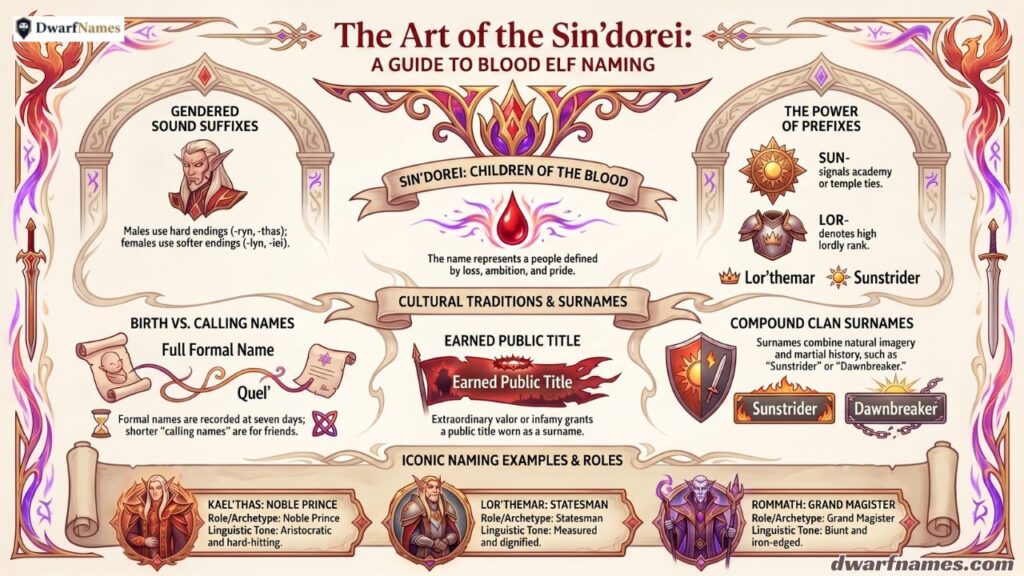
Kael’thas Sunstrider is perhaps the most iconic Blood Elf name in fantasy gaming. “Kael” strikes with precision and authority short, hard at the start, aristocratic. “Thas” adds an ancient, elven weight. “Sunstrider” is the surname, carrying both grandeur and tragedy, evoking someone who walks among the light but reaches too far into its source. Kael’thas began as a noble prince and became something far darker, and his name carries both identities.
Lor’themar Theron is another brilliantly constructed name. It begins with a title-like prefix (“Lor”) that immediately signals nobility, flows into a strong middle syllable, and lands on “Theron,” which carries quiet, steady strength. Lor’themar is a survivor and a statesman and his name feels exactly like that. Measured. Dignified. Unbroken.
Sylvanas Windrunner, though technically a High Elf turned Forsaken, has roots in Blood Elf culture that are impossible to ignore. “Sylvanas” feels both ethereal and sorrowful the soft sibilance at the start, the wistful middle, and the fading final syllable. It is a name that whispers of something once beautiful and now permanently changed.
Rommath stands as a contrast blunt, hard-edged, with a rumbling resonance. As Grand Magister, his name fits: a Blood Elf who has embraced the darker edge of arcane power without apology. The name suggests neither elegance nor warmth, only iron certainty.
These names tell you a great deal. The best Blood Elf names balance musical flow with strength, beauty with edge, and always carry a sense that something ancient and perhaps dangerous lies beneath.
Male Blood Elf Names
Male Blood Elf names tend to project confidence, arcane power, or martial edge. Whether they serve as mages, rangers, paladins, or lords, their names walk the line between the lyrical and the formidable. Each name below has been crafted to feel both culturally authentic and uniquely compelling.
- Vaelithos
- Thalryn
- Aerindel
- Sorath
- Keldavyn
- Mirethon
- Zarethas
- Lycanis
- Draevar
- Seranthal
- Mordael
- Thylorin
- Caelithar
- Arvanthos
- Sunvael
- Eryndor
- Thessoran
- Vorath
- Nymithal
- Belariun
- Caelovyn
- Rothindal
- Sylvareth
- Zeranthos
- Maelivorn
- Aldrathas
- Caeryndor
- Felorath
- Haelthas
- Isrovyn
Female Blood Elf Names
Female Blood Elf names are often more melodic in structure, but they carry no less authority. These are the names of scholars, rangers, high priestesses, and sorceresses women whose elegance is inseparable from their power. For writers seeking DnD half-elf names with a similar flowing quality, the musicality here translates beautifully across related archetypes.
- Lyraenne
- Vaelindra
- Soralyss
- Thaelvyn
- Mirielle
- Zerathal
- Aerilyn
- Caeldris
- Nysaveth
- Sylvindra
- Eladrae
- Thessalyne
- Mordivian
- Lorenthal
- Felarise
- Rhysiveth
- Caelindra
- Sorvaine
- Daelithra
- Nymirael
- Velindra
- Alandriel
- Thylorvae
- Seraith
- Belindrae
- Zyrelveth
- Arventhis
- Lumirae
- Caerindel
- Elvindra
Cool and Unique Blood Elf Names
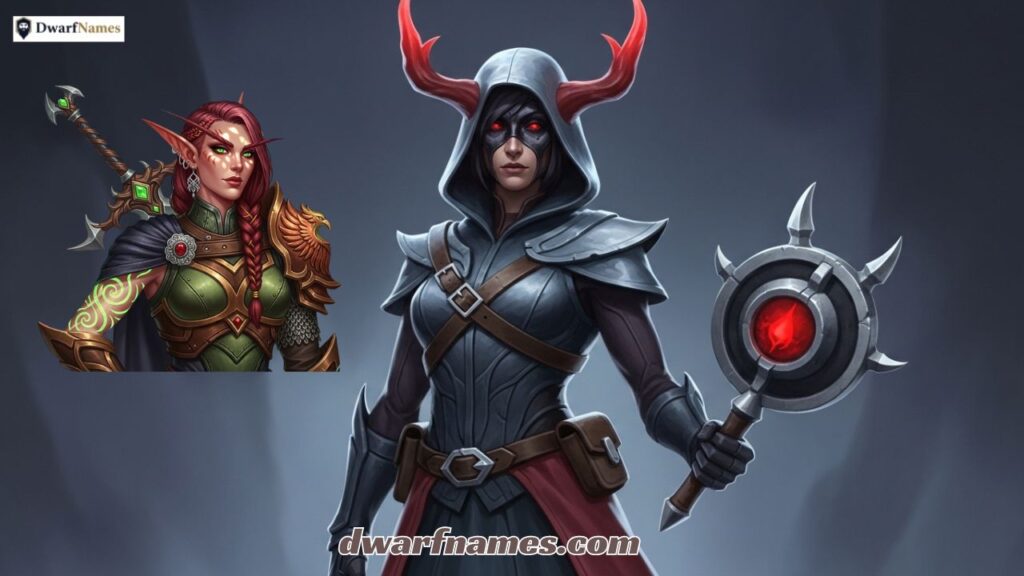
Some names exist not to whisper of heritage, but to announce it. These are the cool, unique Blood Elf names ones that bend conventional syllable structure into something distinctive. They feel like names a character would earn rather than simply inherit. Naming with intention is an art that crosses cultures; the craftsmanship in Japanese names and Italian names shows how syllable rhythm and cultural weight can turn a simple word into a lasting identity.
- Zorathen
- Vyxalindra
- Noctivael
- Solvithas
- Kraeth
- Lumirex
- Zyvanthis
- Astriveth
- Vaelkrath
- Noctrindel
- Duskryn
- Bloodthal
- Embervaine
- Crimsolvyn
- Ashraelthos
- Silverthal
- Voidryn
- Phantivael
- Starlith
- Malevorn
- Thornirael
- Dawnkrael
- Vexilindra
- Solrath
- Noctareth
- Draelivyn
- Skyrindel
- Ashvore
- Lunaethas
- Vyrindael
Warrior and Badass Blood Elf Names
Not every Blood Elf stands behind a spell book. Some take up the blade, the bow, or the war banner. These names are built for the battlefield harder consonants, striking syllables, names that sound like the crack of steel or the snap of a bowstring. For a sense of that same fierce power in a different cultural register, exploring Norse god names or Japanese god names offers fascinating parallels in how mythology shapes warrior identity.
- Kravithos
- Seldrath
- Vorathen
- Mordekhal
- Blazethar
- Irondael
- Bloodvael
- Suncleaver
- Stormdris
- Emberfang
- Thornkral
- Ashblade
- Crimsonrath
- Duskpiercer
- Steelvyn
- Skullrender
- Gravithos
- Ironveil
- Wraithkral
- Venomblade
- Warcrest
- Blazeryn
- Darkfang
- Stonedael
- Soulrender
- Deaththal
- Shadowrath
- Bloodkrael
- Scarfield
- Thornstrike
Royal and Noble Blood Elf Names
The aristocracy of Blood Elf society holds itself to an exacting standard of elegance and authority. Royal names carry an additional layer of gravity longer, more formal, often with prefixes or suffixes that signal lineage and station. If you enjoy the architecture of noble naming traditions, you might also find inspiration in Hawaiian names, which carry their own deeply rooted sense of lineage and purpose.
- Aerindorel
- Thalyndris
- Caelitharion
- Solvanthas
- Mirethindel
- Loryndael
- Voranthariel
- Zeralindaris
- Belarionthas
- Nysavethion
- Sylvindorel
- Rhysivaelion
- Alandrinthis
- Feloranthal
- Elvintharian
- Thylorivael
- Arduantharion
- Serandalion
- Morditharel
- Caelvorindael
- Eladrionthas
- Lumirethian
- Valindoriael
- Thessarionthal
- Daelivornion
Traditional and Classic Blood Elf Names
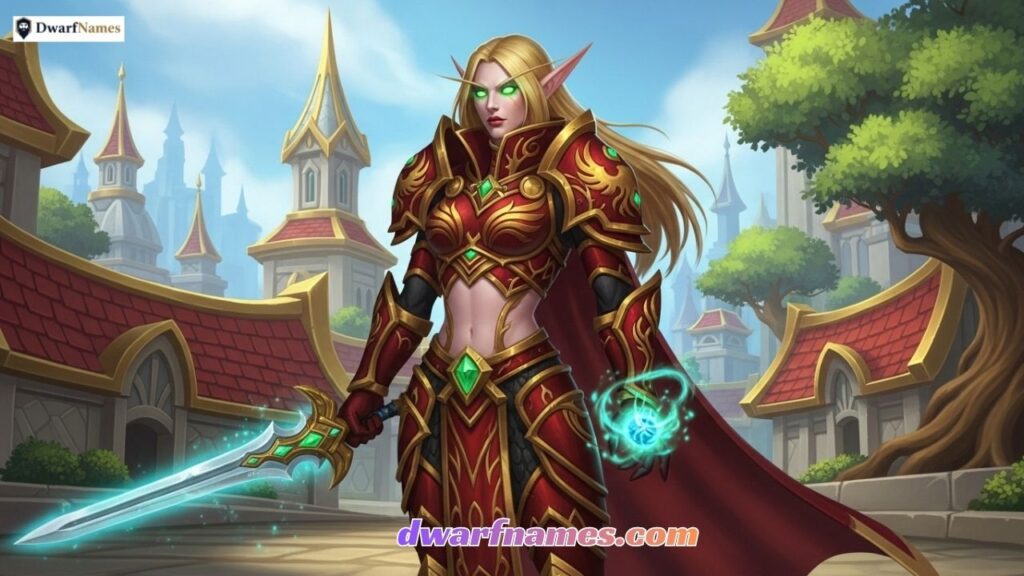
These names feel as though they were carved into the stone of the first elven citadels names passed down through bloodlines for thousands of years. They are familiar, dignified, and carry the full weight of ancient culture. When constructing an old house of Blood Elves, reach for these.
- Aerindel
- Thalindor
- Caerylith
- Sylveth
- Mordavel
- Felaen
- Vorath
- Lyrindel
- Naevith
- Serath
- Belindal
- Eryveth
- Caldris
- Zyrith
- Thaelin
- Mirith
- Aelindra
- Nyroth
- Vaelith
- Sorindel
- Dryveth
- Luvindel
- Theriath
- Caldindra
- Aervyn
Blood Elf Naming Traditions: A Worldbuilding Guide
Understanding how Blood Elves name their children, their warriors, and their dead is as important as the names themselves. The Sin’dorei carry their cultural memory in language and names are the oldest language of all.
Birth Names and Calling Names: Most Blood Elves are given a formal birth name by their parents at a ceremony held seven days after their arrival into the world. This name is recorded in the family’s lineage scrolls and invoked in formal and magical contexts. Alongside this, a child usually develops a “calling name” shorter, warmer, and used by family and close companions. A Blood Elf named Caelitharion in formal records may be known simply as “Cael” among friends.
Gendered Naming Conventions: While Blood Elf society is not rigidly divided along gender lines in terms of power or role, naming conventions do carry tendencies. Male names often end in harder sounds “-ryn,” “-rath,” “-thas,” “-vorn.” Female names tend toward softer endings “-rae,” “-lyn,” “-dra,” “-veth,” “-iel.” These are conventions, not rules, and names crossing these patterns are not unheard of, especially among those who have adopted warrior or mage personas that deliberately challenge convention.
The Mark of Bloodline: Noble Blood Elf families often encode their lineage into a child’s name. The prefix “Lor-” historically denoted high lordly rank. Names containing “Sun-,” “Dawn-,” or “Ember-” within them often indicate families tied to the ancient temples or the arcane academies. “Ash-” and “Shadow-” infixed into a name can signal that a family has walked darker roads perhaps sorcery, perhaps dealings with the Void.
Names Given in War: A Blood Elf who performs an act of extraordinary valor or extraordinary infamy in battle may receive a war-name added to their calling name. These war-names function like epithet surnames and are worn publicly. “Bloodthal the Unbowed,” “Embervaine of the Shattered Gate” the war-name becomes inseparable from identity.
The Forsaken Name: When a Blood Elf turns from the light whether into fel magic, shadow, or outright darkness their family may formally strip their birth name from the lineage scrolls. Some who are cast out choose an entirely new name. Others keep the old name as defiance. This stripping of the name is considered one of the most severe social punishments in Blood Elf culture, second only to exile.
Blood Elf Clan Names and Surnames
Blood Elf surnames are compound words drawn from natural imagery, arcane references, and martial history. They tend to be evocative, immediately painting a picture of the family’s history or domain. Many readers who enjoy this kind of compound surname construction will find similar creative pleasure in exploring DnD half-orc names, which share the bold, descriptive compound style in a very different register.
- Sunstrider
- Dawnbreaker
- Emberthorn
- Ashveil
- Bloodmere
- Crimsoncrest
- Shadowvale
- Ironbloom
- Starlith
- Voidhaven
- Thornmantle
- Goldspire
- Ruinfire
- Duskveil
- Stormglass
- Emberhallow
- Soulfire
- Nightmantle
- Blaeskeld
- Wraithbloom
- Flamecrest
- Darkthorn
- Mournspire
- Felblaze
- Ashmantle
- Cinderfall
- Bloodspire
- Sunhallow
- Dawnveil
- Ironflame
- Embermantle
- Goldthorn
- Mistblaze
- Shadowcrest
- Soulspire
- Thornfire
- Voidbloom
- Nightstrider
- Starloch
- Ruinspire
- Flamehaven
- Darkveil
- Dawnmantle
- Ironmere
- Ashblaze
- Crimsonthorn
- Cinderstone
- Emberveil
- Goldflame
- Wraithcrest
Conclusion
A name is never just a name. Among the Blood Elves a people who have rebuilt their civilization from the ashes of catastrophe, who have stared into the void of addiction and power and still chosen to endure a name carries everything. It carries bloodlines, promises, wounds, and glory. It is the first thing a Blood Elf gives to the world, and the last thing the world strips from them.
Whether you are a writer giving voice to a proud arcane lord, a dungeon master crafting an ancient enemy for your players to respect, or a gamer stepping into a Blood Elf character for the very first time, the names you choose will shape how your story feels from the first moment. Choose one that carries weight. Choose one with music in its syllables and iron in its bones.
The Sin’dorei endure. And in the right hands, their names will endure too in the pages of your stories, the notes of your campaigns, and the worlds you build.
Frequently Asked Questions
What makes a good Blood Elf name?
A good Blood Elf name balances flowing elvish syllables with a touch of darkness or power, reflecting their arcane heritage and tragic history within twenty syllables.
Can Blood Elf names be used for DnD characters?
Absolutely. Blood Elf names work perfectly for high elves or sun elves in DnD, offering an exotic, culturally rich feel that enhances roleplay significantly.
How do Blood Elf surnames work in worldbuilding?
Blood Elf surnames are typically compound words evoking nature, magic, or war. Families pass them down, and war deeds sometimes permanently alter a character’s surname.
Are Blood Elf names gender-specific?
By convention, male names often end in harder sounds while female names favor softer endings, though exceptions exist, especially among warriors and mages.
What cultural influences inspire Blood Elf names?
Blood Elf names draw from elvish phonetics, ancient arcane tradition, and cultural grief, blending the lyrical elegance of their origins with a sharp, modern edge.
How many syllables should a Blood Elf name have?
Most Blood Elf names range from two to four syllables. Noble and royal names often stretch longer to signal lineage, while warrior names may be deliberately shorter.
Can I mix and match syllables to create new Blood Elf names?
Yes. Blood Elf naming follows phonetic patterns — mixing prefixes like “Vael-,” “Thal-,” “Cael-” with suffixes like “-ryn,” “-ith,” “-dra” creates convincing new names easily.