
There is a certain magic locked inside an Irish name. Something ancient stirs in the syllables of names like Caoilfhinn, Fionnuala, or Cormac, as if the rolling hills of the Emerald Isle, the mist-draped standing stones, and centuries of bardic tradition are folded right into the sound. Irish names carry weight that most modern names simply cannot match. They are relics of an island civilization built on myth, warrior culture, monastic wisdom, and poetic spirit.
For fantasy writers, RPG players, and worldbuilders, Irish names offer something irreplaceable: an authenticity that feels genuinely ancient without being invented. Unlike names crafted from scratch for a fictional world, Irish names come from a living mythological tradition stretching back thousands of years, from the age of the Tuatha De Danann to the High Kings of Tara. They carry the resonance of real legend and, precisely because of that, make fictional characters feel more grounded and vivid.
Whether you are naming a fierce warrior queen, a wandering druid, a cunning noble, or a gentle healer in your next story, game, or worldbuilding project, this guide is your complete treasury. Below you will find over 250 Irish names for boys and girls, organized by theme and tone, with meanings woven into every section. Let the lore begin.
Famous Irish Names From Literature and Myth
Before diving into the full lists, it is worth understanding how Irish names have shaped storytelling across centuries. The most resonant names from Irish mythology do not just label a character. They describe them, predict them, and in some cases define their fate.
Cuchulain (also spelled Cu Chulainn) is perhaps the most famous name in all Irish legend. Born Setanta, he earned his bardic name meaning “Hound of Culann” after slaying a fearsome guard dog and pledging to serve in its place. His name tells his entire story: loyalty, ferocity, and a life lived in service. In fantasy, a name like this signals a warrior who is both dangerous and bound by a deep personal code.
Fionn Mac Cumhaill, leader of the Fianna, carries a name meaning “fair” or “bright.” Yet Fionn was no soft hero. He was cunning, wise through the mystical Salmon of Knowledge, and fierce in battle. His name creates an ironic contrast that makes him endlessly compelling, the kind of naming trick that great fantasy writers use to subvert expectations.
Deirdre of the Sorrows carries one of the most haunting names in Celtic tradition. Her name likely derives from the Old Irish word meaning “broken-hearted” or “she who rages.” Foretold at birth to bring ruin, Deirdre is a name that carries tragedy in its very syllables. Writers crafting a doomed heroine or a prophesied queen would do well to study how her name sets the tone for everything that follows.
Brigid (also Brighid or Bride) was both a goddess and a Christian saint, representing fire, poetry, and healing. Her name, meaning “exalted one” or “high goddess,” bridges the pagan and sacred worlds. In any fantasy setting with a divine system, a character named Brigid carries instant mythic weight.
These examples show that Irish names are not merely decorative. They are narrative tools. If you enjoy building divine systems, you might also explore Celtic god names for deity-level naming inspiration.
Irish Boy Names: The Classic and the Legendary
These are the names that have echoed from hilltop forts and across the great halls of ancient Ireland. Bold, lyrical, and full of old magic, these male Irish names are perfect for heroes, kings, warriors, and wandering scholars alike.
Irish male names often reflect strength of character, connection to nature, or divine favor. Many derive from the names of ancient High Kings, mythological champions, and early Christian saints whose stories shaped Irish cultural identity for generations.
- Aidan (little fire)
- Brendan (prince)
- Cormac (chariot son)
- Declan (man of prayer)
- Eoghan (born of the yew tree)
- Fergus (man of strength)
- Finbar (fair-haired)
- Gulliver (derived from Gaelic hero lore)
- Hugh (heart, mind)
- Iarlaith (tributary lord)
- Keane (ancient)
- Liam (strong-willed warrior)
- Lorcan (fierce little one)
- Malachy (my messenger)
- Niall (champion)
- Odran (pale green)
- Padraig (noble)
- Ronan (little seal)
- Seamus (supplanter)
- Tadhg (poet, philosopher)
- Tuathal (ruler of the people)
- Uilliam (will-helmet)
- Vivian (alive, lively)
- Colm (dove)
- Diarmuid (free man)
- Fiachra (raven)
- Cathal (battle rule)
- Bran (raven)
- Cian (ancient)
- Donal (ruler of the world)
Irish Girl Names: Timeless and Enchanting
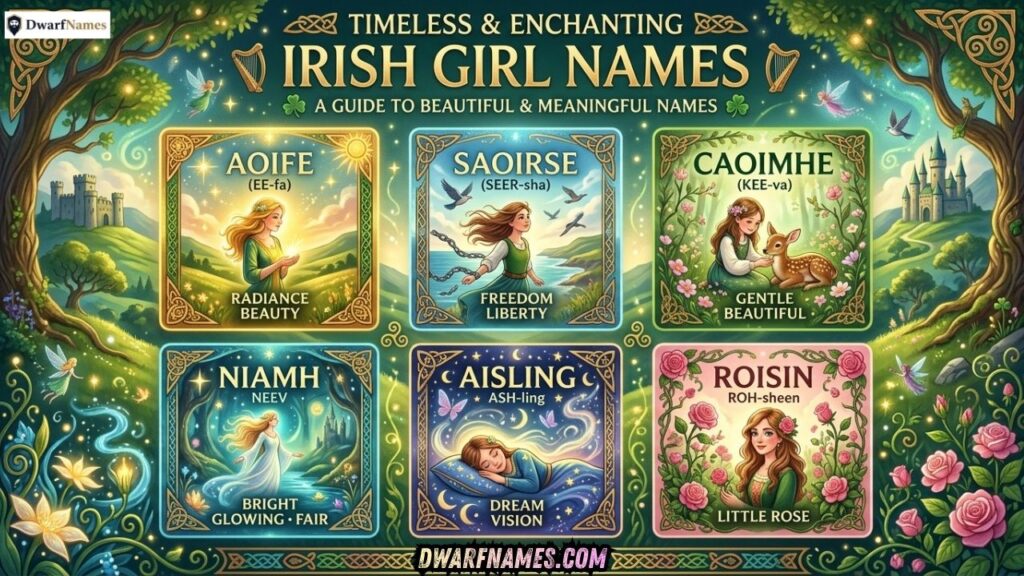
Irish female names are among the most lyrical in any tradition. They flow like rivers through the language, soft and sharp in equal measure. Whether drawn from mythology, nature, or the names of warrior queens, these names carry an unmistakable feminine power.
Many traditional Irish girl names are derived from nature imagery, from flowers and rivers to moonlight and flame, making them perfect for fantasy characters connected to elemental magic or the natural world.
- Aoife (radiant, beautiful)
- Brigid (exalted one)
- Caoimhe (gentle, beautiful)
- Deirdre (sorrowful, broken-hearted)
- Eimear (swift)
- Fionnuala (fair shoulders)
- Grainne (grace, love)
- Honora (honor)
- Ita (thirst for truth)
- Laoise (radiant girl)
- Meadhbh / Maeve (she who intoxicates)
- Nora (honor)
- Orlaith (golden princess)
- Phadraigín (noble)
- Riona (queenly)
- Sadhbh (sweet)
- Sinead (God is gracious)
- Treasa (strength)
- Una (lamb, unity)
- Vivienne (lively)
- Ciara (dark one)
- Clodagh (from the River Clodagh)
- Emer (swift)
- Niamh (bright, radiant)
- Sorcha (bright, radiant light)
- Tara (hill, tower)
- Ailbhe (noble, bright)
- Blathnaid (little flower)
- Muirenn (sea-fair)
- Eithne (kernel of a nut, essence)
Cool and Unique Irish Names for Fantasy Characters
Some Irish names are so beautifully unusual that they feel like they were coined inside a fantasy world. These names carry a haunting quality, a strangeness that makes characters feel genuinely otherworldly without sacrificing authentic roots. If you want names that turn heads in a lore document or on a character sheet, these are your picks.
- Aisling (dream, vision)
- Caoilfhinn (slender and fair)
- Darragh (oak tree)
- Ealga (noble, brave)
- Fionntan (white ancient one)
- Gormflaith (blue-green princess)
- Imogen (derived from Celtic myth)
- Lonán (little blackbird)
- Muirgheal (sea-bright)
- Naoise (warrior of legend, Deirdre’s beloved)
- Olwen (white footprint, from Celtic tradition, also found in Welsh names)
- Ronnat (little seal)
- Saorla (free princess)
- Tigernach (lord-like)
- Uaithne (green)
- Feidhlim (ever-good)
- Ríoghnach (queenly)
- Berrach (sharp, pointed)
- Conchobhar (lover of hounds)
- Derdriu (ancient form of Deirdre)
- Etarcomol (one between two)
- Lugaid (named for the god Lugh)
- Maelruain (devotee of Ruain)
- Nessa (rough, not gentle)
- Oisín (little deer)
- Parthalán (son of the furrows)
- Ruairí (red king)
- Scathach (shadowy one, warrior goddess)
- Temair (dark, eminence)
- Étaín (jealousy, passionate one)
Irish Warrior Names: Strong and Battle-Hardened
The warriors of ancient Ireland were some of the most celebrated fighters in the mythological world. The Fianna, the Red Branch Knights, the legendary champions of the Ulster Cycle, all bore names that rang like iron on iron. These names are perfect for your fiercest fighters, ruthless generals, and battle-scarred veterans.
If you also write characters inspired by other ancient warrior traditions, Roman god names offer an interesting parallel worth exploring.
- Conchobar (lover of hounds, High King)
- Conall Cernach (victorious, strong of the victories)
- Cuchulainn (Hound of Culann)
- Ferghus (man of force)
- Goll (one-eyed warrior, Fianna chief)
- Laegaire (calf-herder turned champion)
- Murchadh (sea warrior)
- Osgar (champion)
- Brian (high, noble, strength)
- Ceallach (bright-headed warrior)
- Donnchaidh (brown warrior)
- Flann (blood red)
- Manchán (little monk, but used ironically for fierce fighters)
- Muirgheas (sea-strength)
- Tighearnach (lord-like)
- Ursula (from Ursainn, bear-strength tradition)
- Amalgaidh (world warrior)
- Breasal (strife, war)
- Cathair (battle-man)
- Domhnall (world-mighty)
- Eochaidh (horseman)
- Fáelán (little wolf)
- Garbhán (rough one)
- Iomhar (bow warrior)
- Murchadha (sea battle)
Irish Royal and Noble Names
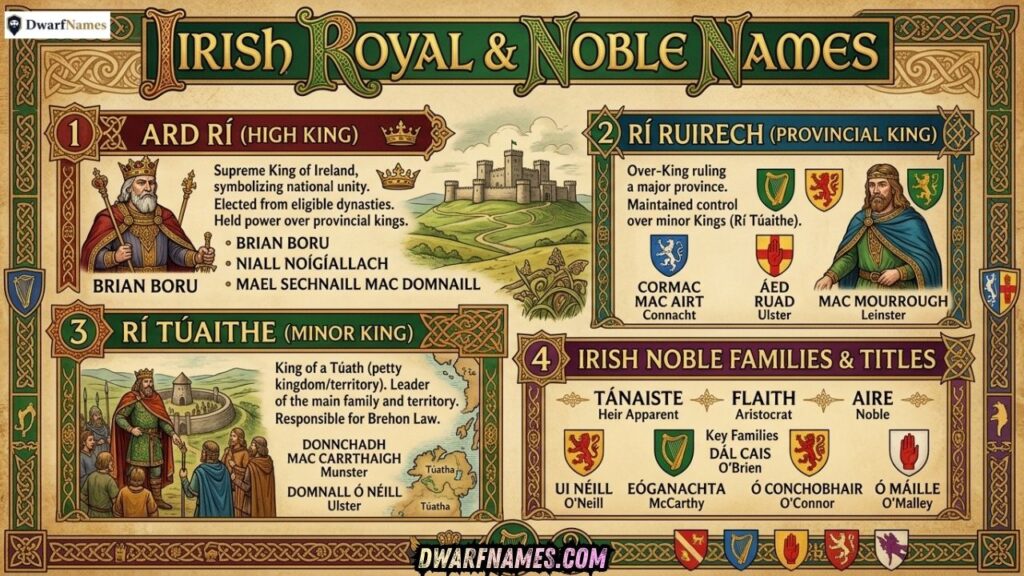
In ancient Ireland, names were markers of lineage and divine right. The High Kings of Tara bore names that announced their sovereignty before they spoke a single word. These names carry an inherent air of command, perfect for rulers, noble houses, court intrigue, and epic political fantasy.
- Ardal (high valor)
- Breatnach (British-descended noble)
- Cairbre (charioteer, royal line)
- Diarmait (free of envy, High King name)
- Énna (bird-king, ancient High King)
- Fionnbarra (fair-crested, noble)
- Guaire (noble, generous)
- Labhrás (laurel, lordly)
- Murchú (sea hound, royal clan)
- Niallghus (champion of the Niall line)
- Orlaith (golden sovereignty)
- Pádraigín (noble-born)
- Qualthach (from older regal lineages)
- Ragnall (powerful ruler, from Norse-Irish blending)
- Seoirse (noble earth-worker, Irish form of George)
- Toirdhealbhach (shaped like Thor, noble)
- Ualgarg (proud and fierce)
- Abhlach (abounding in apple trees, kingly)
- Cobhthach (victorious, ancient king name)
- Dáire (fertile, lordly)
- Eithne of Leinster (essence of royal lineage)
- Flannchú (red hound, noble)
- Gormlaith (queen of sorrow and glory)
- Íte (thirst, saintly-noble)
- Mongfhinn (fair hair, royal sorceress queen)
Traditional and Classic Irish Names
Some names endure not because they are dramatic but because they are beautiful in their simplicity. These traditional Irish names have been carried by farmers, monks, poets, and chieftains alike. They are the bedrock of Irish naming culture and remain perfect for characters who feel grounded, authentic, and deeply human.
- Aifric (pleasant)
- Bearach (pointed, sharp)
- Coinneach (handsome one)
- Donncha (dark warrior)
- Fionnán (little fair one)
- Gobnait (little mouth, patron of bees)
- Maedhbh (she who intoxicates)
- Naithi (combat, fighter)
- Paidin (little Patrick)
- Seánan (little ancient one)
- Tomás (twin)
- Caitlín (pure)
- Donnchadha (brown-haired fighter)
- Eoin (God is gracious)
- Fachtna (hostile)
- Gearóid (spear brave)
- Lorcán (fierce)
- Máire (bitter, beloved)
- Naomh (holy)
- Odhran (pale green)
- Piaras (rock)
- Rísteard (powerful ruler)
- Seárlait (free man, feminine form)
- Tarlach (instigator)
- Ultán (from Ulster)
Irish Naming Traditions: The Lore Behind the Name
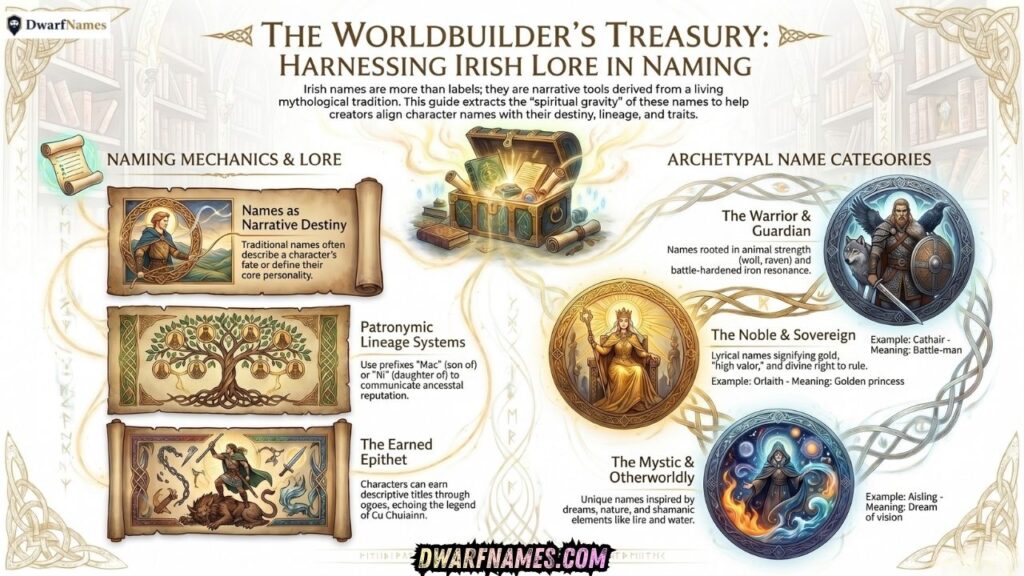
In ancient Ireland, naming was never a casual act. A child’s name was believed to carry a kind of spiritual gravity. Names were chosen to honor ancestors, invoke divine protection, invoke warriors long dead, or to align a child’s destiny with the forces of nature and myth.
The oldest Irish naming convention followed a patronymic system. Male names took the prefix “Mac” (son of) and female names used “Ní” (daughter of). So Fionn Mac Cumhaill was Fionn, son of Cumhaill, and his descendants formed the Clan Mac Cumhaill. This convention makes it easy to build layered naming systems in your fantasy world: a character’s surname instantly communicates lineage, reputation, and cultural alignment.
In bardic tradition, a name was sometimes only the beginning. Many great heroes were given epithets, descriptive additions that captured their deeds. Cu Chulainn, as noted earlier, was born Setanta. His true name was earned. This is a fantastic device for worldbuilders: let characters begin with simple names and earn their true titles through the story.
The Irish also had a tradition of spiritual names, particularly for those entering religious orders or taking on shamanic roles. Names with roots in light, fire, water, and sacred animals (especially the raven, wolf, and deer) were considered deeply auspicious. A character named Lon (blackbird) or Bran (raven) carries an ancient shamanic resonance that no invented name can quite replicate.
For comparison across Celtic traditions, Welsh names share some etymological roots with Irish names and offer equally powerful options for druidic or nature-connected characters.
Irish Clan Names and Fantasy Surname Ideas
Building a clan or noble house in your story requires names that sound weighty, ancestral, and thematic. Here are over 40 Irish-inspired compound clan names and surnames perfect for fantasy use. Think of these as the kind of names that would appear carved above a fortress gate or stitched into a battle standard.
- Mac Conall (son of the strong wolf)
- O Briain (descendant of Brian)
- Mac Fionnán (son of the fair one)
- O Murchadha (descendant of the sea warrior)
- Mac Giolla Íosa (son of the servant of Jesus, ancient noble clan)
- O Ceallagh (descendant of Ceallach, bright-headed)
- Mac Darragh (son of the oak)
- Ó Flannagáin (descendant of the red warrior)
- Mac Tighe (son of the poet)
- O Lonáin (descendant of the little blackbird)
- Ironfell (invented compound, iron descent)
- Ravenwatch (bardic sentinel clan)
- Greymoor (from the grey marshland)
- Ashbranch (sacred ash tree lineage)
- Stonefire (ancient forge clan)
- Brightmoor (noble highland dwellers)
- Coldwater (seafaring northern clan)
- Oakenspire (druidic order name)
- Emberhall (great fire-keepers)
- Silversong (bard-lineage family)
- Mac Beatha (son of life)
- O Driscoll (descendant of the intermediary)
- Mac Cormaic (son of Cormac)
- O Faoláin (descendant of the little wolf)
- Ó Maolagáin (devotee of a saint, noble clan)
- Cinderspear (warrior family)
- Dawnforge (royal blacksmith line)
- Thornwater (marshland protectors)
- Hollowfire (mystic order)
- Nightbranch (shadow druids)
- Mac Rónáin (son of the little seal)
- O Floinn (descendant of the red one)
- Mac Fiachra (son of the raven)
- Ironroot (ancient forest clan)
- Steelbrook (river-fort defenders)
- Aldenmoor (elder marshland line)
- Crowfield (raven-blessed farmstead)
- Mistfall (mountain mist dwellers)
- Blackthorn (fierce border warriors)
- Goldenspire (high tower nobles)
If you are building an expansive world that draws from multiple cultural threads, British names and Korean names offer fascinating contrast for multi-cultural fantasy settings with diverse peoples.
Conclusion: Let the Old Names Live Again
Names are the first act of creation in any story. Before a character speaks, fights, loves, or dies, their name has already told the reader something essential about who they are. Irish names carry thousands of years of myth, culture, and collective memory, making them one of the most powerful naming tools available to any writer or worldbuilder.
Whether you are crafting a lone warrior with the iron name of Conchobar, a dreaming seer named Aisling, a wolf-spirit shapeshifter answering to Fáelán, or a golden-haired queen called Orlaith, the Irish tradition offers you names that breathe and live and carry weight far beyond the page.
Use them boldly. Let them inform your characters’ personalities, shape your clan structures, and echo through your world’s history. The names of ancient Ireland were never meant to be forgotten. They were always meant to be spoken aloud, with fire in the hall and a story ready to begin.
Frequently Asked Questions
What are the most popular Irish names for boys in 2026?
Classic Irish boy names like Liam, Fionn, Cormac, Darragh, and Ronan remain widely popular, blending ancient heritage with modern appeal for storytellers and parents alike.
What do Irish girl names typically mean?
Many Irish girl names are rooted in nature, light, and mythology. Names like Niamh mean bright, Aoife means radiant, and Sorcha translates to luminous or shining one.
Are Irish names good for fantasy characters?
Absolutely. Irish names carry deep mythological roots, lyrical sounds, and ancient meanings that make fantasy characters feel authentic, layered, and rooted in real legendary tradition.
How do you pronounce difficult Irish names?
Irish pronunciation differs greatly from English spelling. Caoimhe is “Kwee-va,” Siobhan is “Shih-vawn,” and Aoife is “Ee-fa.” Learning phonetics adds richness to using these names.
What is the difference between Irish and Celtic names?
Irish names are a subset of the broader Celtic tradition. Celtic names also include Welsh, Scottish Gaelic, and Gaulish names, all sharing Indo-European roots but distinct linguistic identities.
Can I use Irish names in a non-Irish fantasy setting?
Yes. Irish names translate beautifully to any fantasy world. Their sounds feel ancient and otherworldly enough to fit elven kingdoms, druidic orders, sea-faring cultures, or warrior civilizations.
What are some rare Irish names that feel truly unique?
Names like Étaín, Scathach, Conchobhar, Fionnuala, and Tigernach are rarely used today but carry extraordinary mythological depth, making them perfect choices for standout fantasy characters.