
There is a certain kind of magic woven into the names that echo from the sands of ancient Egypt. They rise from the lips like incantations — names carved into obelisks, whispered in temple smoke, sealed inside golden cartouches meant to last ten thousand years. Whether you are a novelist shaping a sun-scorched empire, a dungeon master building a campaign beneath pyramid shadows, or a worldbuilder crafting a civilization where gods walk openly among mortals, Egyptian names carry an irreplaceable weight. They do not merely label a character. They crown them.
Ancient Egyptian names were never arbitrary. Each syllable carried divine intention. Children were named after gods, after the qualities their parents prayed they would embody, after the celestial events that framed their birth. A name could invoke Ra’s fire, Osiris’s patience, or Isis’s cunning. It was both identity and destiny. In a world where language held sacred power — where writing the name of a god summoned that god’s presence — naming was one of the most important acts a person could perform.
For fantasy writers and worldbuilders, this tradition is a treasure vault waiting to be opened. Egyptian-inspired names ground your world in ancient grandeur. They whisper of desert winds and starlit tombs, of crocodile gods and solar barges, of a civilization so ancient that even its myths have myths. If you have already explored god names for your pantheon or searched through medieval names for other settings, you know how much a culturally resonant name elevates your storytelling. Egyptian names take that elevation and make it monumental.
This article gives you 350 names drawn from the spirit, sound, and soul of ancient Egypt — organized by category, enriched with lore, and ready to place directly into your story, game, or world.
Famous Ancient Egyptian Names From Literature & Games
Before diving into the lists, it is worth examining how Egyptian names have already shaped beloved characters across fiction and gaming. The pattern is clear: a great Egyptian name does not just identify — it defines.
Nefertari — The name means “beautiful companion,” and the historical queen who bore it became one of ancient Egypt’s most celebrated figures. In fantasy, this name appears in various forms, always attached to characters of grace, political intelligence, and hidden steel. A Nefertari is never just beautiful — she is calculating.
Imhotep — Perhaps the most recognized Egyptian name in popular culture, Imhotep was a historical architect, physician, and polymath later deified. In fiction, from classic horror films to tabletop games, the name has become synonymous with ancient sorcerers of terrible power. The name itself means “he who comes in peace” — an irony that no fantasy writer should waste.
Amenhotep — Meaning “Amun is satisfied,” this name carries the weight of divine blessing and royal lineage. Characters bearing this name in fiction and RPGs tend to be scholars, priests, or philosopher-kings — men of great wisdom burdened by tradition.
Khemet — A less common but deeply atmospheric name drawn from the Egyptian word for “the black land,” referring to Egypt itself. Fantasy characters with this name often serve as guardians, wanderers, or those deeply tied to the earth’s ancient memory.
These names show how etymology becomes personality. When you choose an Egyptian name, you are choosing a story before the story begins.
Male Ancient Egyptian Names
These names ring with the authority of pharaohs and high priests, desert warlords and divine scholars. Each carries the resonance of a civilization that measured time in dynasties.
- Amenra
- Khaemset
- Nebwenenef
- Userhat
- Paheri
- Nebamun
- Senenmut
- Horemheb
- Amenhotep
- Djedhor
- Khnumhotep
- Nebhepetre
- Usermaatra
- Siptah
- Merenptah
- Thutmose
- Ramesses
- Senwosret
- Amenemhat
- Djoser
- Khafra
- Sneferu
- Mentuhotep
- Ahmose
- Herihor
- Nakhtmin
- Sobekhotep
- Nebwenenef
- Merneptah
- Paser
- Yuya
- Ay
- Pentu
- Kha
- Nebseny
- Kenherkhepeshef
- Djehutymes
- Nebnetjeru
- Amenemope
- Ipy
- Khnumibre
- Nakhtnebef
- Psusennes
- Shoshenq
- Bakenkhons
- Ipuki
- Maiherpri
- Nebwenenef
- Heqaib
- Amunhotep
Female Ancient Egyptian Names
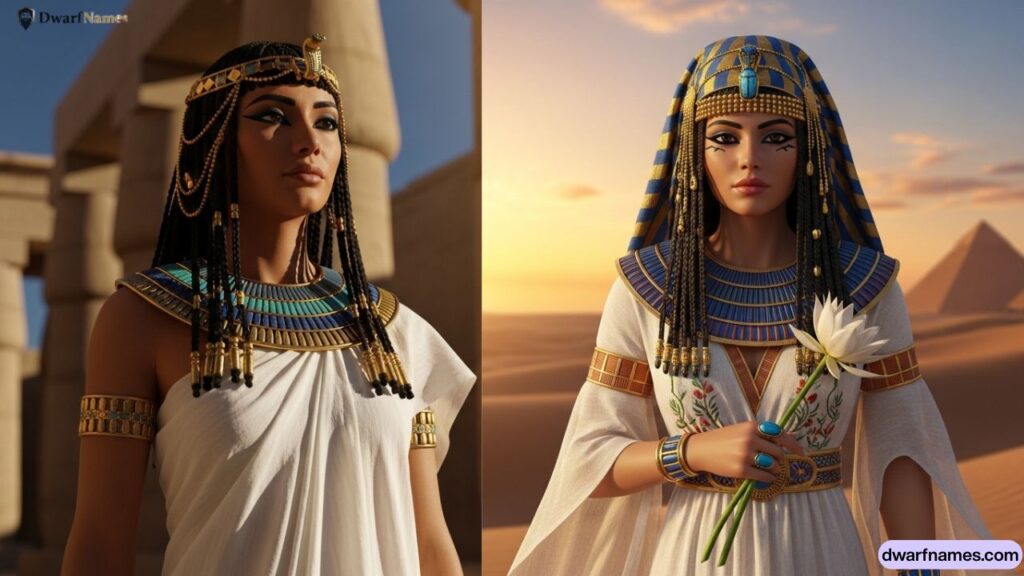
Egyptian women carried names of breath-taking poetry — names that invoked goddesses, celestial beauty, and divine fertility. These are perfect for queens, priestesses, oracles, or any woman of power in your world.
- Nefertiti
- Ankhesenamun
- Hatshepsut
- Sitamun
- Meritaten
- Nefertari
- Tiye
- Mutnedjmet
- Kiya
- Ahmose-Nefertari
- Henuttawy
- Isetnofret
- Baketaten
- Nebetah
- Nebettawy
- Tentamun
- Taharqa
- Karomama
- Tasherit
- Meketaten
- Ankhesenpaaten
- Nebet
- Iset
- Henutmire
- Tausret
- Merytaten
- Nebetiunet
- Takhat
- Sitre
- Nodjmet
- Henuttawy
- Mutnodjmet
- Nebetnehat
- Ipet
- Ahset
- Khentkaus
- Meresankh
- Hetepheres
- Neferhent
- Khenemet
- Nubhotep
- Satiah
- Nebetnunu
- Iput
- Menhet
- Renenutet
- Henutsen
- Neferu
- Neithhotep
- Merneith
Cool and Unique Ancient Egyptian Names
Some names fall outside the expected registers — strange, resonant, and deeply atmospheric. These are ideal for characters who break from tradition, whether sorcerers who walk between worlds or wanderers who carry forgotten knowledge. If you enjoy naming characters with unusual flair, you might also appreciate the creativity behind DnD Tabaxi names and DnD gnome names for contrast across fantasy traditions.
- Khentkaus
- Nebwenenef
- Djedptahiufankh
- Harsiese
- Padiamenet
- Meryptah
- Khonsirdis
- Ankhefenmut
- Djehutysankh
- Iufaa
- Shepenwepet
- Nitocris
- Amenirdis
- Harwa
- Pabasa
- Montemhat
- Nespaherenhat
- Petosiris
- Osorkon
- Pasenhor
- Djedbastetiufankh
- Neskhonspakhered
- Ankhhor
- Wahibre
- Samtutefnakht
- Inaros
- Nakhtnebef
- Psamtik
- Apries
- Nectanebo
- Tjahapimu
- Horudja
- Sematawytafnakht
- Peftjauawybast
- Khababash
- Ankhpakhered
- Djedhor
- Wennefer
- Padineith
- Iufenamun
Warrior and Badass Ancient Egyptian Names
Egypt’s greatest warriors did not merely fight — they became living weapons of the gods. These names carry the weight of bronze axes, chariot thunder, and the divine fury of Sekhmet. Use these for commanders, gladiators, and desert champions.
- Thutmose (The Conqueror)
- Ramesses (He Who the Sun Bore)
- Horemheb (Horus is in Jubilation)
- Seqenenre (He Who Strikes Like Ra)
- Kamose (The Bull)
- Ahmose (Born of the Moon)
- Nebhepetre (Lord of the Rudder)
- Intef (He Brought)
- Userkaf (His Soul is Powerful)
- Djedefre (Ra’s Endurance)
- Senwosret (Man of the Goddess Wosret)
- Merneptah (Beloved of Ptah)
- Amenhotep (Amun is Satisfied)
- Sethi (Of Seth)
- Khaneferre (The Beautiful Soul of Ra)
- Nebkaure (Lord of the Souls of Ra)
- Sekhemkhet (Powerful of Body)
- Huny (The Striker)
- Nebhepetre
- Sobekneferu
- Dedumose
- Nubkheperre
- Mentuhotep
- Sehetepibre
- Amenemhat
- Khasekhem
- Sekhemkhet
- Ninetjer
- Raneb
- Qa’a
Royal and Noble Ancient Egyptian Names
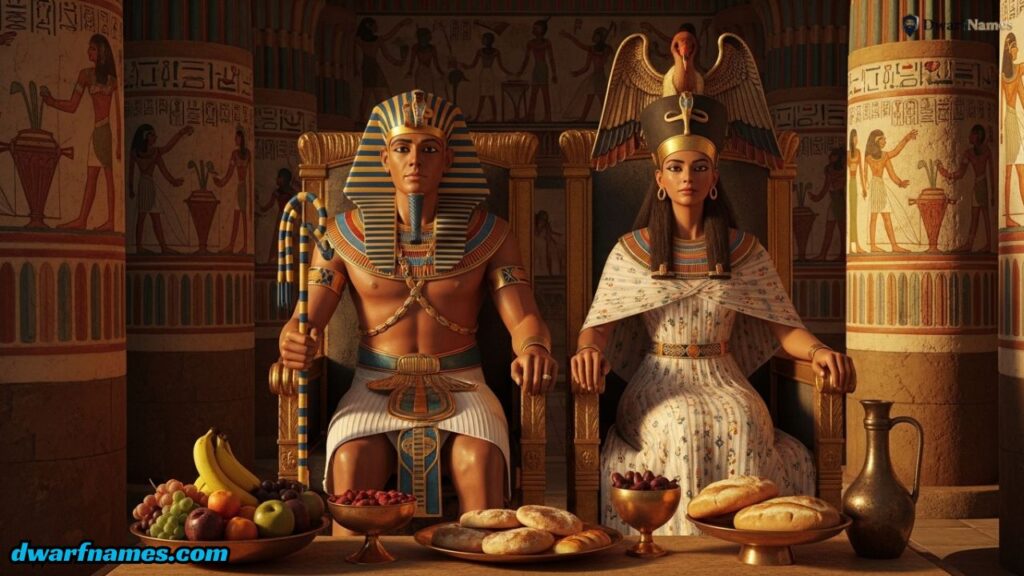
These names were spoken in throne rooms, inscribed beside cartouches, and offered to eternity. They are names that carry crowns — fitting for pharaohs, viziers, high priests, and those who rule by divine right. They pair beautifully with vampire names if you are building an immortal nobility that spans ancient timelines.
- Usermaatra Setepenra (Ramesses the Great’s throne name)
- Nebkheperure (Tutankhamun’s throne name)
- Menkheperre (Thutmose III’s throne name)
- Aakheperkare (Thutmose I)
- Djeserkare (Amenhotep I)
- Nebpehtyre (Ahmose I)
- Kheperkheprure (Ay)
- Djeserkheperure (Horemheb)
- Menmaatre (Seti I)
- Nebmaatra (Amenhotep III)
- Neferkheperure (Akhenaten)
- Userkare
- Merykare
- Neferkare
- Wahkare
- Sekhemkare
- Nebkaure
- Nubkaure
- Khakare
- Sehotepibre
- Amenemhat
- Sesostris
- Nebhepetre
- Sankhkare
- Aakheperure
- Menkheperure
- Nebwenenef
- Nebseny
- Neferefre
- Sahure
Traditional and Classic Ancient Egyptian Names
These are the names most deeply rooted in Egyptian linguistic tradition — names that have survived millennia, appearing on papyrus scrolls, temple walls, and royal tombs. They feel ancient because they are ancient.
- Hori
- Mahu
- Neni
- Raia
- Kha
- Yey
- Ipuy
- Iuty
- Kha
- Mose
- Raia
- Nehi
- Any
- Pen
- Huy
- Kha
- Nenu
- Hepu
- Idy
- Qen
- Seny
- Tia
- Iru
- Nen
- Ipu
- Meri
- Nebt
- Hent
- Imi
- Renu
- Satu
- Keku
- Herit
- Itet
- Nubit
- Khuit
- Renpit
- Iabet
- Hesat
- Nebtu
Egyptian Naming Traditions: Lore for Worldbuilders
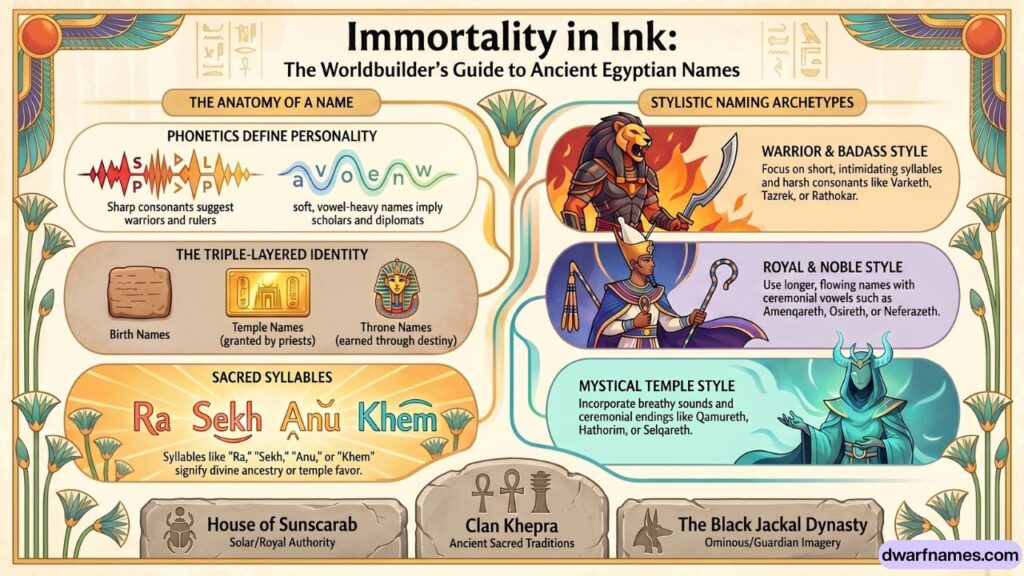
In ancient Egypt, a name was not simply how others referred to you. It was one of your five souls — the Ren — and it was believed to be essential to your survival in the afterlife. Without a name, a soul could not pass into the eternal realm. This is why pharaohs went to extraordinary lengths to carve their names everywhere: on temple walls, on statues, on the backs of scarab amulets. To have your name destroyed was to be erased from existence itself.
This worldbuilding detail is extraordinarily powerful for fantasy settings. Imagine a culture where names are kept partially secret — where a person’s true name is whispered only to priests or buried with them, while a “use name” is given for daily life. Imagine sorcerers who wield power over others by learning their true names. Imagine a rite of passage where a child receives their name only after surviving their first trial, proving they are worthy of having a Ren at all.
Egyptian names followed several patterns that fantasy worldbuilders can borrow directly:
Theophoric names combined a deity’s name with a phrase. Amenhotep (“Amun is satisfied”), Ramesses (“Ra bore him”), Thutmose (“Thoth is born”) — these are divine sponsorships baked into language. In your world, a character named Seraphheld or Moonsent carries this tradition forward.
Epithet names described a quality or destiny. Nefertiti means “the beautiful one has come.” Nefertari means “beautiful companion.” Hatshepsut means “foremost of noble women.” These are not descriptions — they are prophecies of character.
Occupational or honorific names sometimes identified a person’s divine role. High priests bore names associated with their patron deity. Generals carried names of war-gods. In a fantasy setting, this creates a natural naming system for guilds, orders, and sacred institutions.
Dynastic naming patterns also existed — names that flowed through royal families, with each generation adding titles or syllables. For RPG campaigns, a ruling family where all sons bear names ending in “-hotep” and all daughters in “-neferu” creates immediate world depth.
Egyptian Clan and Surname Constructions
Egypt did not use hereditary surnames as we understand them today — but fantasy worldbuilding benefits from constructing clan names and compound epithets. Below are 50 compound name elements you can use to build clan identities, noble houses, mercenary companies, or priestly orders for your Egyptian-inspired world.
- Goldenserpent
- Dawnstone
- Solarflame
- Dustwind
- Khemet-born
- Ankhbearer
- Scarabwarden
- Blacksand
- Eyeofra
- Lotusthrone
- Crocodilemaw
- Silentdesert
- Starcrossed
- Tombwalker
- Floodmark
- Obsidianveil
- Falconcrest
- Ironstaff
- Sunwarden
- Riverborn
- Khnumblood
- Osirisseal
- Hathorlight
- Sekhmetfang
- Ptahstone
- Ibisfeather
- Anubismark
- Thothscribe
- Horuseye
- Nephthysveil
- Redsand
- Goldbark
- Starlotus
- Silvenight
- Ashenwing
- Cobraveil
- Sphynxborn
- Nilecrown
- Blacklotus
- Kemetblood
- Ancientstone
- Starlamp
- Dustthorn
- Rayborn
- Papyruswarden
- Embalmer
- Crownseeker
- Tombfire
- Hieroglyphmark
- Desertmoon
Conclusion: The Power of a Name That Carries Eternity
A name is the first gift a world gives a character — and in Egyptian-inspired fantasy, it is also a burden, a prophecy, and a divine contract. When you name your pharaoh Khaemset, your oracle Shepenwepet, or your warrior champion Seqenenre, you are not just labeling a character. You are placing them in a lineage that stretches back through dynasties, back to the gods themselves.
Whether you are writing an epic fantasy novel set in a world of golden pyramids and divine magic, running a tabletop campaign where players explore cursed tombs, or simply crafting a short story that brushes the hem of eternity — Egyptian names give your characters a weight that few other naming traditions can match. They carry the desert’s silence and the Nile’s abundance, the hawk’s precision and the sphinx’s riddle.
Use these names well. Let them breathe. Let them carry history even when your world has none. A name like Horemheb or Ankhesenamun arrives already half-legendary. The reader feels it before they even meet the character.
And remember — in the tradition of the ancient Egyptians, the name is the soul. Choose it with that weight in mind.
Frequently Asked Questions
What makes Ancient Egyptian names feel royal and powerful?
Egyptian names combine divine references, sacred syllables, and deity invocations, giving them inherent authority. They carry centuries of ceremonial meaning and feel both mythological and commanding.
Can I use Ancient Egyptian names for fantasy characters in RPGs?
Absolutely. Egyptian names are ideal for RPG characters, adding cultural depth, mystique, and authenticity. They suit priests, warriors, nobles, and any archetype in desert-themed campaigns.
What do Ancient Egyptian names typically mean?
Most Egyptian names reference gods, virtues, or divine blessings — for example, Amenhotep means “Amun is satisfied,” while Nefertiti means “the beautiful one has come,” reflecting sacred naming traditions.
Are there naming rules in Ancient Egyptian culture I can use for worldbuilding?
Yes. Egyptians used theophoric names (deity + phrase), epithet names (personality traits), and royal throne names. These patterns help worldbuilders create consistent, culturally resonant naming systems.
How do I create my own Ancient Egyptian-style fantasy names?
Combine deity names (Amun, Ra, Horus, Ptah) with meaningful suffixes (-hotep, -neferu, -mose, -ra). This mirrors authentic Egyptian construction and produces believable, immersive results.
What are some famous Ancient Egyptian names from fiction?
Imhotep, Nefertiti, and Cleopatra appear widely in fantasy and horror fiction. Games like Assassin’s Creed Origins also use authentic Egyptian names to build immersive historical fantasy worlds.
How many syllables do Ancient Egyptian names typically have?
Most range from two to five syllables. Royal throne names tend to be longer and more ornate, while everyday names were shorter. Both styles work equally well for fantasy characters.