
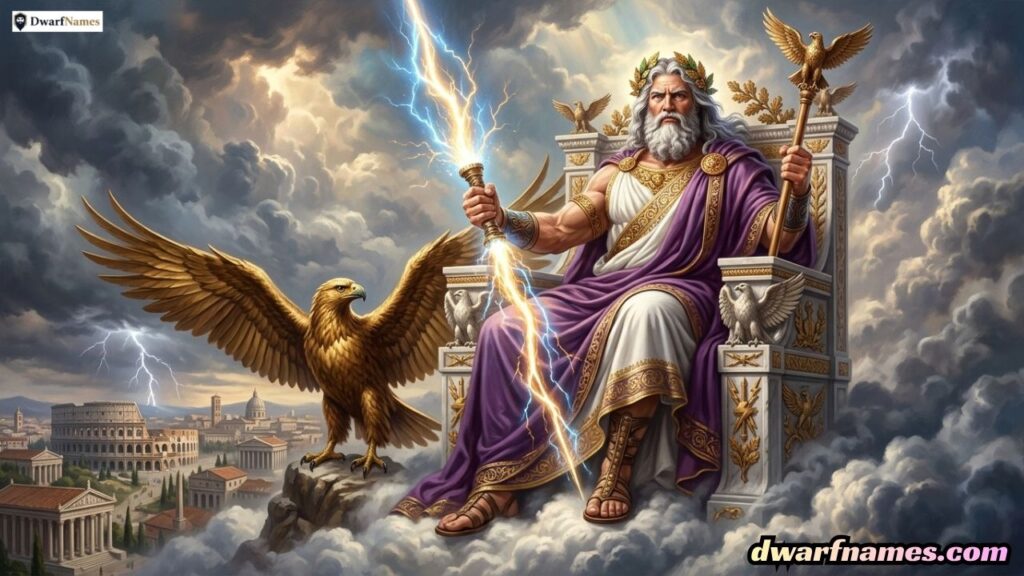

The ancient Romans did not simply name their gods. They breathed lives into them, carved their faces into marble, poured wine at their altars, and whispered their names into the wind before every battle, harvest, and sea voyage. Roman god names carry the weight of an entire civilization within them. Each syllable holds thunder, moonlight, fire, or fate. For writers, worldbuilders, tabletop RPG players, and fantasy game designers, these names are not relics. They are raw material for stories that have not yet been told.
Whether you are crafting the pantheon of a brand-new fantasy world, naming a powerful NPC in your campaign, or searching for that perfect name that feels ancient, commanding, and alive, Roman deity names offer an unmatched reservoir of inspiration. They blend power with elegance, myth with meaning, and the familiar with the wonderfully strange.
What makes Roman god names so magnetic in fantasy contexts is their duality. They can sound both brutal and poetic. A name like Mars conjures war drums and iron shields. Minerva carries the cool gleam of torchlight on scrolls. These names do not just label a character. They define one. If you love the mythic depth of Roman god names or find yourself drawn to the wild, untamed spirit of Celtic god names, you already understand how much a name can shape a world.
This is your complete reference guide. Over 300 Roman deity names, organized by category, culture, and character type. Whether you need something regal, fierce, mysterious, or divine, it is all here.
Famous Roman God Names From Literature and Games
Before diving into the full lists, it helps to understand how Roman deity names have already shaped legendary characters in fiction and fantasy.
Jupiter (Jove) stands as the archetypal ruler of the heavens in countless retellings. His name signals authority without question. In Rick Riordan’s “The Heroes of Olympus” series, Jupiter’s Roman identity contrasts with his Greek counterpart Zeus in ways that reflect discipline, militarism, and empire over the wilder Greek temperament. His name, derived from the ancient Dyeus Pater (Sky Father), carries the weight of legitimacy.
Mars is perhaps the most adapted Roman god in fantasy and gaming. From the Roman deity of war and agriculture, Mars has been reimagined in strategy games, tabletop settings, and dark fantasy novels as the template for warrior gods everywhere. His dual nature, both destroyer and protector of the harvest, makes him fascinating to write.
Diana, goddess of the hunt and the moon, appears in everything from Shakespeare to modern urban fantasy. Her name has become synonymous with fierce, independent female power. Writers reach for Diana-inspired characters when they want someone lethal, swift, and untamed by courts or politics.
Janus, the two-faced god of beginnings and doorways, is a name that writers use when they need a deity of paradox. His name has inspired countless trickster and liminal characters, beings who stand at the threshold between worlds. He is the patron saint of storytelling itself: every story begins with a door that opens.
Male Roman God Names
Roman male deities carried names that rang like bronze on stone. These were names spoken at the front of legions, carved above temple doors, and chanted during triumphs through the streets of Rome.
- Jupiter
- Mars
- Neptune
- Pluto
- Apollo
- Mercury
- Vulcan
- Janus
- Saturn
- Bacchus
- Orcus
- Liber
- Faunus
- Silvanus
- Dis
- Quirinus
- Consus
- Portunus
- Volturnus
- Carna
- Vertumnus
- Terminus
- Picus
- Soranus
- Cacus
- Sterculinus
- Virbius
- Robigus
- Summanus
- Inuus
- Angerona
- Fontus
- Semo Sancus
- Penates
- Libitina
- Lucifer
- Noctiluca
- Picumnus
- Priapus
- Veiovis
Female Roman Goddess Names
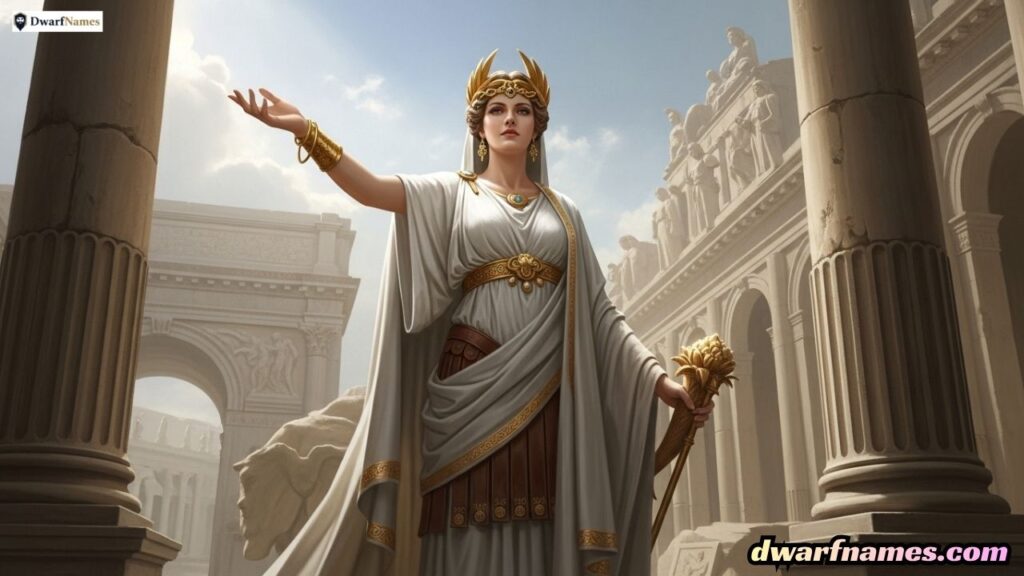
The goddesses of Rome were not passive figures waiting in temples. They were agents of fate, keepers of flame, weavers of destiny, and commanders of the tides. Their names hold grace and ferocity in equal measure.
- Juno
- Minerva
- Venus
- Diana
- Ceres
- Vesta
- Proserpina
- Aurora
- Luna
- Fortuna
- Flora
- Pomona
- Bellona
- Bona Dea
- Carmenta
- Concordia
- Cybele
- Egeria
- Fauna
- Feronia
- Furrina
- Hersilia
- Invidia
- Iris
- Iunones
- Laverna
- Levana
- Lucina
- Mater Matuta
- Meditrina
- Mens
- Murcia
- Nenia
- Ops
- Pax
- Pietas
- Salus
- Stata Mater
- Tempestas
- Voluptas
- Vitula
- Vacuna
- Ubertas
- Trivia
- Strenia
Cool and Unique Roman God Names
Some Roman deity names are simply striking. They feel built for fantasy worlds, video game characters, or the kind of protagonist who needs a name that stops readers in their tracks.
- Vejovis
- Sterquilinus
- Libitina
- Cloacina
- Angerona
- Noctiluca
- Verminus
- Mutunus
- Abeona
- Adeona
- Murcia
- Devera
- Educa
- Potina
- Ossipaga
- Carna
- Intercidona
- Pilumnus
- Deverra
- Mania
- Nox
- Fama
- Febris
- Endovelicus
- Silvanus
- Bubona
- Mellonia
- Nenia
- Vagitanus
- Orbona
Warrior and Powerful Roman God Names
For the fantasy writer who needs names that feel like drawn swords, Roman mythology delivers. These deity names are built for warlords, divine champions, guardian spirits, and terrifying battle gods.
- Mars
- Bellona
- Virtus
- Honos
- Victoria
- Quirinus
- Orcus
- Robigus
- Nortia
- Nerio
- Moles
- Pax
- Terminus
- Virbius
- Soranus
- Furina
- Dis Pater
- Libitina
- Summanus
- Volturnus
- Mullo
- Toutates
- Laran
- Nortia
- Cacus
- Strenia
- Palici
- Carna
- Sancus
- Mefitis
Royal and Noble Roman God Names
Roman deities of royalty, law, justice, and divine order carried names that commanded silence in a room and reverence in a hall. These names suit kings, emperors, divine rulers, and the kind of antagonist who believes they were born to rule.
- Jupiter
- Juno
- Saturn
- Ops
- Neptune
- Pluto
- Minerva
- Apollo
- Diana
- Concordia
- Pietas
- Fides
- Felicitas
- Aequitas
- Iustitia
- Libertas
- Pax
- Roma
- Victoria
- Salus
- Virtus
- Abundantia
- Annona
- Aeternitas
- Clementia
- Disciplina
- Genius
- Gloria
- Hilaritas
- Providentia
Traditional and Classic Roman God Names
These are the names most deeply embedded in Roman tradition, the gods invoked at the founding of cities, at the planting of fields, and at the birth of children. They have a timeless quality that makes them perfect for classic fantasy worldbuilding.
- Jupiter
- Juno
- Neptune
- Pluto
- Apollo
- Diana
- Ceres
- Vulcan
- Mercury
- Venus
- Mars
- Minerva
- Bacchus
- Vesta
- Saturn
- Faunus
- Terminus
- Janus
- Penates
- Lares
- Manes
- Genius
- Fortuna
- Flora
- Pomona
- Aurora
- Luna
- Sol
- Proserpina
- Liber
Roman God Names for Worldbuilding: Naming Traditions and Lore
One of the most powerful tools a worldbuilder has is not just the names themselves but the system behind them. Roman divine naming traditions offer a rich template.
Roman gods often held multiple names and titles. Jupiter was also called Optimus Maximus, meaning Best and Greatest, a title that reflected his supreme authority. Mars carried epithets like Gradivus (the Marching One) and Ultor (the Avenger). These epithets functioned like titles in a royal court, each one illuminating a different facet of the deity’s power.
In your fantasy world, you might adopt a similar structure. A god of storms could be called Tempestis Furens (Raging Storm) in formal rites but simply Tempestis in casual worship. A death goddess might be Mortis Quieta (Still Death) in poetry but Mortis Devorans (Devouring Death) on battlefield prayers.
Roman gods were also deeply tied to place. Local versions of deities existed throughout the empire. A river god in Gaul might share Mercury’s name but carry local characteristics, wearing different symbols and demanding different offerings. For fantasy worldbuilders, this opens the door to regional pantheon variations, perfect for building layered, believable mythologies. For more inspiration on regional divine naming systems, exploring Irish names and Welsh names can reveal how Celtic cultures created deity names with similar geographic and tribal roots.
Another powerful convention was the concept of the numen, a divine power or spirit residing in a place or object. Doorways had numina. Crossroads had numina. Ovens had numina. This means in a Roman-inspired fantasy world, even the most mundane locations might carry a sacred name, and a character who knows those names wields genuine power.
Roman God Epithets and Divine Titles
Epithets functioned as secondary names in Roman religious tradition, and they are extraordinary tools for fantasy writers who want to give gods layered identities. Below are compound divine titles that can be used directly or as inspiration for your own pantheon.
- Jupiter Optimus Maximus (Best and Greatest)
- Jupiter Tonans (the Thunderer)
- Jupiter Fulgurator (the Lightning Thrower)
- Jupiter Stator (the Stayer, who halts retreat)
- Mars Gradivus (the Marching God)
- Mars Ultor (the Avenger)
- Mars Pater (Father Mars)
- Mars Victor (Mars the Victorious)
- Venus Genetrix (Venus the Mother)
- Venus Caelestis (Heavenly Venus)
- Venus Victrix (Venus of Victory)
- Diana Lucifera (Diana the Light-Bearer)
- Diana Venatrix (Diana the Huntress)
- Apollo Phoebus (Bright Apollo)
- Apollo Medicus (Apollo the Healer)
- Minerva Medica (Minerva the Healer)
- Juno Regina (Juno the Queen)
- Juno Moneta (Juno the Warner)
- Mercury Psychopomp (Guide of Souls)
- Neptune Pater (Father Neptune)
- Pluto Dis (Pluto the Rich One)
- Ceres Augusta (August Ceres)
- Fortuna Primigenia (Firstborn Fortune)
- Fortuna Redux (Fortune Who Returns)
- Vulcan Mulciber (the Smelter)
- Saturn Pater (Father Saturn)
- Bacchus Liber (Bacchus the Free)
- Hecate Trivia (Hecate of the Three Ways)
- Luna Noctiluca (the Night-Shining Moon)
- Sol Invictus (the Unconquered Sun)
Roman Deity Clan and Family Names for Fantasy Worldbuilding
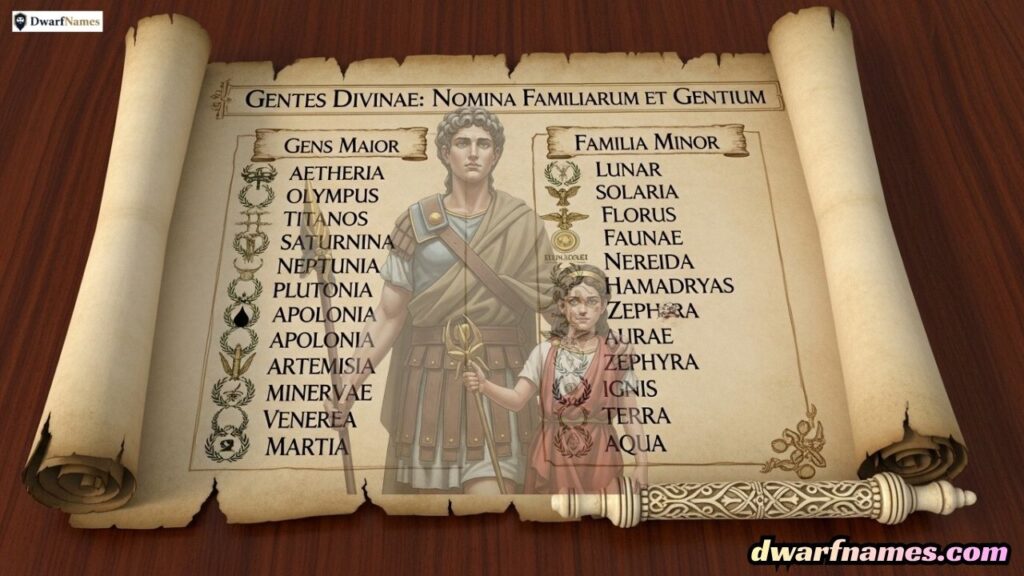
For tabletop RPG campaigns and fantasy novels where characters belong to divine bloodlines or priest clans, these compound family-style names offer immediate atmosphere. Think of them as the surnames of demigods, cult leaders, divine bloodline houses, and sacred orders.
- Jovianmarch
- Martellstone
- Venusblood
- Lunarwatch
- Solarbane
- Plutocroft
- Neptunecrest
- Apollonfire
- Dianaswood
- Minervaspire
- Vestahearth
- Saturnfall
- Cerealfield
- Vulcanforge
- Mercurywind
- Bacchusbloom
- Fortunatide
- Faunusbriar
- Terminuswall
- Janusgate
- Florabough
- Pomonaroot
- Auroradawn
- Bellaflame
- Concordiabond
- Pietaschain
- Saluscrown
- Victoriarise
- Liberfield
- Orphansmere
- Deathrealm
- Shadowwick
- Thunderholm
- Moonspell
- Flamecourt
- Stormmark
- Ironwarden
- Gatekeeper
- Dawnblade
- Ashveil
Bonus: Roman-Inspired Fantasy God Name Generator Ideas
If you are creating an entirely new pantheon inspired by Roman tradition, the following framework will help you build names that feel authentic without directly copying historical deities. Consider pairing these with Korean names or British names if your world blends cultural mythologies, a common and fascinating approach in modern fantasy worldbuilding.
Root Elements to Combine:
Prefix roots: Sol, Lun, Ign, Aqua, Terr, Vent, Mort, Vit, Bel, Vic, Fer, Grav, Fal, Noc, Temp
Suffix endings: -us, -ia, -is, -inus, -ina, -ator, -rix, -or, -ius, -ona
Example combinations:
- Solvius (a sun god with rule over sight and prophecy)
- Lunaria (a moon goddess tied to tides and illusion)
- Ignatus (a fire deity born from volcanic fury)
- Mortinus (a death god of peaceful passing)
- Bellatrix (a warrior goddess of righteous war)
- Tempestara (a storm deity who tests the worthy)
- Nocturis (a night god who guards dreamers)
- Vitaris (a life goddess who tends growing things)
- Ferronus (a forge deity who tempers souls)
- Gravius (a gravity god of judgment and weight)
Each name suggests an entire mythology. The name does half the worldbuilding work before you write a single sentence of backstory.
Conclusion: Why Roman God Names Still Matter in Fantasy
There is a reason writers, gamers, and creators return to Roman deity names again and again. These names survived millennia not through luck but through power. They carry the accumulated reverence of millions of people who believed, who prayed, who built temples and sacrificed at altars. That weight is still present in every syllable.
When you name a character after a Roman god or craft a name in the Roman divine tradition, you are borrowing a kind of mythic gravity. Your readers will feel it even if they cannot name the source. The name will feel older than the story around it, which is precisely the effect every fantasy world needs.
Use these names boldly. Twist them, combine them, strip them down to roots and rebuild them for your world. The Romans themselves adapted names freely from Greek, Etruscan, and Phoenician traditions. Mythology has always been a living, borrowing, endlessly creative enterprise.
Your pantheon is waiting to be named. Start here.
Frequently Asked Questions
What are the most popular Roman god names for fantasy characters?
Jupiter, Mars, Venus, Diana, and Apollo remain the most widely used Roman god names in fantasy fiction, games, and worldbuilding due to their strong mythic associations.
Can I use Roman god names for my DnD campaign or RPG?
Absolutely. Roman deity names work perfectly in tabletop RPGs as divine patrons, rival gods, ancient powers, or NPC names that carry immediate gravitas and cultural resonance.
What is the difference between Roman and Greek god names?
Roman gods are often Latinized versions of Greek deities, such as Jupiter for Zeus or Neptune for Poseidon, but Roman tradition gave them distinct personalities and expanded their roles in civic and military life.
Are there Roman goddess names that work well for female fantasy characters?
Yes. Minerva, Diana, Juno, Aurora, Fortuna, and Bellona are all strong, evocative names that carry distinct personality traits perfect for powerful female characters in any fantasy story.
How were Roman gods named in ancient Rome?
Roman gods received names tied to their function, with many also gaining epithets and titles that described specific aspects of their power, such as Mars Ultor meaning Mars the Avenger.
What makes Roman god names good for worldbuilding?
Roman divine names combine brevity with weight, are easy to pronounce, carry layered historical meaning, and adapt naturally into compound names, epithets, and clan titles for rich fantasy world systems.
Where can I find more mythology-based fantasy name inspiration?
Beyond Roman names, exploring Celtic god names or the rich traditions behind Irish names offers equally powerful mythological naming systems for fantasy worldbuilding.