
In the grand tapestry of fantasy worldbuilding, nothing shapes a world quite like the names of the creatures that inhabit it. A species name is more than a label — it is an echo of ancient languages, a whisper of forgotten ecosystems, a declaration of identity carved into the very soul of a fictional universe. Whether you are a dungeon master crafting a living wilderness, a novelist populating a sprawling continent, or a game developer building the fauna of an alien biosphere, the names you give your species will define how readers, players, and explorers experience your world.
Species naming in fantasy sits at a remarkable crossroads between science and myth. Real-world biology drew its nomenclature from Latin, Greek, and the languages of explorers who first catalogued the natural world. Fantasy biology does something even more powerful — it draws from imagination, from the rhythm of invented tongues, from the roar of creatures never seen and the whisper of plants that glow in moonless forests. The very sound of a name can suggest danger, gentleness, alienness, or ancient wisdom before a single line of description is written.
Think of how deeply names embed themselves in lore. The great dragon Smaug carries menace in every hard consonant. The wyvern, the basilisk, the behemoth — these are species names that became legend. Now imagine building your own compendium of life, where every beast and bloom has a name that rings true in the world you’ve crafted. That is the power waiting for you in this guide.
This ultimate collection of 300 species names for biology and fantasy worldbuilding is your gateway to that power. Organized by type, tone, and cultural origin, these names are ready to populate your codexes, bestiaries, field guides, and campaign notes. Let us begin.
Famous Species Names from Literature and Games
Before we dive into the lists, it helps to understand how the masters did it. Fantasy fiction and gaming are rich with species names that have stood the test of time — not because they were randomly invented, but because they were crafted with intention.
The Bulette (Dungeons & Dragons) — Sometimes called the “land shark,” the Bulette’s name is blunt, abrupt, and slightly alien. It evokes something that bursts from the earth without grace or ceremony. The name is unforgettable precisely because it sounds like nothing else in the monster manual.
The Tarrasque (D&D) — Borrowed from French legend, this titanic creature carries the weight of its name like armor. The double consonant cluster creates a sense of mass, of something immovable and ancient. It became one of the most feared names in tabletop gaming without ever needing extensive description.
The Niffler (Harry Potter) — Here is a species name that does the opposite — soft, bouncy, almost affectionate. J.K. Rowling understood that creature names could carry warmth and whimsy. The Niffler became beloved partly because its name promised something endearing before you ever saw it.
The Sandworm / Shai-Hulud (Dune) — Frank Herbert gave his desert leviathan two identities: a biological label and a sacred name. This dual-naming technique is extraordinary worldbuilding. One name says “organism,” the other says “god.” Your species can do the same.
These examples demonstrate that great species names have personality, phonetic texture, and cultural resonance. Keep that in mind as you explore the lists below.
Mammalian Fantasy Species Names
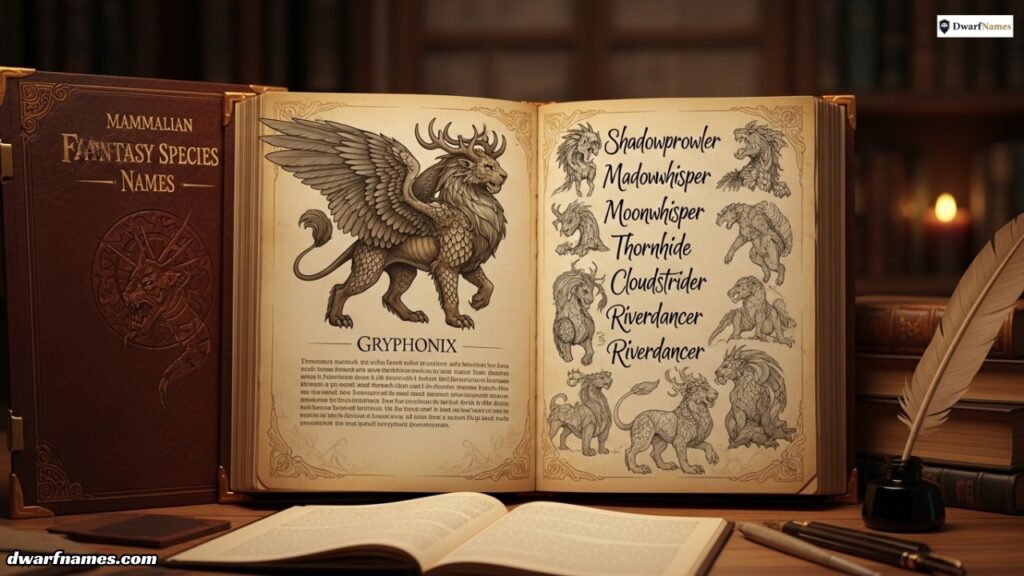
Mammals are the backbone of most fantasy bestiaries — warm-blooded, relatable, yet capable of extraordinary variation. These names are built for creatures that breathe, that nurse their young, that hunt or flee through forest and plain. Many of these connect thematically to naming traditions found in sources like Greek god names, where power and nature intertwine.
These names range from apex predators to gentle grazers, from burrowing things to soaring megafauna:
- Vorathian
- Malkesh
- Thundrel
- Cravenox
- Silvarne
- Duskmohr
- Ferralix
- Grenholdt
- Ursvane
- Pellwick
- Morrifax
- Shadowkin
- Thalvorn
- Brimwood
- Greymantle
- Ashenfur
- Coldmaw
- Ironpelt
- Dawnstrider
- Vestrak
- Mirelock
- Thunderclove
- Bleakcrest
- Hornveil
- Siltmane
- Ravengirth
- Dustwhisker
- Fangmore
- Stoneloper
- Brackenhound
- Velthross
- Crownmane
- Aldermusk
- Nightloper
- Swiftbarrow
- Fellgrazer
- Emberfang
- Coldtread
- Ironbristle
- Dunmurr
- Ashprowl
- Kettlehorn
- Vorthmane
- Reedlurk
- Ashvault
- Cinderback
- Dreadmane
- Hollowclaw
- Grimward
- Ravensnout
Avian and Aerial Species Names
The sky belongs to these names. Whether great predatory birds, luminous moths the size of horses, or creatures that drift on magical thermals, aerial species carry names that should evoke lift, wind, and the vastness above.
- Zephyrax
- Cloudmere
- Vanthalion
- Skywren
- Mistfeather
- Thornwing
- Duskplume
- Galeborn
- Ironcrest
- Hollowbeak
- Aethervane
- Stormmantle
- Fernglide
- Silverthorn
- Ashgyre
- Windraker
- Nimbuswing
- Veilcrest
- Razorglide
- Emberwing
- Coldsoar
- Dawnheron
- Shiftplume
- Scalewing
- Cinderfalcon
- Driftmantle
- Stonetalon
- Halvorn
- Skydrifter
- Galecrest
- Thornsoar
- Vaultraven
- Ironvane
- Ashplume
- Rimewing
- Greycloak
- Stormwatcher
- Mistborn
- Frostglide
- Duskvane
- Hollowmantle
- Windwatcher
- Blazefeather
- Saltgyre
- Thistlewing
Aquatic and Deep-Sea Species Names
Below the surface, naming shifts. The best aquatic species names carry a sense of depth, pressure, cold, and the alien beauty of lightless places. These are names for creatures that haunt rivers, rule ocean trenches, and drift through magical underseas. They share a kinship with the mythology explored in Roman names, where water deities were ancient and fearsome.
- Abyssalon
- Driftmare
- Thornfin
- Mirewraith
- Coralshade
- Deepvessel
- Saltborn
- Glacialmere
- Voidcrawler
- Tidemantle
- Ironscale
- Kelpcrown
- Wavewarden
- Siltdrifter
- Coldmare
- Stormfin
- Murkspine
- Blacktide
- Fernshark
- Hollowpike
- Vaulteel
- Ashkeel
- Duskbelly
- Depthcrawler
- Rimedrifter
- Saltmaw
- Inkscale
- Grimfin
- Coldcrawler
- Dregtide
- Nightmare (aquatic)
- Siltwraith
- Stoneeel
- Voidfin
- Darkskimmer
- Cavecrawler
- Mireskate
- Frosteel
- Grimcoral
- Shellmantle
- Deepmarrow
- Thornray
- Hollowkeel
- Dustwraith
- Inkdrifter
- Reedshark
- Stoneskate
- Vaultray
- Ashfin
- Coldpike
Reptilian and Draconic Species Names
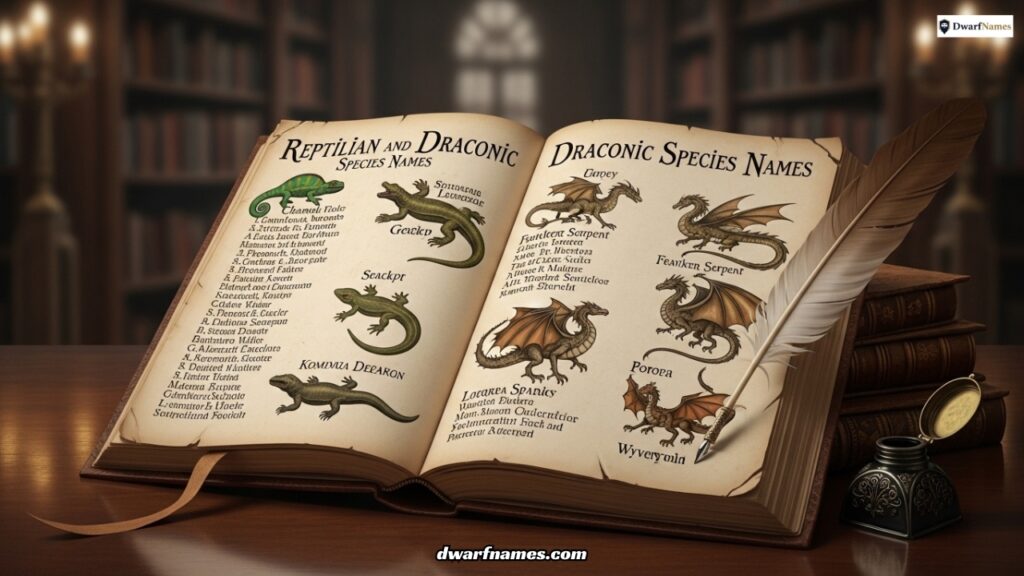
Dragons, serpents, and their kin deserve names that hiss and crack. Reptilian species names in fantasy carry the weight of primordial time — these are creatures older than civilization, whose names should reflect that ancient lineage. If you enjoy building reptilian lore, you might also find inspiration in DnD Firbolg names for how ancient races carry their heritage in their naming.
- Vorrathex
- Scalemourne
- Ashviper
- Crestdrake
- Thornrex
- Embercrawler
- Ironhide
- Duskscale
- Stormdrake
- Coldblood
- Rimeviper
- Hellscale
- Gorgoneth
- Blazecrest
- Ashdrake
- Hollowfang
- Vaultcrawler
- Dreadscale
- Saltblood
- Cinderdrake
- Grimcrest
- Stoneblood
- Skullrex
- Ironviper
- Grimdrake
- Dustcrawler
- Voidcrest
- Fellscale
- Darkfang
- Stonecrest
- Ashveil
- Crownrex
- Deathcrawler
- Rimescale
- Emberfang
- Hollowrex
- Thunderscale
- Coldcrest
- Blastrex
- Vaultfang
- Ashdragon
- Stormscale
- Dawnfang
- Grimviper
- Voiddrake
Flora and Botanical Species Names
A living world has plants as well as creatures. Botanical naming in fantasy is a craft unto itself — these names should suggest texture, fragrance, danger, or healing. From parasitic vines to luminescent ferns, your world’s flora deserves names as rich as its fauna. For more naming inspiration rooted in mythological traditions, explore Greek god names where natural forces were personified with extraordinary names.
- Ashbloom
- Thornweave
- Duskfern
- Mirewort
- Grimrose
- Coldvine
- Stonelily
- Shadebriar
- Ironmoss
- Vaultbloom
- Emberpetal
- Dustweed
- Fernmantle
- Hollowroot
- Rimefern
- Saltbloom
- Ashenreek
- Deepvine
- Stormthorn
- Voidbloom
- Shadowfern
- Cinderpetal
- Dreadwort
- Dawnlily
- Grayvine
- Ashpetal
- Frostbloom
- Hollowfern
- Mireweed
- Stonebriar
- Darkrose
- Reedwort
- Saltmoss
- Thornlily
- Vaultfern
- Emberwort
- Coldbriar
- Ironpetal
- Grimvine
- Ashenbloom
- Duskwort
- Darkfern
- Siltbloom
- Stormweed
- Cinderbriar
Insect and Arachnid Species Names
Small does not mean insignificant. The insect and arachnid orders of a fantasy world can be among its most terrifying and fascinating inhabitants. These names carry a clicking, chitinous quality — short, sharp, slightly unsettling.
- Chitravane
- Grimspinner
- Dustmite (evolved)
- Hollowstinger
- Ashcrawler
- Thornmoth
- Vaultspider
- Ironmite
- Coldwasp
- Duskbeetle
- Rimecrawler
- Stonespinner
- Embermoth
- Saltsting
- Grimcrawler
- Dreadbeetle
- Mireling
- Voidwasp
- Ashmite
- Cinderfly
- Hollowbeetle
- Deepcrawler
- Stormsting
- Darkspinner
- Frostmoth
- Greyling
- Reedcrawler
- Thornsting
- Vaulting
- Ember crawler
Mythical and Celestial Species Names
Some species transcend biology entirely — they are creatures of pure myth, summoned from starlight and ancient prophecy. These names should feel vast, as if they were spoken by gods rather than catalogued by naturalists. You might find a similar sense of the divine in resources like halfling names, where even small folk carry names that echo with destiny.
- Etherborn
- Starmantle
- Voidwalker
- Aeonshade
- Celestrax
- Dawnborn
- Luminarch
- Starloper
- Cosmovane
- Eclipsian
- Radiantform
- Vaultborn
- Heavenshade
- Skyshard
- Stormborn
- Duskmantle
- Ashborn
- Rimecrest
- Coldlight
- Blazeborn
- Voidshade
- Starlurk
- Glowmantle
- Nebulax
- Astralvane
- Hollowstar
- Sunwalker
- Moonmantle
- Grimlight
- Eclipsar
Species Naming Traditions: A Worldbuilder’s Lore Guide
In any believable world, names don’t appear from nowhere. They emerge from cultures, from necessity, from reverence or fear. Here is a framework for giving your species names a coherent in-world origin.
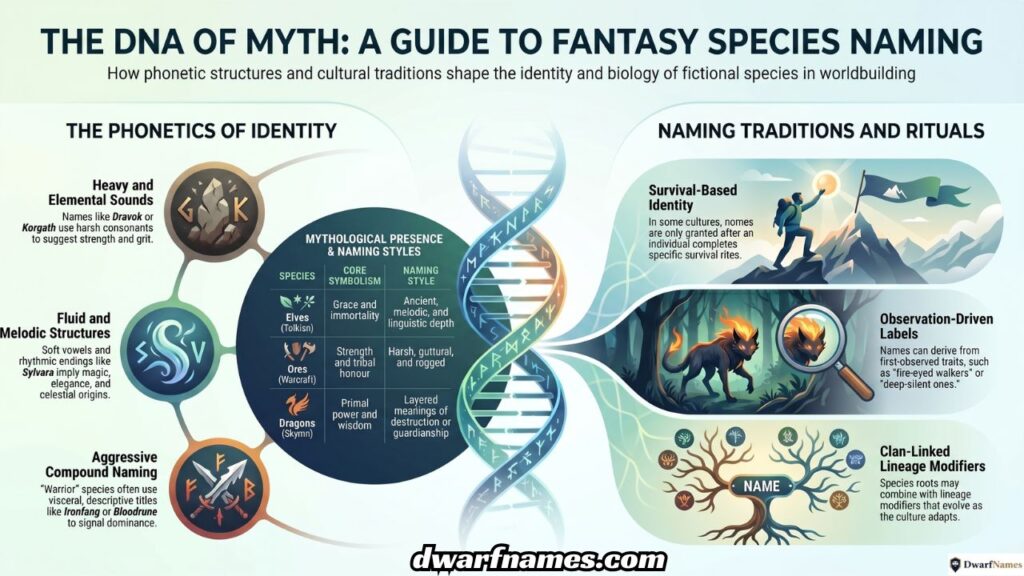
The Warden’s Tradition — In many fantasy cultures, it is the rangers, druids, and naturalists (called Wardens) who name new species. They follow a strict tradition: the first syllable describes the creature’s primary habitat, the second its most notable physical feature. So a creature found in ashlands with a broad crest becomes “Ash-crest” — and over centuries, that compound becomes a single word: Ashcrest. This is similar to the way human names evolved through occupational suffixes and regional markers.
The Elder Tongue Method — Ancient civilizations in your world may have spoken a precursor language. Species discovered in that era carry names from the Elder Tongue, which often feature doubled consonants, hard stops, and archaic vowel clusters: Vorrathex, Thundrel, Malkesh. These names feel older, weightier. When a character encounters a creature with an Elder Tongue name, they know they are dealing with something that was already ancient when history began to be written.
Common Tongue Descriptors — More recently catalogued species often carry names in the common trade tongue — practical, descriptive, occasionally affectionate. Dustwhisker, Ironpelt, Coldmaw. These names function like nicknames that became official. Adventurers and merchants gave them these names on the road, and the names stuck.
Sacred Naming — Some cultures believe that naming a creature gives the namer power over it, or responsibility for it. In these traditions, new species are named only by elders after extended observation and ceremony. The names bestowed are sacred words, often incorporating the name of a deity or elemental force: Etherborn, Celestrax, Aeonshade.
Species Clan and Family Names (Bonus Section)
In a world with sapient species or highly organized animal hierarchies, family and clan names create another layer of identity. These compound names work for noble lineages of mythical beasts, for ancient familial lines among dragon clans, or for the heraldic naming traditions of magical fauna. They have a similar structural elegance to names found among pirate crews, where reputation and intimidation are built into the name itself.
- Stonebreaker
- Ironvault
- Ashmantle
- Grimtide
- Coldcrown
- Dawnpiercer
- Voidwalker
- Embermaw
- Thornguard
- Hollowcrest
- Stormrender
- Ashbane
- Scalecloak
- Frostmourne
- Dreadclaw
- Cindershield
- Ironmantle
- Vaultbreaker
- Duskwarden
- Bladehorn
- Rimecrown
- Saltbane
- Windcutter
- Stonehammer
- Grimclaw
- Darkmantle
- Coldguard
- Ashrender
- Thorncrown
- Embershield
- Dustwarden
- Hollowbane
- Stormclaw
- Voidcrown
- Cinderbreaker
- Ironhide
- Dawnguard
- Scalebane
- Frostclaw
- Grimwarden
- Saltmantle
- Windbreaker
- Stonecrown
- Darkshield
- Ashclaw
- Thornrender
- Embercrown
- Dustguard
- Hollowmantle
- Rimebane
Conclusion: Name Your World into Existence
Names are the first act of creation. Before a creature breathes in your world, before it hunts or blooms or drifts through dark water, it needs a name that carries the weight of its existence. The 300 species names gathered in this guide are more than a list — they are seeds. Each one contains the potential for an entire ecological niche, a cultural relationship, a legend told around fires in your imagined world.
The greatest writers and worldbuilders understand that naming is world-making. When Tolkien named the great eagles Gwaihir and Landroval, he didn’t just label them — he gave them nobility. When Herbert named the sandworm Shai-Hulud, he transformed a monster into a god. Your names can do the same.
Take these names. Twist them, combine them, let them evolve through your world’s languages and histories. Let a warrior carry a scar from an Emberfang encounter that defines his character. Let a botanist’s life work be the cataloguing of Hollowroot varieties. Let your world breathe with named life on every page and encounter table.
The wilderness of your imagination is waiting to be catalogued. Now you have the names to begin.
Frequently Asked Questions
What makes a good fantasy species name for biology worldbuilding?
A great fantasy species name combines phonetic texture, cultural resonance, and descriptive suggestion. It should sound natural in the world while conveying the creature’s essence clearly.
How many species names do I need for a fantasy world?
Even 50 well-crafted species names can populate a rich fantasy world. Quality and consistency matter more than sheer quantity when building believable ecosystems.
Can I use these species names in my D&D campaign or RPG?
Absolutely. These names are designed for games, novels, and worldbuilding. Use them freely for homebrew campaigns, bestiaries, field guides, and encounter tables.
How do I create consistent naming conventions for fantasy species?
Choose a root language structure — hard consonants for predators, soft vowels for gentle creatures — and apply it consistently. Naming traditions make your world feel linguistically alive.
Are these species names suitable for sci-fi biology as well?
Many names here work well in science fantasy settings. Adjust spelling conventions slightly to shift the tone from magical-fantasy to speculative-biological as needed.
What is the difference between a species name and a common name in fantasy?
Species names are formal, often derived from ancient in-world languages. Common names are what everyday people call a creature — usually descriptive, regional, and less formal.
How do naming conventions reflect culture in fantasy worldbuilding?
Naming systems reveal who catalogued a species first — warriors name threats, druids name allies, merchants name resources. This layering creates living cultural history within your world.