
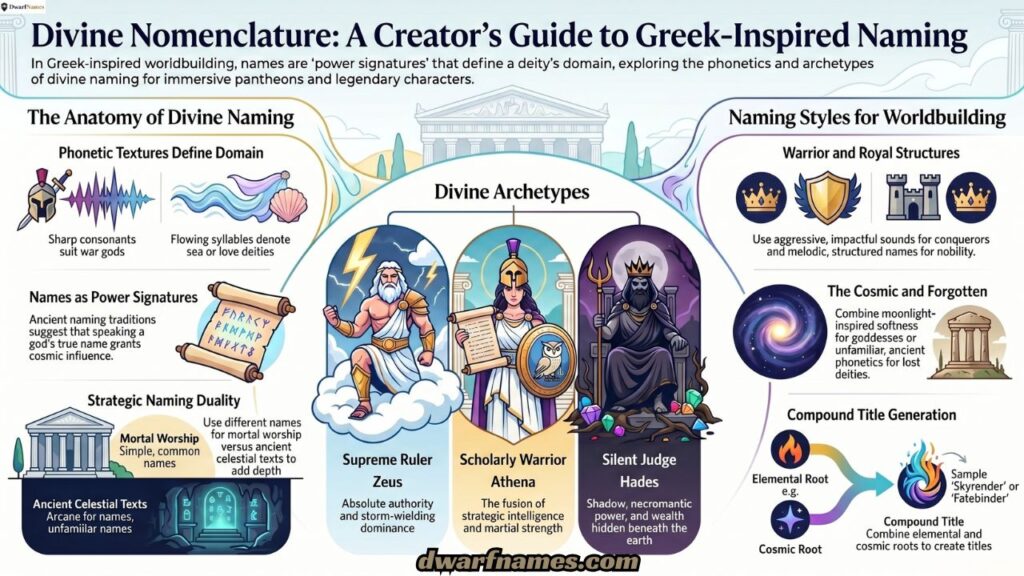

Long before kingdoms rose from stone and mortal heroes carved their names into legend, there were the gods. They ruled from snow-capped Olympus, stirred the seas into fury, breathed fire into the earth, and wove fate itself on celestial looms. Greek mythology is not merely a collection of ancient tales it is the original universe of gods, monsters, heroes, and cosmic drama. And at the heart of every myth, every epic, every prayer whispered beneath a starlit sky, there is a name.
For writers, game masters, and worldbuilders, Greek god names are among the most powerful naming resources ever conceived. They carry centuries of meaning each syllable echoing divinity, personality, and power. A name like Zeus doesn’t just identify a character; it announces dominion. Persephone whispers of duality spring’s bloom and the underworld’s shadow. These names don’t merely label; they define.
Whether you’re building a mythic fantasy setting, designing a pantheon of your own, seeking inspiration for a D&D campaign, or writing a novel where gods walk among mortals Greek god names are your most potent tool. This ultimate guide contains over 300 names drawn from the full breadth of Greek mythology: Olympians, Titans, primordial deities, minor gods, and forgotten divine figures. Organized by theme, gender, role, and personality, this is the most complete resource you’ll find.
Just as explorers of other fantastical cultures might dive into species names from across the fantasy world or the rugged heritage of DnD Firbolg names, the Greek divine tradition offers its own unparalleled depth ancient, resonant, and endlessly inspiring.
Famous Greek God Names From Literature & Games
Before diving into the lists, it’s worth understanding how the greatest storytellers have used Greek god names to build unforgettable characters.
Zeus — Father of gods and men, Zeus is the archetype of divine authority. In literature from Hesiod’s Theogony to Rick Riordan’s Percy Jackson series, his name alone summons the imagery of thunderbolts and absolute power. He is complex — a ruler who is both just and deeply flawed, a father figure who betrays and protects in equal measure. His name means “sky” or “shine,” and it colors every character who bears it.
Athena — The goddess of wisdom and war strategy is perhaps mythology’s most nuanced female deity. In games like Hades by Supergiant Games, Athena appears as a calm, measured force amid divine chaos. Her name has become synonymous with intelligence married to strength a naming model that fantasy writers use constantly when crafting female warrior-scholars.
Ares — Where Athena is strategy, Ares is raw fury. His name has become a fantasy shorthand for brutal, passionate warriors consumed by battle. In games, films, and novels, characters named Ares or with names inspired by him carry an immediate aura of violence and intensity.
Persephone — One of mythology’s most tragic and powerful figures, Persephone embodies duality: the maiden of spring and the queen of the dead. Her name has inspired countless fantasy characters who straddle two worlds, serve two masters, or carry a hidden darkness beneath a gentle exterior.
Male Greek God Names
These names belong to the gods of the Greek pantheon Olympians, Titans, primordial forces, and divine heroes. Each carries gravitas, mythology, and immense fantasy potential.
- Zeus
- Poseidon
- Hades
- Apollo
- Ares
- Hermes
- Hephaestus
- Dionysus
- Helios
- Cronus
- Uranus
- Prometheus
- Atlas
- Hyperion
- Oceanus
- Morpheus
- Thanatos
- Hypnos
- Erebus
- Boreas
- Zephyrus
- Notus
- Eurus
- Nereus
- Triton
- Proteus
- Pan
- Priapus
- Aeolus
- Erichthonius
- Ganymede
- Asclepius
- Paeon
- Deimos
- Phobos
- Eros
- Anteros
- Pontus
- Aether
- Tartarus
- Pallas
- Coeus
- Crius
- Iapetus
- Mnemosyne
- Epimetheus
- Menoetius
- Lelantos
- Perses
- Phobetor
Female Greek Goddess Names
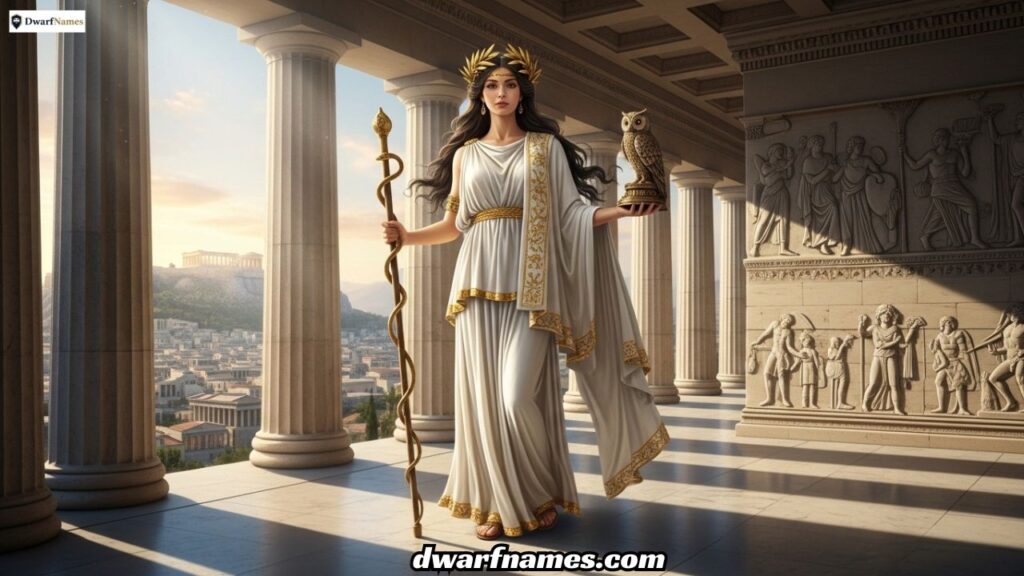
The goddesses of Greek mythology are some of the most layered, complex, and fascinating divine figures ever imagined. These names are rich with character and fantasy resonance.
- Hera
- Athena
- Aphrodite
- Artemis
- Demeter
- Hestia
- Persephone
- Hecate
- Nyx
- Selene
- Eos
- Iris
- Nemesis
- Tyche
- Nike
- Themis
- Dike
- Eunomia
- Eris
- Harmonia
- Psyche
- Circe
- Calypso
- Medusa
- Gaia
- Rhea
- Tethys
- Mnemosyne
- Phoebe
- Styx
- Metis
- Amphitrite
- Galatea
- Leucothea
- Chloris
- Aura
- Melinoe
- Macaria
- Elpis
- Aletheia
- Daphne
- Aegina
- Clymene
- Electra
- Pleione
- Alcyone
- Merope
- Taygete
- Celaeno
- Sterope
Cool & Unique Greek God Names
These are the names that carry an unusual edge less commonly cited, but no less powerful. Perfect for fantasy writers who want that rare, distinctive divine name that feels both ancient and arresting.
- Erebus
- Aether
- Chaos
- Apate
- Bia
- Caerus
- Comus
- Eurynomos
- Zelus
- Kratos
- Hedylogos
- Hymenaios
- Iynx
- Meilikhios
- Nomos
- Orcus
- Palioxis
- Pheme
- Proioxis
- Soter
- Telesphoros
- Theron
- Trivia
- Xenia
- Zelos
Warrior & Strong Greek God Names
If your character is a divine warrior, a demigod of battle, or a god reborn into conflict, these names carry the weight of ancient war. Much like the fierce traditions found in Roman names with their martial legacy, these Greek names resonate with power and conflict.
- Ares
- Kratos
- Bia
- Nike
- Alastor
- Adrestia
- Enyo
- Polemos
- Proioxis
- Palioxis
- Deimos
- Phobos
- Athena
- Perses
- Menoetius
- Machaon
- Euryalus
- Amphiaraus
- Alcides
- Thereus
- Drakon
- Kapros
- Ladon
- Ophion
- Sthenelus
Royal & Noble Greek God Names
For the rulers of pantheons, the kings of divine courts, and the noble-born children of gods. These names demand reverence and carry an aristocratic divine weight.
- Zeus
- Poseidon
- Hades
- Cronus
- Hyperion
- Oceanus
- Coeus
- Hera
- Rhea
- Themis
- Mnemosyne
- Phoebe
- Tethys
- Gaia
- Uranus
- Apollo
- Artemis
- Demeter
- Hestia
- Persephone
- Selene
- Helios
- Eos
- Hermes
- Dionysus
Traditional & Classic Greek God Names
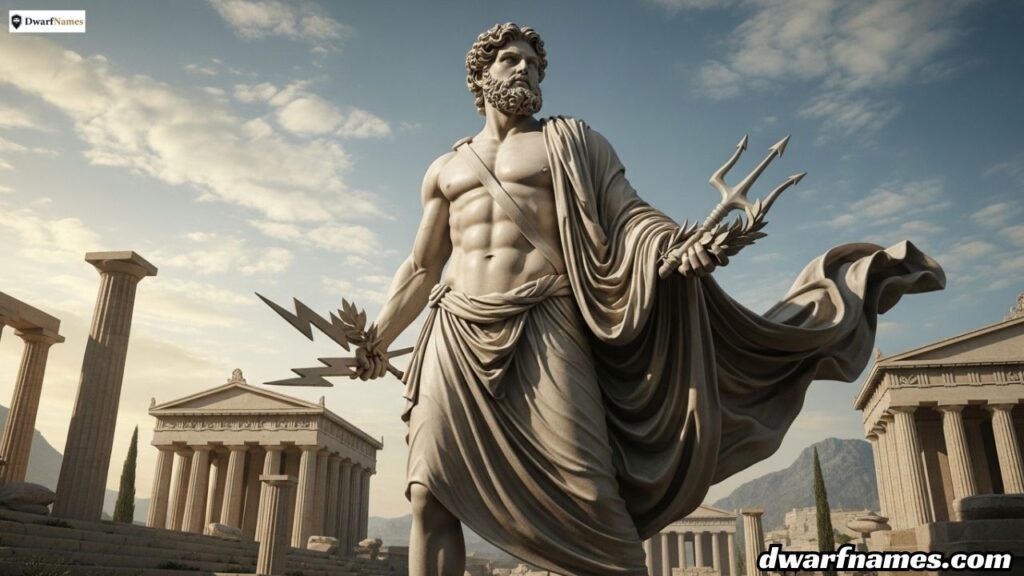
These are the household names of Greek mythology the names every ancient Greek knew, the names carved into temple stones and sung by rhapsodes. Traditional, timeless, and endlessly useful for any fantasy setting that draws on classical mythology.
- Zeus
- Apollo
- Hermes
- Ares
- Poseidon
- Hades
- Hephaestus
- Dionysus
- Athena
- Aphrodite
- Artemis
- Hera
- Demeter
- Hestia
- Persephone
- Hecate
- Morpheus
- Nemesis
- Tyche
- Pan
- Asclepius
- Iris
- Nyx
- Eros
- Helios
Primordial Greek God Names
Before the Olympians, before even the Titans, there were the Primordials the original divine forces who were not born but simply were. These names carry a deeper, older weight than almost any other in fantasy naming. They are perfect for ancient gods, world-builders, or beings who predate civilization itself.
The primordials are the cosmological skeleton of Greek myth and naming a character after one suggests something fundamental about their nature.
- Chaos
- Gaia
- Tartarus
- Eros
- Erebus
- Nyx
- Aether
- Hemera
- Uranus
- Pontus
- Thalassa
- Ananke
- Chronos
- Phanes
- Hydros
- Thesis
- Phusis
- Akmon
- Ophion
- Eurybia
Minor & Forgotten Greek God Names
Greek mythology contains hundreds of minor deities, spirits, and divine figures who rarely receive their due. For worldbuilders seeking truly original names that still feel mythologically authentic, these lesser-known divine names are a treasure.
- Achelous
- Aceso
- Adephagia
- Aergia
- Agdistis
- Aglaea
- Algos
- Alke
- Amenthes
- Amphilogiai
- Androktasiai
- Antiphates
- Apheleia
- Arithmos
- Asopos
- Astraea
- Ate
- Atropos
- Auxo
- Brontus
- Catharmo
- Clotho
- Corus
- Daimon
- Dysnomia
- Echidna
- Empusa
- Eniautos
- Epione
- Eudaimonia
- Eunomos
- Euthenia
- Geras
- Glaucos
- Hebe
- Hedone
- Hygeia
- Iambe
- Kairos
- Kerkopes
- Koros
- Lachesis
- Lamia
- Lethe
- Litae
- Lupe
- Lyssa
- Maniae
- Methe
- Momus
Greek God Naming Traditions: A Worldbuilding Lore Guide
Understanding why Greek gods have the names they do transforms how you use them. In the ancient world, divine names were not arbitrary. They were sacred identifiers that described cosmic function, personality, origin, and domain.
Function-Based Names: Many Greek god names directly describe what the deity does. Hypnos (sleep), Thanatos (death), Nike (victory), Eros (desire) these are almost titles rather than personal names. When crafting a fantasy pantheon, consider naming minor gods after their exact function. A god of harvest might be Karpos (fruit), while a deity of storms might be Aella (whirlwind).
Epithet Culture: Greek gods rarely had a single name. Zeus was also Zeus Xenios (protector of guests), Zeus Basileus (king), and Zeus Ombrios (rain-bringer). These epithets served as titles reflecting different aspects of the same divine figure. A single god could have dozens of cult names across different cities. Fantasy writers can use this tradition to give their divine characters multiple names a public name, a war name, a secret name known only to worshippers.
Genealogical Names: Many divine names echo their parentage. Helios (the sun god) fathered Phaethon (the shining one). The children of Nyx bear names tied to night and darkness Hypnos, Thanatos, Eris, Nemesis. When worldbuilding a divine family tree, consider how names should echo across generations.
Place and Nature Names: Gods were often named for the natural phenomena they embodied or the places they governed. Poseidon may derive from roots meaning “lord of waters.” Gaia is simply “earth.” Aether means “upper air.” This connection between name and nature gives fantasy settings a grounded, immersive quality when used thoughtfully.
Greek God Clan & Family Names: Divine Bloodlines
In mythology, divine identity was inseparable from lineage. The children of Zeus were Olympians. The children of Nyx carried shadows in their blood. Here are inventive compound divine clan names inspired by Greek mythological tradition perfect for naming divine houses, noble lineages, or factions in a fantasy pantheon.
- Zeusblood
- Stormborn
- Titanfall
- Shadowweave
- Abysskeeper
- Starforged
- Tidecaller
- Ironwrath
- Voidborn
- Sunharvest
- Moonwalker
- Deathwhisper
- Flameshaper
- Nightmother
- Skycleaver
- Thunderchosen
- Deepwater
- Sacredfire
- Warstride
- Dreamwarden
- Fatebreaker
- Soulforgod
- Goldenmantle
- Darkpillar
- Stoneblessing
- Seabound
- Oathkeeper
- Lightweaver
- Ironvow
- Wraithborn
- Brimstone
- Cosmoscribe
- Firstborn
- Voidwatcher
- Eternalspark
- Ashenpetal
- Dawnbreaker
- Spiritforge
- Emberwrath
- Starmantle
Greek God Last Names & Surnames for Fantasy Characters
When Greek gods or demigod characters need surnames for a more grounded fantasy setting think of the epic fantasy tradition of names like pirate names or halfling names these compound divine surnames are perfect. They blend Greek mythological roots with the descriptive surname tradition.
- Olympusborn
- Titansbane
- Skythrone
- Lightningveil
- Deepabyss
- Mortalsblight
- Wavebreaker
- Soulreaper
- Frostgale
- Embersong
- Goldenveil
- Shadowroot
- Stormmantle
- Irontemple
- Oceanwhisper
- Dawnspire
- Sacredbolt
- Gravestone
- Starfall
- Cosmoscrown
- Voidpillar
- Fireserpent
- Nightbloom
- Thunderforge
- Suncrown
- Moonpetal
- Deathgarden
- Spiritwalker
- Ashenveil
- Ironwarden
- Flamepillar
- Stormbringer
- Faithcleaver
- Soulweave
- Starborn
- Dreambolt
- Shadowmantle
- Warsong
- Goldpillar
- Frostborn
Conclusion: The Power of a Divine Name
A name is never just a label. In the world of myth and fantasy, a name is a declaration it tells the world who you are, what you carry, and where you come from. The Greek gods understood this perfectly. Every name in their vast pantheon was chosen, shaped, and refined across centuries of storytelling to carry maximum weight and meaning.
Whether you’re a novelist crafting a pantheon from scratch, a game master running a mythic campaign, or a worldbuilder constructing a civilization that worships these ancient powers, these 300+ Greek god names give you an extraordinary foundation. Use them directly. Remix them. Let them inspire entirely new names that carry the echo of Olympus without being bound to it.
The gods named in this guide have survived thousands of years precisely because their names are perfect. They feel divine because they were born from divine imagination and that same imagination is yours to inherit.
So take these names. Write your myths. Build your worlds. Let the gods speak through your stories.
And if you’re looking to expand your naming horizons further, explore the rich traditions of human names in fantasy settings because even gods sometimes walk among mortals with names no one recognizes.
Frequently Asked Questions
What are the most famous Greek god names?
Zeus, Athena, Apollo, Poseidon, and Hades are the most recognized, each representing core mythological domains like sky, wisdom, sun, sea, and death.
Can I use Greek god names for fantasy characters in my novel?
Absolutely. Greek god names are in the public domain and widely used in fantasy fiction, RPGs, and worldbuilding for their powerful, mythological resonance.
What are some unique Greek god names that are less commonly known?
Names like Erebus, Aether, Melinoe, Caerus, Pheme, and Zelus are rare, authentic Greek divine names perfect for distinctive fantasy characters.
How do Greek god names reflect their personality and powers?
Greek divine names often describe function or nature directly Hypnos means sleep, Thanatos means death, Nike means victory making each name a built-in character description.
Are Greek god names good for D&D characters and campaigns?
Yes Greek mythology is one of D&D’s deepest inspirations. Names like Kratos, Hecate, and Morpheus work perfectly for divine NPCs, clerics, and pantheon-based worldbuilding.
What is the difference between Olympian and Titan names in Greek mythology?
Olympians like Zeus and Athena rule the current cosmic order; Titans like Cronus and Hyperion are older, overthrown gods, often used for more ancient or villainous characters.
Where can I find more fantasy name ideas beyond Greek mythology?
For broader inspiration, explore collections like halfling names or DnD Firbolg names to expand your worldbuilding palette.