
There’s something undeniably magnetic about a Tiefling. When they step into a tavern, the air shifts—conversations hush, eyes linger, and unease stirs beneath forced smiles. Their infernal heritage is impossible to ignore: sweeping horns, flicking tails, and eyes that glow with unnatural intensity. Yet beneath that striking exterior lies a story shaped not by destiny alone, but by choice, resilience, and defiance.
In Dungeons & Dragons, Tieflings stand at the crossroads of darkness and redemption. Their lineage ties them to the Nine Hells, but their actions define who they truly become. Every decision they make—every alliance, spell, or blade drawn—reveals a deeper struggle for identity and belonging in a world that often judges them too quickly.
A Tiefling’s name is more than a label. It’s a declaration of self, a symbol of power, conflict, or rebellion. Choosing the right name isn’t just creative—it’s the beginning of your character’s legend.
Famous Tiefling Names From Literature & Games
Before we dive into the vast name lists, it’s worth looking at the Tieflings who have already left their mark on the worlds of fiction and tabletop gaming. These characters show us how a single name can encapsulate an entire identity.
Farideh — From the Brimstone Angels novel series by Erin M. Evans, Farideh is perhaps the most celebrated Tiefling in modern D&D fiction. Her name has a Persian-inspired resonance that feels ancient and otherworldly, perfectly suited for a woman navigating pacts, prophecy, and sisterhood. Farideh’s name does not scream “demon blood”—it whispers of complexity, intelligence, and quiet fire. It reflects a character who defies the stereotype placed upon her at birth.
Havilar — Farideh’s twin sister from the same series, Havilar is more brash, more impulsive, and more dangerously fun. Her name shares that exotic musicality but has a sharper, more percussive quality. Together, Farideh and Havilar show how names can differentiate characters even within the same bloodline.
Emmek Hargan — A less celebrated but beautifully crafted Tiefling NPC found in various D&D sourcebooks, Hargan represents the street-hardened, urban Tiefling—practical, cunning, surviving in a world that deals them a bad hand at every turn. His name feels grounded and gritty, more human than infernal, speaking to a life spent trying to blend in.
Mollymauk Tealeaf — From Critical Role‘s second campaign, Mollymauk is perhaps the most beloved Tiefling in actual-play history. His name is simultaneously absurd and poetic—a contradiction, just like Molly himself. Flamboyant, warm-hearted, philosophical, and tragic, Mollymauk proves that a Tiefling name doesn’t need to sound menacing. Sometimes the most haunting name is the one that makes you smile before it breaks your heart.
These examples reveal a core truth: the best Tiefling names mean something. They reflect personality, backstory, and emotional truth. Now let’s build your arsenal of names to do exactly that.
Male Tiefling Names
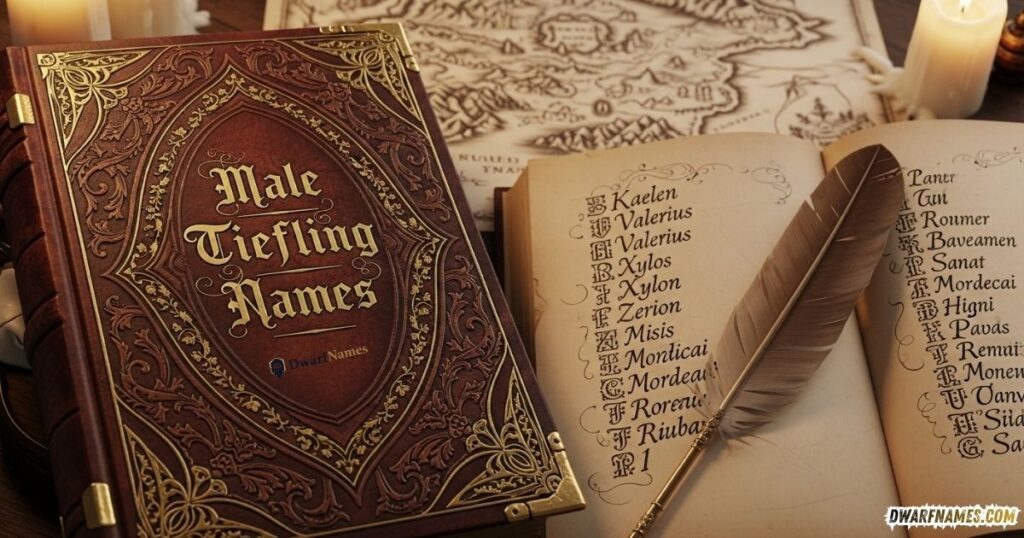
Male Tiefling names in D&D often blend infernal Latin and Abyssal influences with a dark musicality. Many carry hard consonants—the sound of iron striking stone—while others flow with unsettling elegance. Whether your character is a brooding sorcerer, a vengeful warrior, or a wandering bard with a devil’s grin, these names offer a rich palette.
- Akmenos
- Amnon
- Barakas
- Damakos
- Ekemon
- Iados
- Kairon
- Leucis
- Melech
- Mordai
- Morthos
- Pelaios
- Skamos
- Therai
- Varis
- Zovos
- Rathiel
- Carnivex
- Dravos
- Sevreth
- Ixos
- Molken
- Tyravel
- Belhazar
- Caladros
- Vexian
- Nazrath
- Solkarn
- Drevan
- Halveth
- Cyrex
- Malphas
- Obrath
- Therion
- Xavros
These names carry the weight of centuries—some evoking forgotten infernal languages, others carrying that slightly-off quality that marks someone not entirely of this world. If you enjoy names from similar dark fantasy traditions, the demon names archive offers additional inspiration drawn from mythological roots.
Tiefling Names Female
Female Tiefling names possess a particular dark elegance—often built on softer sounds that conceal sharp edges, or musical rhythms that feel like incantations. They can be haunting, regal, fierce, or seductive, sometimes all at once.
- Akta
- Anakis
- Bryseis
- Criella
- Damaia
- Ea
- Kallista
- Lerissa
- Makaria
- Nemeia
- Orianna
- Phelaia
- Rieta
- Savara
- Talaneh
- Vesryn
- Zelaia
- Myravel
- Elorath
- Xanthia
- Solvara
- Nyressa
- Celdara
- Threnody
- Vaelith
- Ishara
- Morryn
- Silveth
- Calandria
- Evaine
- Duskara
- Thariel
- Nasmira
- Xelara
- Koriel
Many of these names share a tonal kinship with dark elf names, another tradition steeped in shadow, elegance, and ancient power. The overlap is no coincidence—both cultures have learned to make beauty from darkness.
Cool and Unique Tiefling Names
Sometimes you want a name that doesn’t fit neatly into any tradition—a name that feels genuinely one-of-a-kind, surprising, and immediately memorable. These names push the edges of what a Tiefling name can be.
- Azrael (gender-neutral, heavenly and infernal at once)
- Cinder
- Vexar
- Skarith
- Obsidian
- Wraithmoor
- Pyreth
- Solvex
- Nocturne
- Hexara
- Ashveil
- Typhon
- Grimoire
- Emberlash
- Dreadhollow
- Shadowthorn
- Voidmere
- Scarleth
- Cindervex
- Blazemoth
- Thornwraith
- Ashcroft
- Morvaine
- Darkember
- Soulflare
- Hexarion
- Vexmourne
- Ironash
- Gravelthorn
- Crimsonveil
These names occupy a fascinating space—more evocative than traditional, they feel like aliases chosen deliberately, names that tell a story before the character has spoken a single word. They echo the kind of names you might find among dragon names or witch names—titles that carry power simply by existing.
Warrior and Badass Tiefling Names
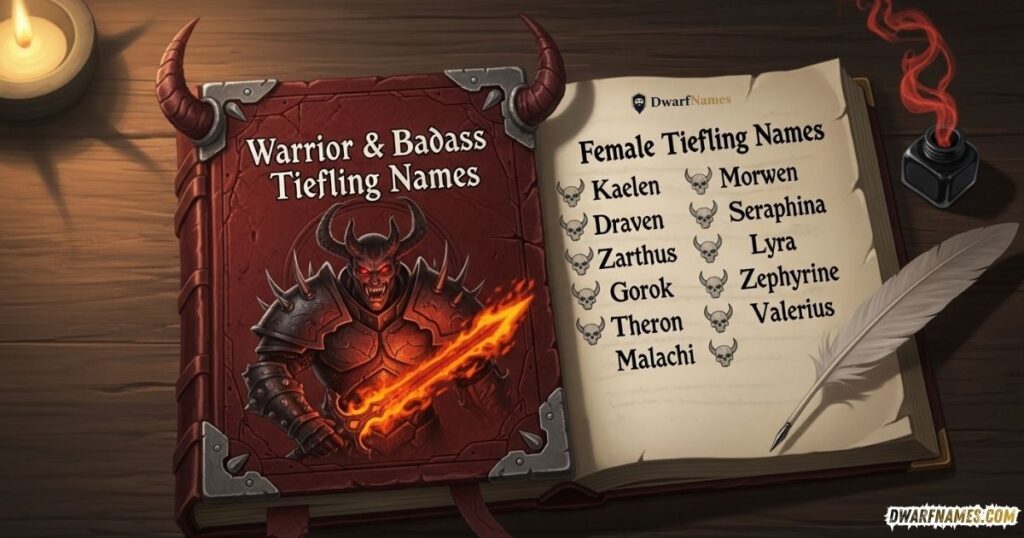
Not every Tiefling broods in corners or whispers pacts with devils. Some forge their infernal heritage into pure, elemental strength—and their names announce it like a war cry. These names carry steel and fire.
- Mordrak
- Infernus
- Hexblade
- Vexkrath
- Demonhide
- Soulcleave
- Ironshroud
- Bloodthorn
- Ravenmaw
- Scorchbane
- Hellfire
- Ashstrike
- Grimfang
- Vorex
- Dreadknight
- Blazeclaw
- Scorndark
- Ironpyre
- Thornblade
- Vexclaw
- Soulrender
- Ashforged
- Warcinder
- Hellmark
- Darksteel
- Pyreborn
- Razorwing
- Ashknight
- Grimslayer
- Emberfist
For those drawn to martial might and warrior legacy, names from the knight names tradition can offer excellent structural inspiration—titles that carry honor and hierarchy even when forged in shadow.
Royal and Noble Tiefling Names
In cities where Tieflings have clawed their way to power—or in infernal courts where bloodline matters above all—noble names take on a different character. They are elegant, commanding, and built to demand respect from the first syllable.
- Azarath the Eternal
- Lord Malpheris
- Duchess Selvaine
- Vexandros the Black
- Lady Calindra
- Sareth the Unmoved
- Marchioness Threnova
- Emperor Drakthos
- Countess Valerith
- Sovereign Molvaris
- High Lord Calyxar
- Prince Sorvane
- Archduke Pyrethon
- Queen Ashalar
- Warlord Hexavar
- Grand Marshal Draveth
- Lord-Consort Skornax
- Regent Calvaine
- Admiral Vexandra
- Prelate Morvash
These names feel at home in the kinds of settings where kingdom names carry ancient weight—places where a name is a legacy, a weapon, and a throne all at once.
Traditional and Classic Tiefling Names
These names draw most heavily from the official D&D lore—names that have appeared in sourcebooks, supplement materials, and the long tradition of the game itself. If you want your Tiefling to feel deeply rooted in the established lore of the Forgotten Realms or Planescape, these are your foundation.
- Akmenos
- Amnon
- Barakas
- Damakos
- Ekemon
- Iados
- Kairon
- Leucis
- Melech
- Mordai
- Morthos
- Pelaios
- Skamos
- Therai
- Varis
- Akta
- Bryseis
- Damaia
- Kallista
- Lerissa
- Makaria
- Nemeia
- Orianna
- Phelaia
- Rieta
These classic names have a timeless quality that makes them instantly recognizable to experienced D&D players while remaining accessible to newcomers. Much like high elf names, they follow patterns of internal consistency that make them feel like they belong to a real linguistic tradition.
Tiefling Naming Traditions: The Lore Behind the Labels
Understanding why Tieflings name themselves the way they do adds extraordinary depth to your character or worldbuilding. Tiefling naming is not monolithic—there are at least three distinct traditions, each reflecting a different relationship with identity and heritage.
The Infernal Tradition draws from the languages of the Nine Hells—Abyssal, Infernal, and archaic forms of Celestial corrupted over millennia. Names from this tradition carry hard stops, guttural sounds, and syllabic patterns that feel older than human language. Characters named in this tradition often come from families that take a certain grim pride in their heritage, treating it as a mark of distinction rather than shame.
The Virtue Tradition is perhaps the most distinctive and poignant naming practice in all of D&D. Some Tieflings—particularly those who grew up in hostile environments, lost their birth names, or chose to redefine themselves—adopt names drawn from abstract virtues and concepts: Despair, Hope, Art, Torment, Poetry, Ruin, Cruelty, Reverence. These names are at once a kind of cosmic joke and a profound statement of self. A Tiefling named Hope who lives in a world that offers them none becomes an instant narrative. A Tiefling named Torment who has made peace with their past becomes an act of reclamation.
The Adopted Tradition covers Tieflings who grew up in predominantly human or other-race communities and simply received names common to that culture—or who abandoned infernal-sounding names to escape prejudice. These characters often carry names like Gareth, Mira, or Corvin—recognizably humanoid, deliberately unremarkable, and sometimes carrying a quiet tragedy of their own.
The choice between these three traditions is itself a character choice. It says something profound about how your Tiefling sees themselves in relation to their heritage.
Virtue Names: A Special Tradition
The Virtue naming tradition deserves its own section because it is so uniquely Tiefling—and because it produces some of the most dramatically rich names in all of fantasy roleplay. These names work best when there is an ironic or meaningful tension between the name and the character.
- Hope
- Despair
- Art
- Torment
- Ruin
- Reverence
- Poetry
- Cruelty (Crul for short)
- Sorrow
- Mercy
- Vengeance
- Solace
- Lament
- Silence
- Grace
- Wrath
- Patience
- Tempest
- Penance
- Valor
- Spite
- Absolution
- Regret
- Triumph
- Malice
A character named Silence who cannot stop talking, or Mercy who shows none—these paradoxes become engines of story. This is worldbuilding through naming at its most elegant.
Tiefling Naming Conventions in Dungeons & Dragons
- Acheron
- Baelith
- Cindervex
- Dravok
- Eryndor
- Fyris
- Gloam
- Hellsin
- Izzrak
- Jexis
- Kalthor
- Lurien
- Malvek
- Nythor
- Obrix
- Pyralis
- Qelzar
- Raxus
- Sablex
- Tharion
- Umberis
- Vexor
- Wrathen
- Xaldrin
- Yzrael
- Zorvax
- Kaelith
- Morvex
- Zynther
- Velkros
Dungeons & Dragons Tiefling Name Inspiration
- Azrael
- Belros
- Cyrion
- Duskren
- Emberlyn
- Faelith
- Grimnar
- Haxion
- Ignivar
- Jorvex
- Kaedryn
- Lilithor
- Morvain
- Nyxar
- Ormion
- Pyreth
- Qirath
- Ravien
- Soryn
- Tzarel
- Umbrax
- Virex
- Xornis
- Yelvar
- Zareth
- Drakos
- Velmorn
- Zyrion
- Ashkar
- Noxiel
Tiefling Names DnD
- Avarix
- Brimor
- Calix
- Drevon
- Elzra
- Fennix
- Garruk
- Hesper
- Icaron
- Jaxor
- Kaelis
- Lorvek
- Myrrax
- Nethor
- Orvax
- Pyros
- Quorin
- Riven
- Sythor
- Talver
- Urzok
- Varnis
- Wexor
- Xavian
- Yornax
- Zarek
- Draven
- Malzor
- Zethis
- Korvax
Tiefling Virtue Names
- Agony
- Mercy
- Chaos
- Silence
- Vengeance
- Hope
- Sorrow
- Fate
- Wrath
- Glory
- Despair
- Radiance
- Ash
- Ember
- Truth
- Lies
- Justice
- Ruin
- Shadow
- Dawn
- Night
- Pride
- Fear
- Honor
- Grief
- Flame
- Void
- Dream
- Storm
- Resolve
Tiefling Last Names
- Ashborne
- Blackflame
- Cindersoul
- Duskveil
- Emberfall
- Firebrand
- Grimshade
- Hellbound
- Ironwhisper
- Nightbane
- Oathbreaker
- Pitwalker
- Redveil
- Shadowthorn
- Soulflayer
- Thornveil
- Underflame
- Vileborn
- Wyrmfire
- Bloodmark
- Darkspire
- Frosthell
- Grimfire
- Infernalis
- Magmashade
- Netherborn
- Sablethorn
- Voidwalker
- Warbrand
- Zephyrbane
Tiefling Surnames and Clan Names
While many Tieflings go by a single name (some by choice, some because their families cast them out), others carry surnames that reflect lineage, profession, or the dark flavor of their bloodline. Some surnames are inherited; others are forged.
Infernal Surnames
- Ashvault
- Brimstone
- Hellscar
- Shadowmantle
- Vexmourne
- Ironpyre
- Duskbrand
- Thornhallow
- Soulwarden
- Emberfall
- Grimward
- Voidcrest
- Cindermark
- Darkmantle
- Hexblood
- Ashenborn
- Pyrewatch
- Morvain
- Soulbrand
- Scornhollow
Clan Names (for Tieflings with tribal or family structures)
- The Ashborn Lineage
- House Vexandros
- Clan Soulrender
- The Emberveil Covenant
- House Grimthorn
- Clan Pyrethon
- The Hexborn Circle
- House Duskveil
- Clan Ashknight
- The Infernal Accord of Molvaris
These naming structures work well in settings where world names carry political weight—where a surname is a faction, and a faction is a fate.
For more compound name inspiration, the traditions found in druid names offer nature-dark contrasts that pair beautifully with Tiefling aesthetics—think ash and ember meeting root and stone.
Building Your Tiefling’s Name: A Worldbuilder’s Framework
If none of the names above quite fit your vision, here is a practical framework for forging your own. Think of it as a naming grimoire.
Step 1 — Choose Your Sound Profile. Hard and guttural (Vex, Krath, Drak) suggests aggression, military background, or infernal pride. Soft and musical (Lyra, Vael, Sora) suggests artistry, cunning, or a desire to be perceived as gentle. Mixed profiles (Vaelthorn, Solvex, Celdara) suggest complexity—a character who is many things at once.
Step 2 — Choose Your Tradition. Infernal? Virtue? Adopted? Or a hybrid—a virtue name rendered in Infernal phonetics, like Tor-Ment becoming Torvaneth, or Hope becoming Haelith?
Step 3 — Layer in Meaning. The best Tiefling names carry a secondary resonance. Cinder evokes something burned, something that survived fire. Nocturne evokes music and night. Even if the player at the table never explains the name’s meaning, you knowing it will inform every choice you make.
Step 4 — Test It Aloud. A name only truly works when it can be spoken dramatically by a dungeon master at a critical moment. Say it out loud. Does it land?
This process echoes how skilled authors approach wizard names—layering phonetics, meaning, and mythic resonance until the name itself becomes part of the character’s power.
Tiefling Names for Different Classes and Archetypes
A Tiefling Warlock demands a different name than a Tiefling Cleric. Here’s a quick framework pairing archetypes with name styles.
Warlock — Lean into infernal tradition. Names like Malphas, Hexavar, Vexandros, or Grimoire carry the weight of pacts and forbidden knowledge.
Paladin — Lean into the Virtue tradition or adopted human names. A Paladin named Mercy or Absolution is an immediate story. One named Gareth who looks like a devil defying expectations is equally powerful.
Rogue — Single-syllable names or street aliases work best. Cinder, Shade, Ash, Vex. Fast names for fast characters.
Sorcerer — Musical, slightly unnerving names that suggest power coiled beneath calm. Vaelith, Solvara, Threnody, Nocturne.
Bard — This is where Virtue names shine brightest. Art, Torment, Sorrow, Poetry. Or something theatrically dramatic like Molten Lace or Twilight’s Echo.
Fighter/Barbarian — Strong, hard-consonant names. Drakvar, Ashstrike, Scorndark, Ironpyre.
For those creating Tieflings who travel the wider planes, exploring names from traditions like mermaid names or country names can inspire unique hybrids—Tieflings who absorbed naming conventions from cultures they passed through.
Conclusion: Your Name Is Your First Spell
In the end, a name is not decoration. It is declaration. For a Tiefling—a being who came into this world already carrying the judgment of strangers, already marked by a power they were born into and did not ask for—a name is an act of extraordinary significance.
Whether you choose something infernally ancient like Malphas or Threnody, something defiantly hopeful like Absolution or Grace, or something entirely your own, forged from the phonetic alchemy of your imagination, know that you are doing something important. You are giving a character permission to exist.
The names in this guide are starting points, not ceilings. They are the embers of something larger—a character, a story, a world. Tieflings are proof that the most compelling fiction lives in contradiction: beauty and menace, damnation and grace, exile and belonging. Let your name hold that tension. Let it mean something. Let it be the first thing your character gives the world before they take anything from it.
Now go roll some dice. Hell is waiting—and so is your legend.
For further exploration of fantasy naming across cultures and races, you might also enjoy our guides to DnD Tiefling names for even more options, high elf names for contrast with noble fey tradition, and demon names for the deepest roots of infernal naming lore.