
Every great hero, cunning villain, and mysterious wanderer in fantasy fiction carries something heavier than a blade or a spellbook: a name. And not just any name — a surname that echoes through tavern halls, is whispered in royal courts, and carved into tombstones long after the story ends. The right fantasy surname is a world compressed into syllables. It tells you where someone comes from, what they’ve survived, and what kind of legend they might become.
Whether you’re crafting a protagonist for your epic novel, rolling up a new character for a tabletop RPG, building a city of factions for your game world, or simply searching for the perfect title for your next great creation — this guide exists for you. Inside, you’ll find more than 400 fantasy surname ideas organized by theme, tone, and tradition. From ancient noble houses to feared warrior clans, from whispering elven lineages to the iron-stamped names of dwarven smiths, every name here has been chosen to ignite imagination.
Names in fantasy aren’t decoration. They are identity. When Tolkien named a hobbit “Baggins,” he told us volumes before a single page was turned. When George R.R. Martin wrote “Lannister,” the name alone conjured gold, lions, and treachery. A great fantasy surname shapes the reader’s expectations, deepens lore, and makes characters feel like they belong to a living, breathing world — not just a story. And just as the right surname grounds a character, the right last name ideas can ground an entire fictional lineage.
So let us open the great tome and begin.
Famous Fantasy Surnames From Literature & Games
Before diving into our lists, it helps to understand what makes a great fantasy surname by examining the ones that have endured. These names aren’t just labels — they carry entire mythologies on their shoulders. Studying them teaches us the craft behind the title.
Stormcrow is a surname archetype built on omen and movement. Characters bearing storm-based surnames often serve as harbingers — they arrive before catastrophe and leave just as it begins. The name evokes both power and transience. Think of Gandalf’s ironic title “Stormcrow” in Tolkien’s world, used as an insult by those who feared the truth he carried.
Greywarden blends color symbolism with function. Grey signals neutrality, age, and wisdom; warden marks the duty to protect. Names of this compound structure appear frequently in dark fantasy traditions, particularly among those who walk between light and shadow — characters like the Grey Wardens of Dragon Age, sworn to fight ancient evil regardless of personal cost. This dual-world existence is also reflected in the shadowy DnD Drow naming traditions, where surnames often carry the weight of loyalty and betrayal simultaneously.
Ashveil speaks to concealment of a destroyed past. Ash invokes destruction and rebirth; veil suggests a hidden truth. Characters with this kind of surname often carry a secret — a fallen house, a hidden lineage, or a power they’ve suppressed. In many ways, the surname itself becomes the first mystery of the story.
Ironfast is the quintessential warrior surname — forged, immovable, declarative. The long tradition of metal-and-permanence names appears in dwarf naming conventions where the surname reflects not just occupation, but philosophy. An Ironfast doesn’t bend. That information is handed to the reader before the character speaks a single word.
Notice the pattern: the best fantasy surnames are not random syllable combinations. They carry meaning — elemental, occupational, symbolic — and they echo the character’s role in the world.
Male Fantasy Surnames
These are strong, resonant surnames suited to male characters across warrior, mage, rogue, and noble archetypes. Each name balances authority with depth, feeling rooted in tradition without sacrificing originality.
- Ashborne
- Blackthorn
- Coldmere
- Dawnridge
- Embervast
- Frostmantle
- Grimwall
- Halvorn
- Ironspire
- Jadecroft
- Keldrath
- Lorenvane
- Moorcrest
- Nighthollow
- Oakhaven
- Plagueborn
- Quillstrike
- Ravenscroft
- Stormbeck
- Thornwall
- Umberveil
- Vanthorpe
- Wulfmere
- Xarrath
- Yorncrest
- Zephyrmoor
- Aldercroft
- Blazewick
- Crestfallen
- Dustmantle
- Embergrave
- Falconspur
- Galeholt
- Harrowick
- Ironmoor
Female Fantasy Surnames
These surnames carry elegance, power, and mysticism — fitting for sorceresses, queens, assassins, healers, and wandering seers alike. They are designed to feel both timeless and distinctive, strong without sacrificing grace.
- Aelindra
- Brighthollow
- Cinderfall
- Dewmere
- Elvenmist
- Fairweald
- Glimmershaw
- Heronvale
- Ivyborn
- Jademoore
- Kindlewick
- Larkspur
- Mistwhisper
- Nightbloom
- Opalveil
- Pearlwick
- Quietwater
- Rosevarn
- Silverbell
- Thornmoss
- Umbrafield
- Velvethorn
- Winterlyn
- Xelindra
- Yarrowhaven
- Zephyrrose
- Amberfall
- Brineborn
- Crystalmere
- Duskweave
- Emberglow
- Feywander
- Gossamerwick
- Hollowsong
- Ivorydale
Cool & Unique Fantasy Surnames
For characters who need to stand apart — strange, striking surnames that linger in the memory long after the page is turned. Many of these suit an outcast or half-elf wanderer whose lineage defies simple categorization. These names feel like they carry secrets.
- Voidshroud
- Thornechoes
- Ashwhisper
- Coldvane
- Dreadspire
- Emberfrost
- Fadecloak
- Gloomtide
- Hexmorrow
- Inkfall
- Jinxcroft
- Knellthorn
- Lostwater
- Mirewood
- Nullborn
- Obliquen
- Phantomgate
- Quicksable
- Ridgescrawl
- Shadowstep
- Twistveil
- Unseenvast
- Vexmire
- Wrathwick
- Xylvorn
- Yarnvoid
- Zenithdusk
- Abyssvane
- Blightmere
- Cryptfall
- Doomveil
- Eclipseborn
- Fademark
- Ghostthorn
- Havenless
Warrior & Badass Fantasy Surnames
These surnames are hammered from iron and battle-fury. They belong to veterans who have survived wars, catastrophes, and worse. If your character has fought a dragon and lived, they might carry one of these names. This category shares DNA with the fierce, uncompromising barbarian naming tradition, where a surname is earned in blood rather than inherited at a hearth.
- Bonebreaker
- Crashblade
- Deathmark
- Emberstrike
- Fisthorn
- Grimforge
- Hammerfall
- Irongrip
- Jawcrush
- Killmoor
- Lionsmaw
- Manecleave
- Nailcroft
- Ogrewall
- Pikeblood
- Quartzbane
- Ramspike
- Skullward
- Tombcleave
- Urgrock
- Vaultbreaker
- Warbrand
- Xenoblade
- Yardhammer
- Zerothrust
- Ashenwar
- Blademark
- Crimsonfall
- Darkcleave
- Edgeborn
- Flamegrip
- Gorewall
- Hellbrand
- Ironsmash
- Jadecleave
Royal & Noble Fantasy Surnames
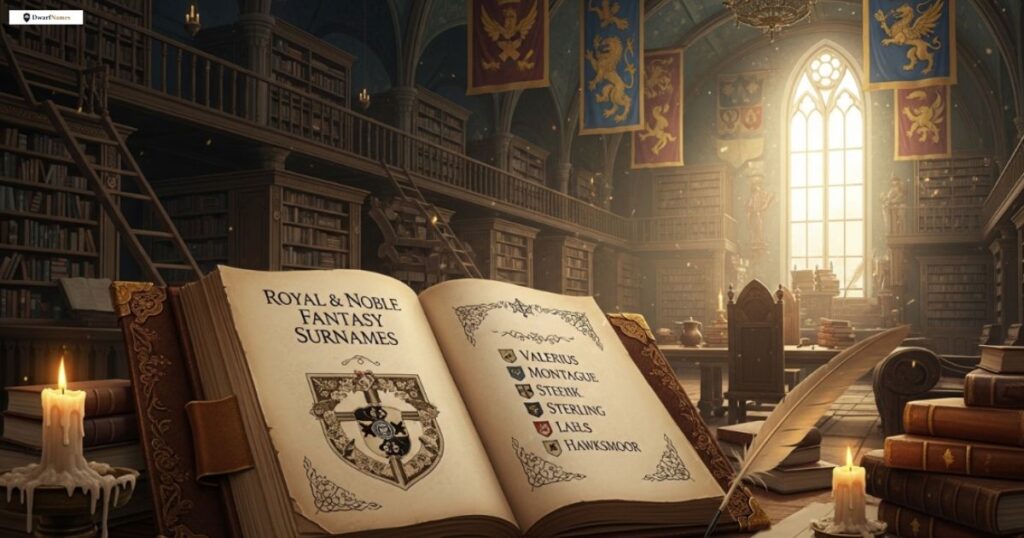
Nobility demands names that carry weight — surnames that sound as though they’ve been spoken in throne rooms and carved into the lintels of ancient estates. These are names passed down across dynasties, each one weighted with history. For building entire royal houses around these names, the deeper resource on royal names and titles offers rich context on how aristocratic naming traditions differ across cultures and eras.
- Aldenmoor
- Brightspire
- Crownveil
- Dawnmantle
- Embervorne
- Falconrest
- Goldmere
- Highcastle
- Imperith
- Jewelcrest
- Kingsthorn
- Lordenmere
- Marblevast
- Noblewick
- Orinthia
- Peregrine
- Queensdale
- Regalmoor
- Silvergate
- Thorncastle
- Upland
- Velvetspire
- Whitecrest
- Xanthorne
- Yardenhal
- Zephyrwick
- Aurelius
- Barronfall
- Castlegrove
- Dukesvale
- Eminenthal
- Firstbloom
- Grandveil
- Hallowed
- Imperialwick
Traditional & Classic Fantasy Surnames
Some names feel timeless — rooted in the deep grammar of fantasy tradition. These are the surnames that would feel at home in any era of your world’s history, the kind passed down across generations without fading. They pair beautifully with both established last name ideas and invented fantasy syllabics, and they form the backbone of any well-populated world.
- Aldric
- Brentwood
- Crestwood
- Dunmore
- Elmsworth
- Fairfield
- Graystone
- Hollowick
- Ironvale
- Jadwick
- Kettlemere
- Larchwood
- Millcroft
- Northvale
- Oldham
- Pinehollow
- Quillbrook
- Riverstone
- Silverfield
- Timbervale
- Underwold
- Villmere
- Westmarch
- Xanvale
- Yarwood
- Zelwick
- Ashwood
- Barrowfield
- Clearwater
- Darkhollow
- Eastmere
- Fernwick
- Grainfield
- Hillcroft
- Innkeeper
The Lore of Fantasy Surnames: Naming Traditions & Worldbuilding
In truly immersive worlds, surnames don’t arise randomly. They are granted, inherited, earned, or sometimes imposed — and each origin tells a different story. Understanding how fantasy cultures name their people is one of the most powerful tools a worldbuilder has. Just as the architecture of a fantasy town reflects its history, so too does the structure of its people’s names.
Clan-Based Surnames
Many warrior cultures — particularly barbarian tribes and nomadic horse-clans — use surnames that reflect the clan’s totem animal, founding warrior, or spiritual oath. The name “Stonehoof” might belong to an entire clan whose ancestors rode great beasts across stone plains. Individual identity is secondary to collective legacy. When a member of such a clan introduces themselves by surname, they are not just giving a name — they are invoking their entire lineage. For worldbuilders interested in building out these totem-based naming traditions, studying troll clan naming conventions provides a useful look at how savage and ancient cultures structure identity through shared names.
Earned Surnames
In cultures where surnames must be earned rather than inherited, a character may begin life with no last name at all, gaining one through a deed of valor, a great failure, or an unusual gift. An assassin who always strikes from shadow might earn the name “Nightstep.” A healer who never loses a patient becomes “Steadyhand.” A sailor who survived a kraken becomes “Deepsurvived.” This tradition makes every name feel like a compressed biography — and it immediately gives readers or players a story hook to explore.
Occupational Surnames
Among more settled, guild-based societies, surnames often derive from craft or trade — Fletcher, Silversmith, Wardwright. These names carry a quiet dignity. They speak of communities where what you do defines who you are. For worldbuilders constructing merchant families or artisan guilds in a fantasy city setting, occupational surnames add a layer of believable texture that makes the world feel lived-in rather than constructed.
Elemental & Mystical Lineage Names
Elven-adjacent races and plane-touched bloodlines often use surnames that flow from nature — the name of a river, a constellation, a season, or a celestial event. These names tend to be multisyllabic and soft-consonant. Cultures like the Genasi, born of elemental planes, may carry surnames reflecting which element shaped their bloodline — Cinderblood, Stormborn, Deepwater. Similarly, the fierce and hidden Drow carry surnames heavy with shadow and ancient oath, often bound to their matriarchal house structures in ways that make surnames a political declaration as much as a personal identity.
Cursed & Fallen Surnames
Some of the most dramatic fantasy characters carry surnames that mark their family’s disgrace — a house destroyed by betrayal, a name associated with heresy or dark magic. Ashfall, Blackened, Wrathhollow — these names immediately signal tragedy. Characters who bear them often struggle between the weight of their inheritance and the desire to forge a new identity. Even figures of mythological legend can model this duality: the storm god Susanoo carries a name that embodies both greatness and destruction — a perfect template for fantasy surnames that hold contradiction within a single word.
Fantasy Clan Names & Compound Surnames
The grand tradition of compound clan surnames — where two powerful words are fused into one — produces some of the most iconic names in fantasy. These are built for families, factions, guilds, and orders. Use them as founding house names, titles granted by kings, or names carved over fortress gates. They pair well alongside animal-derived totemic naming traditions for clans who identify with a creature, and work beautifully with the brutal compound names common to barbarian warrior cultures.
- Ashbourne
- Bloodmantle
- Coldspire
- Deathmarch
- Ebonveil
- Frostforge
- Grimstone
- Hallowvane
- Ironwall
- Jadeclaw
- Knightfall
- Lightsever
- Moonbreach
- Nightward
- Oakenshield
- Plaguevast
- Quickthorn
- Razorcrest
- Shadowmark
- Titangrip
- Voidgate
- Warbringer
- Xenofall
- Zealotward
- Ashfang
- Blightwall
- Crimsonmantle
- Darkspire
- Edgewall
- Flameborn
- Ghostcroft
- Hellmark
- Ironspawn
- Kingstrike
- Lostmantle
- Midnightcrest
- Ninefall
- Oldguard
- Pridefall
- Runemark
- Steelgrip
- Thunderwall
- Vaultcrest
- Wrathcrown
- Yewmark
- Zerothborn
- Abyssborn
- Brandmark
- Crestfall
- Doomguard
- Emberwrath
- Fangmark
- Greymantle
- Hollowbane
- Ironpledge
Tips for Crafting Your Own Fantasy Surnames
The lists above are starting points, not finishing lines. The best worldbuilders use curated name lists as raw material, then shape and twist them to fit their specific worlds and characters. Here are the core principles that produce great fantasy surnames every time.
Fuse meaningful words. Take two words from different domains — an element plus a landscape feature (Ashdale), a quality plus a profession (Grimward), a color plus an emotion (Greysorrow) — and fuse them. The combination should feel like it carries meaning even if it doesn’t translate directly. The slight imprecision is part of the magic.
Use phonetic texture deliberately. Hard consonants like K, G, T, and D project strength and aggression. Soft sibilants like S, V, and L suggest elegance or mystery. Aspirated sounds like Wh and Th feel ancient and weighted. Build surnames whose phonetic texture matches your character’s identity — a brute warrior shouldn’t be named Silversong, and a gentle healer probably isn’t a Bloodsmash.
Test it aloud. Say the name ten times. Does it feel comfortable in the mouth? Fantasy readers will silently pronounce your characters’ names with every mention — a name with awkward consonant clusters creates low-grade friction across hundreds of pages. It should feel natural to say even if it looks unusual on the page.
Let your world’s geography inspire surnames. The best surnames often reference a real place in your world. A character from the Ashplain Wastes might carry “Ashplain” as a surname. A noble house founded near the Silver River becomes “Silvermere.” The city names and town names of your world can seed an entire generation of surnames if you allow them to. Geography and nomenclature are deeply linked in the real world and should be in yours too.
Think about what the name sounds like to other characters. A surname is not just for readers — it’s how other people in your world perceive and categorize someone. A character named Deathmarch is going to be treated very differently in a tavern than one named Fairweald. Use that gap between self-perception and social perception as a storytelling tool.
The Name Is the Beginning
Every great fantasy saga begins with a name. Before the first battle is fought, before the first betrayal lands, before the dragon rises from the mountain — there is a name. It sits on the page, waiting for a story to grow around it the way a tree grows around its seed.
The 400 fantasy surnames in this guide are not just interesting combinations of syllables. They are keys — each one unlocking a different kind of story, a different kind of character, a different corner of an imagined world. A warrior named Grimforge carries different expectations than one named Silverbell. A queen called Highcastle inhabits a different palace than one called Ashveil. Names shape narrative before the first sentence of plot is written.
Use these names freely. Combine them, transform them, break them apart and rebuild them. Let a name from the warrior list inspire a noble house. Let a traditional surname become the title of a fallen kingdom. Let a cursed name become the motivation for an entire character arc. The best fantasy worldbuilding is remixing — and naming is the most intimate form of creative remix there is.
Whether you’re building an epic novel, a sprawling game world, a tabletop campaign, or just a single character who deserves to be remembered — start with the right name. Everything else follows from there.
Now go. Your legend has a name. All it needs now is a story.