
Every great story begins somewhere. Not in a towering citadel or a sprawling empire — but in a village. A place with mud-slicked roads, smoking hearths, and names whispered between generations like old prayers. In fantasy writing, RPGs, and worldbuilding, the humble village is often where legends are born, where the hero sets out from, and where the darkest secrets are buried beneath ancient cobblestones.
Yet village names are frequently overlooked. Writers spend hours crafting the name of a king or a dragon, then scribble “Millbrook” or “Stoneford” for the settlement that shapes the entire first act. That’s a mistake. A village name carries culture, history, geography, and soul. It tells the reader whether this is a fishing hamlet clinging to a stormy coast, a frightened frontier outpost at the edge of cursed woods, or a sun-drenched pastoral settlement that has never once been touched by war — and doesn’t know what’s coming.
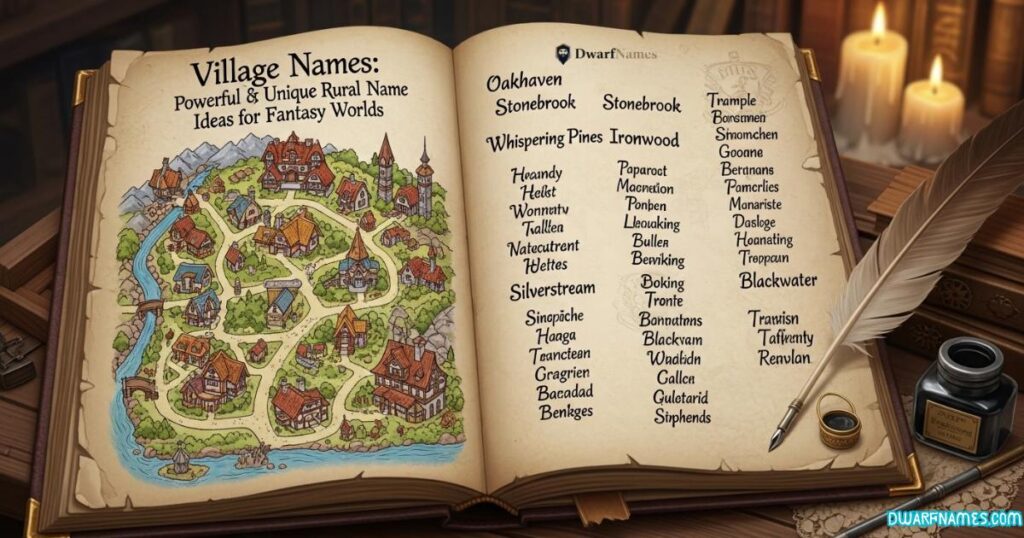
Whether you’re building a tabletop campaign, writing a fantasy novel, designing a video game, or simply filling out a sprawling map, this guide gives you over 400 village names organized by theme, mood, and culture. You’ll also find lore on naming traditions, clan-based settlement names, and compound surname-style village titles that double as worldbuilding tools. For those who also need names for the people living in these villages, you might pair this guide with a collection of fantasy surnames to complete your world.
Let’s explore the villages that legends call home.
Famous Villages From Literature & Games
Before diving into the lists, it helps to examine how skilled storytellers name their villages — and what those names communicate.
The Shire (Tolkien’s Middle-earth) — The name is deceptively simple, drawn from Old English scir (an administrative region). But its softness is intentional. The Shire feels warm, safe, agricultural. The name alone signals pastoral peace before the shadow falls. Tolkien understood that comfortable names create contrast when darkness arrives.
Tristram (Diablo series) — A corrupted English name with Arthurian echoes (Tristan), Tristram sounds noble and old. That nobility decaying into horror is the entire emotional arc of the game’s first act. The village’s name already carries grief.
Riverrun (A Song of Ice and Fire) — George R.R. Martin’s Riverrun is a castle, but it names a settlement like a village: two simple geographical words joined. The technique is classic and effective. Location + movement = immediate sense of place.
Pallet Town (Pokémon) — Even in a non-traditional fantasy, the naming logic is sound. A painter’s palette suggests blank potential, the first color before the adventure begins. Simple names that carry symbolic weight are the hallmark of skilled worldbuilders.
These examples teach us that village names work best when they feel earned — rooted in geography, history, culture, or the story’s emotional truth.
Pastoral & Peaceful Village Names
These names evoke warmth, agriculture, and the quiet rhythms of rural life. Perfect for starting villages, farming hamlets, or the idyllic homes your heroes will inevitably leave behind — or lose.
- Amberfield
- Barleycroft
- Willowmere
- Cloverden
- Hearthstone
- Goldenmill
- Sunbarrow
- Meadowveil
- Fernhollow
- Copperleaf
- Thatchwick
- Maplecross
- Honeyglen
- Dawnmoor
- Reedham
- Silverbarrow
- Cloverhaven
- Wheatholm
- Plumfield
- Birchwick
- Sunspire Hollow
- Greenmantle
- Dovecroft
- Larkmead
- Millwheat
- Oakhaven
- Fernmere
- Crabapple Dell
- Buttercup Crossing
- Thistledown
- Haywick
- Goldenbrook
- Sweetwater Bend
- Rushford
- Emberfield
- Cliffbarley
- Yarrowdale
- Cornwatch
- Willowstone
- Bramblecroft
Dark & Foreboding Village Names
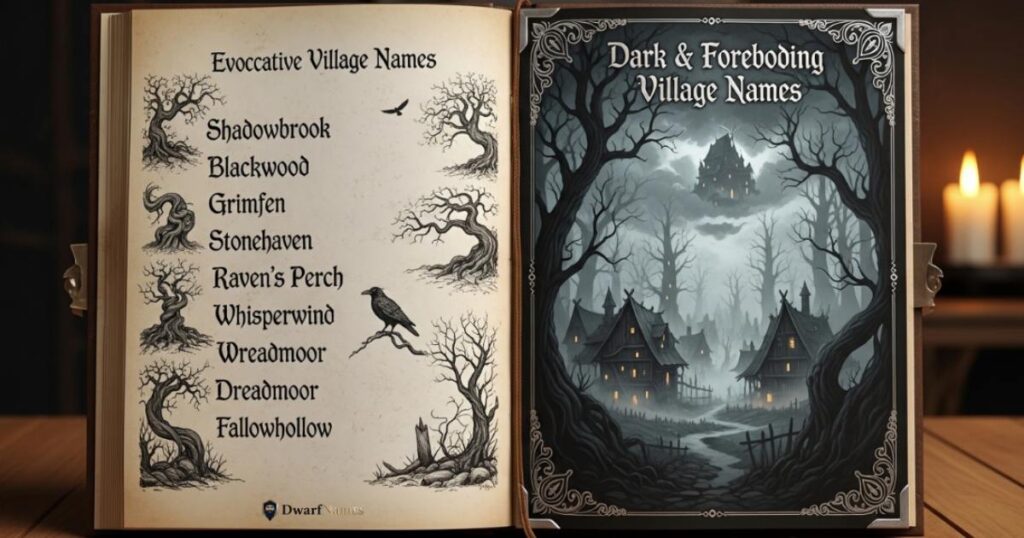
Some settlements exist at the edge of something terrible. These names carry unease, history, and warning — perfect for cursed villages, haunted hamlets, or the eerie places your adventurers stumble into at nightfall. If the inhabitants feel as unsettling as troll-kind from myth, you might also explore troll names for the creatures lurking at the borders.
- Grimhallow
- Ashenveil
- Duskmourn
- Wraithford
- Bleakwatch
- Sorrowmere
- Deadthorn
- Hollowcroft
- Blackmarsh
- Dreadholm
- Witherwick
- Mistfall
- Ravensmoor
- Bogwatch
- Ironblight
- Shadowfen
- Cursewood
- Gallowtree
- Coldash
- Thornwatch
- Dunmire
- Dirgeholm
- Ashcroft
- Emberbane
- Nighthollow
- Greymantle
- Moldercross
- Barrowmist
- Woebrook
- Gloamhaven
- Saltmarrow
- Duskhollow
- Fevervale
- Deathwatch Crossing
- Cinderwick
- Pallid Moor
- Wrackfield
- Blightfen
- Murkmere
- Tombsgate
Forest & Woodland Village Names
Villages nestled deep in ancient forests carry names grown from moss and shadow, from the sound of wind through canopy and the smell of rain on bark. These work well for elvish settlements, druidic communities, or isolated wood-folk. For the elven side of forest dwelling, half-elf names pair naturally with these woodland settlements.
- Elderwood
- Mossfen
- Deepcanopy
- Thornbark
- Greenveil
- Oakenshade
- Fernwatch
- Bramblewood
- Cedarhollow
- Sylvanmere
- Ivygate
- Willowshade
- Rootwick
- Deepmoss
- Yewhollow
- Greenward
- Pinehurst
- Briarwatch
- Ashwood Dell
- Cedarfen
- Tanglevale
- Moonwood
- Hazelcroft
- Grovemere
- Woodmere
- Briarsong
- Mistwood
- Darkroot
- Ferngate
- Quercumhallow
- Silverbough
- Leafspire
- Cobweb Glen
- Treewatch
- Woodfen
- Rustlehollow
- Oakhearth
- Mirkwood Crossing
- Deepbriar
- Elmshade
Mountain & Highland Village Names
High in the peaks, carved into cliffsides or hunched against alpine winds, these villages endure. Their names are hard, sharp, and full of stone. For the stout folk who make such places their home, dwarf names carry the same rugged mountain spirit.
- Ironpeak
- Stonewatch
- Cliffholm
- Grayspire
- Frostridge
- Rockfall
- Cragnesse
- Highpass
- Coldspire
- Avenwatch
- Shaleford
- Granitevale
- Stormcrag
- Flintwarden
- Iceholm
- Drakespine
- Highmark
- Boulderwatch
- Frostmere
- Ridgewick
- Grayhaven
- Ashpeak
- Coldridge
- Ironwatch
- Stonehollow
- Bleakspire
- Dawnpeak
- Cliffwatch
- Windbreak
- Frostgate
- Darkridge
- Stonemarrow
- Galewatch
- Cragholm
- Highwick
- Icewatch
- Blackspire
- Frostford
- Snowmere
- Mountainwatch
Coastal & River Village Names
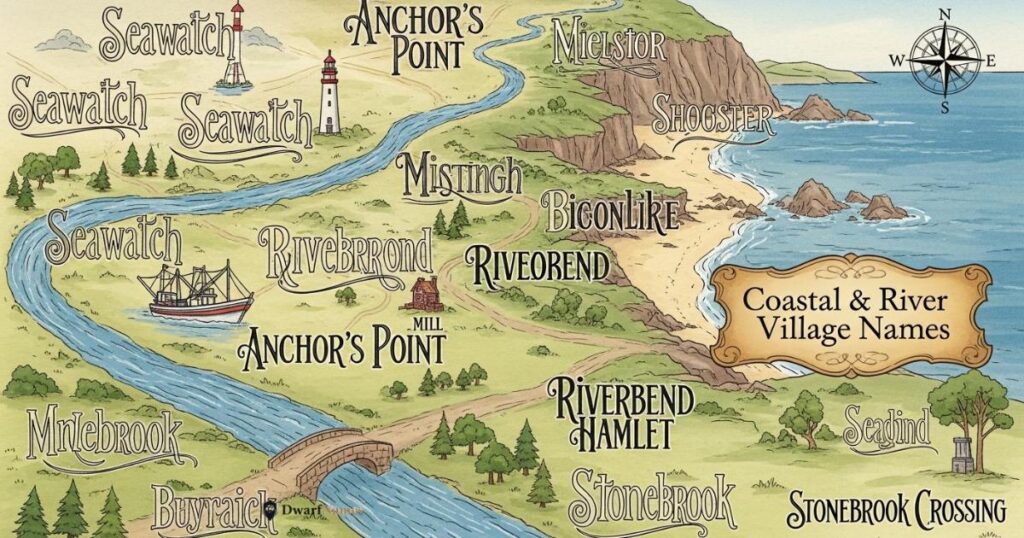
Salt-wind and tide, fishing nets and river ferries — coastal villages carry the rhythm of water in their names. These settlements trade, struggle, and smell of brine. For those building port cities alongside these river hamlets, city names will help scale your world outward.
- Saltwick
- Tidehollow
- Driftmere
- Rockshore
- Anchorfall
- Kelphaven
- Stormport
- Wavecross
- Brinegate
- Seaford
- Tidemark
- Harborhollow
- Mistsea
- Coralhaven
- Sandgate
- Breakwater
- Driftwood Crossing
- Seawatch
- Saltholm
- Mooringsgate
- Coastwick
- Shorefen
- Tidecroft
- Fogwatch
- Brinewell
- Shallowmere
- Anchorwick
- Stormfen
- Seafen
- Waveholm
- Crabgate
- Gullwatch
- Tidemere
- Saltsorrow
- Reedferry
- Shellcroft
- Roughwater
- Breakwick
- Foghollow
- Deepcove
Desert & Arid Village Names
Settlements carved from sand and stone, where water is sacred and shade is survival. These names carry heat, endurance, and ancient memory.
- Dustholm
- Sandsorrow
- Ashgate
- Drywatch
- Scorchwick
- Barrenfield
- Redstone
- Saltvein
- Mirehollow
- Sandmark
- Sunbaked Crossing
- Dustwatch
- Emberfall
- Drysorrow
- Copperdune
- Thirstwatch
- Irongate
- Ochreford
- Saltwatch
- Desertmark
- Sunscorch
- Ashfield
- Duskdune
- Sandshire
- Cinderwatch
- Hothollow
- Burnwick
- Miremark
- Dustcroft
- Heatford
Mystical & Magical Village Names
Some villages exist slightly outside the ordinary — touched by old magic, built atop ley lines, or inhabited by folk who speak to spirits. These names carry enchantment and mystery. They pair beautifully with the otherworldly feel of DnD Genasi names for villagers touched by elemental forces.
- Moonveil
- Starhollow
- Riftwatch
- Spellford
- Glimmerwick
- Faegate
- Whisperholm
- Veilmere
- Shimmerwatch
- Enchantcroft
- Spiritfen
- Dreammere
- Ethereal Crossing
- Wraithwatch
- Glowmark
- Mirrorwick
- Runevale
- Lunarholm
- Starwatch
- Shimmergate
- Glintford
- Magicwatch
- Spectralwick
- Feyhollow
- Wispwatch
- Arcanefen
- Glitterford
- Visionmark
- Spellwick
- Mirrorgate
Naming Traditions: The Lore Behind Village Names
Understanding why villages get their names deepens your worldbuilding enormously. In most fantasy cultures, settlements are named through one of five traditions:
Geographic Origin — The most common. A village beside a ford becomes Ashford. One near a hollow becomes Ravenhollow. These names are lived-in and functional; they reflect the land before the people shaped it.
Founding Family or Hero — Many villages are named for their first settlers or most legendary inhabitants. Aldenmere might be named for Alden the Miller, who cleared the land three centuries before. This is similar to how royal names often get attached to the settlements nobles founded or controlled.
Occupation or Trade — A village of tanners might be called Hidegate. A smithing village might bear a name like Ironwick or Hammerholm. These names double as historical records of what the village once was — even if that trade has long since died.
Spiritual or Superstitious Origins — Some villages are named for what was seen or felt there: a vision, a haunting, a blessing. Ghostwatch, Dreamwick, and Spiritfen all suggest something was experienced here before the first stone was laid.
Elemental or Natural Events — A village built after a great storm might be called Stormbreak. One founded on the site of a lightning-struck oak could become Ashwick. These names carry the memory of the land’s violence or beauty.
Clan & Compound Village Names
These names feel like they’ve been compounded by generations of tradition — two strong words fused into something that carries both meaning and weight. They work brilliantly as town names for larger settlements, or as the ancestral seat of a powerful family or clan. For those who also need fierce warrior titles for the clan founders, barbarian names will complete the picture.
- Stonehaven
- Ironmere
- Blackthorn
- Coldwater
- Greymantle
- Wildwood
- Ashcroft
- Deepwater
- Shadowgate
- Redmoor
- Bloodfen
- Stormwatch
- Darkwell
- Frostholm
- Goldwater
- Irongate
- Coldfen
- Silvermere
- Redwatch
- Darkholm
- Steelwatch
- Blackwater
- Coldmark
- Ironhollow
- Stormfen
- Goldwatch
- Darkwood
- Frostgate
- Silverthorn
- Stonemark
- Bloodwatch
- Grimfen
- Ironwood
- Blackmarsh
- Coldcroft
- Steelholm
- Darkgate
- Frostwood
- Silverwatch
- Grimholm
- Ironfen
- Stormgate
- Bloodmere
- Darkwick
- Coldstone
- Steelfen
- Blackholm
- Frostcroft
- Silvergate
- Grimwood
Bonus: Village Names by Personality & Story Role
Sometimes you need a name that fits the story role the village plays, not just its geography. Here are names grouped by narrative function:
The Safe Haven (where heroes rest and recover): Hearthwick, Warmhollow, Goldenhearth, Safemere, Restwatch, Kindlewood, Sheltergate, Peacehollow, Warmgate, Comfortmere
The Forbidden Village (secrets, cults, curses): Silencegate, Blindwatch, Lockhollow, Secretfen, Hiddenwick, Veilcroft, Hushedmere, Darkwatch, Mutegate, Shadowhollow
The Ruined Village (abandoned, war-torn, haunted): Ashenwick, Lostmere, Brokengate, Forgottenholm, Emptyfen, Deadwatch, Fallenwood, Cindergate, Ghostwick, Ruinmere
The Trade Hub (crossroads, market, caravans): Crosswick, Markethollow, Tradegate, Coinford, Merchantmere, Roadwatch, Caravanholm, Exchangewick, Guildgate, Tollmere
Bringing Villages to Life: Final Thoughts
A village is never just a location marker on a map. It is the accumulated weight of generations — the soil where your characters developed their values, their fears, and their first understanding of the world. A well-chosen village name tells that story before a single scene unfolds.
When you name a village, ask yourself: What happened here? Who built the first home? What does the land look like at dusk? Let the name answer those questions, even faintly. Whether you’re crafting a sunlit pastoral hamlet nestled in a valley or a mist-haunted fishing settlement on a cursed coast, the name should feel earned.
For writers, these names are creative accelerants — they spark visual detail, suggest history, and give secondary characters a home worth defending. For tabletop game masters, a strong village name grounds your players in the world and tells them immediately what kind of story they’ve walked into. For game designers, village names become part of the texture of your world’s lived experience.
Don’t stop at villages, either. The world surrounding these settlements is equally rich with naming opportunity. The drow names of underground civilizations, the wild naming traditions of isolated peoples, the way animal names feed into totemic village identity — all of these threads connect into a single, living world. And just as the god Susanoo of Japanese myth gave name and identity to the storms he embodied — a concept explored beautifully at Mythopedia’s guide to Susanoo — your village names should carry that same sense of elemental truth.
Now go name your world. Make it one worth remembering.
FAQ’s
What is a cool village name?
A cool village name often sounds natural, memorable, and connected to local geography, culture, or history. It should feel unique, easy to pronounce, and reflect the community’s identity, environment, traditions, or landscape charm appealing style.
How do I name my village?
You can name your village by considering local history, natural surroundings, cultural heritage, and unique features. Combine meaningful words that represent identity, geography, or tradition while keeping the name simple, catchy, and easy to remember.
What are the 4 types of villages?
The four types of villages generally include agricultural villages, fishing villages, forest villages, and pastoral villages. Each type is defined by its main occupation, environment, resources, and lifestyle of the people living within them therein.
What is a fancy word for village?
A fancy word for village can be hamlet, township, settlement, or rural community. These terms are often used in literature or formal contexts to describe small inhabited areas with charm, tradition, and simplicity itself present.
What are good creative names?
Good creative names are unique, meaningful, and inspired by nature, culture, history, or imagination. They often combine words, sounds, or ideas that create a memorable identity and reflect the spirit of a place or concept.
What is a small village called?
A small village is often called a hamlet. It usually refers to a tiny settlement with very few houses, limited population, and basic facilities, often located in rural or remote countryside areas worldwide generally known.