
The fjords echo with ancient power. The longships cut through mist-laden waters, and the warriors aboard carry names forged from wind, blood, and the will of the gods. Viking names are not just labels. They are declarations. Each syllable carries the weight of lineage, valor, and destiny. Whether you are crafting a saga, building a campaign world, or simply searching for the perfect name for a fierce character, the Norse naming tradition is one of the richest wells a storyteller can draw from.
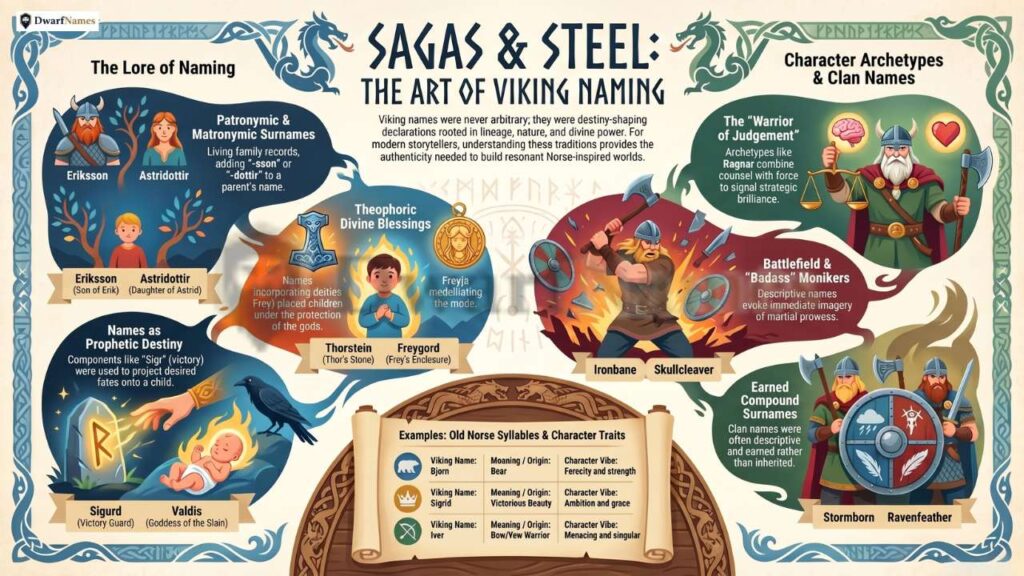
Vikings believed a name shaped a person’s fate. Parents chose carefully, often naming children after gods, natural forces, animals of power, or fallen ancestors whose spirits might guide the child forward. A name like Bjorn meant “bear” and promised ferocity. A name like Sigrid meant “victorious beauty” and carried both grace and ambition. Every name told a story before the person ever spoke a word.
For writers, game masters, and worldbuilders, Viking names bring an unmatched authenticity to any Norse-inspired setting. They roll off the tongue with satisfying weight, they evoke storms and steel, and they root characters in a culture that still resonates deeply in modern fantasy. Just as Hindi names carry spiritual resonance or French names carry elegant tradition, Viking names carry a raw, elemental power all their own.
This guide brings you over 300 Viking names, organized by theme and character type, alongside worldbuilding lore, naming traditions, and clan names to fuel your next great creation.
Famous Viking Names From Literature and Games
Before diving into the full lists, it helps to understand how iconic Viking names work in storytelling. The best examples show how a name becomes an identity.
Ragnar Lothbrok is perhaps the most famous Viking name in popular culture. Ragnar means “warrior of judgment” or “decision warrior,” combining “ragin” (counsel) with “hari” (army). The name promises wisdom paired with force, which mirrors Ragnar’s role as both a calculating strategist and a terrifying fighter. Writers exploring complex Viking heroes often look to this archetype first.
Lagertha is a shieldmaiden name that blends strength with a softer cadence. Derived from Old Norse, it carries associations with a legendary warrior woman. In storytelling, Lagertha names signal independence, tactical brilliance, and a refusal to be diminished. She remains one of the most beloved figures in Norse-inspired fiction.
Ivar (often paired with “the Boneless”) is a chilling Viking name meaning “bow warrior” or “yew warrior.” Short, sharp, and unforgettable, Ivar shows how brevity in a Viking name can be just as powerful as grandeur. Writers who want menacing, singular antagonists often gravitate toward this style.
Freydis comes from the goddess Freya and suggests divine femininity intertwined with steel. In the Vinland Sagas, Freydis Eiriksdottir was a complex, fierce, morally ambiguous figure, and her name perfectly reflected that duality. Names rooted in deity references instantly elevate a character’s mythic significance.
Male Viking Names
Strong, bold, and rich in heritage, male Viking names often reference battle, animals, divine might, or natural forces. These names work beautifully for warriors, chieftains, merchants, and skalds alike.
- Ulfric
- Bjarne
- Sigurd
- Gunnar
- Halvar
- Torsten
- Leifr
- Eskil
- Ragnarr
- Styrbjorn
- Eirik
- Dagfinnr
- Thorvald
- Ingvar
- Ketill
- Halvard
- Sigfus
- Ormr
- Asmund
- Vidar
- Bersi
- Alfarinn
- Hromund
- Skjold
- Osric
- Brandr
- Frode
- Gunnulf
- Haraldur
- Jostein
- Knud
- Ljot
- Magnur
- Nori
- Osvald
- Palnatoki
- Reidar
- Sigbjorn
- Trond
- Ulf
- Valgard
- Wandil
- Yngvar
- Zephrin
- Asgard
- Bjolfr
- Calder
- Dagr
- Erlingr
- Fafnir
Female Viking Names
Viking women held remarkable standing in Norse society. Shieldmaidens, volvas (seers), landowners, and traders all carried names of great beauty and strength. Female Viking names tend to blend lyrical sounds with meanings rooted in power, light, battle, and the divine.
- Astrid
- Ragnhild
- Gudrun
- Sigrun
- Hilde
- Thyra
- Solveig
- Brynhildr
- Ingrid
- Alfhildr
- Valdis
- Freyja
- Gunnvor
- Torhild
- Helga
- Ranveig
- Sigrid
- Unn
- Vigdis
- Aslaug
- Bodil
- Dagmar
- Eira
- Finna
- Gerd
- Haldis
- Inga
- Jorunn
- Kari
- Lilja
- Magnhild
- Nanna
- Oddrun
- Petrina
- Randi
- Svanhild
- Thordis
- Ulva
- Vigfus
- Yrsa
- Zora
- Asfrid
- Borgny
- Dalla
- Eldrun
Cool and Unique Viking Names
These names stand out from the crowd. They are less common, carry unusual sounds, and are perfect for characters who defy expectations. Whether you need a mysterious wanderer, a rogue skald, or a cursed hero, these unique Viking names deliver.
- Skarde
- Vryndal
- Thromund
- Axelyn
- Galdur
- Sivard
- Njorthur
- Halvdan
- Quelvar
- Dragrinn
- Ossian
- Valdrik
- Yrgar
- Throskr
- Bolverk
- Skarvald
- Daegryn
- Vornulf
- Helvar
- Ivarssen
- Gyldrin
- Skaeldr
- Ulfhednar
- Ragnvid
- Thogryn
- Drivald
- Skolvinn
- Orvynd
- Fyrngarr
- Gunnvor the Grey
Warrior and Badass Viking Names
These names were built for the battlefield. Fierce, punishing, and impossible to forget, they evoke axe-falls and war cries and are ideal for frontline fighters, berserkers, warlords, and conquerors. If your character is the kind who charges first and asks nothing, one of these names belongs to them.
- Ironbane
- Grimwulf
- Thorvek
- Skullcleaver
- Berserkarr
- Haldrvain
- Bloodfang
- Ragnvald
- Stormhammer
- Goldbrand
- Vargr
- Deathwarden
- Ironvald
- Slaknar
- Wargrinn
- Skull-Thorr
- Ragefang
- Berulf
- Dragvald
- Thrudrinn
- Ironbrow
- Slagr
- Warbone
- Axefall
- Grimtooth
- Halvardin
- Berskar
- Thundrak
- Skaldrek
- Vragnir
Royal and Noble Viking Names
Not every Viking name belonged to a warrior. Jarls, kings, high priests, and noble houses carried names of authority, dignity, and divine right. These names suggest lineage, power, and the weight of rulership. They suit kings, queens, advisors, and ancient bloodlines.
- Haraldr Goldenhair
- Sigvard the Elder
- Gunhildr
- Ragnheildr
- Eysteinn
- Asgeir Crownborn
- Thorsteinn
- Gunnhildr of the North
- Bjorn Ironseat
- Ingolfr
- Alrekr
- Vestarr
- Godormr
- Alfrekr
- Halfdan the Black
- Svein Forkbeard
- Eirikr Bloodaxe
- Grjotr
- Gudrod the Hunter
- Randver
- Sigtryggr
- Ulfljot
- Visbur
- Yng the Wise
- Adalrikr
Traditional and Classic Viking Names
These are the names that appear most frequently in the sagas, carved in runes, and spoken in longhouses across the Norse world. Classic Viking names are rooted, recognizable, and carry an enduring authority that never grows stale. These are perfect for settings that want historical authenticity alongside fantasy flair.
- Thorr
- Odin-ulf
- Freyr
- Baldur
- Sigmarr
- Leif
- Bjorn
- Erik
- Harald
- Gunnar
- Ragnhild
- Astrid
- Helgi
- Ingolfr
- Njord
- Snorri
- Thorkel
- Ulf
- Vikarr
- Wulfgar
- Alvar
- Bard
- Cnut
- Dorri
- Egill
- Flosi
- Geirr
- Havard
- Ivar
- Jorund
Viking Naming Traditions: A Lore Guide
Understanding how Vikings chose names transforms how you build Norse-inspired characters. Naming was never arbitrary. It followed deep cultural logic that any worldbuilder can use to bring authenticity to their story.
Patronymics and Matronymics. A Viking child typically took their parent’s first name as their surname suffix. A son of Ragnar became Ragnarsson. A daughter of Astrid became Astridsdottir. This practice made full names a living record of family history. In your worldbuilding, a character named Sigurd Haraldsson instantly tells us his father was Harald and that he belongs to that line.
Theophoric Names. Many Vikings carried names that contained the names of gods. “Thor” appears in names like Thorvald, Thorkel, and Thornbjorn. “Frey” and “Freya” appear in names like Freysteinn and Freydis. Receiving such a name was considered a divine blessing, placing the child under that deity’s protection.
Nature and Animal Names. Animals with symbolic weight were popular name elements. Ulf (wolf), Bjorn (bear), Orn (eagle), and Orm (serpent) all carried specific meanings about strength, cunning, or ferocity. A warrior named Bjorn Ormsson was being called a bear who descended from a serpent, an intensely powerful image.
Destiny and Fate Names. Some names were given as aspirations, almost as prophecies. Names containing “sigr” (victory), “ragin” (counsel), or “val” (the slain, as in Valhalla) all projected a desired future onto the child. Parents were quite literally naming children into a fate they hoped would manifest.
Posthumous Naming. Vikings sometimes named children after recently deceased relatives or honored warriors. The belief was that the spirit of the dead person would return through the child, granting the infant both protection and destiny. This practice made names feel sacred and cyclical rather than arbitrary.
Just as school names carry institutional identity across generations, Viking clan names carried ancestral memory, war history, and divine inheritance.
Viking Clan Names and Compound Surnames
No Viking name list is complete without clan names and surnames. These compound names were descriptive, vivid, and often earned rather than inherited. They tell stories all on their own. For fantasy worldbuilding, these are invaluable for building families, factions, and rivalries.
- Ironside
- Stormborn
- Axebreaker
- Goldtooth
- Ravenscar
- Skullcarver
- Thornwood
- Wolfmantle
- Bleakfjord
- Cinderborn
- Deepkeel
- Emberstrike
- Frostwalker
- Grimfang
- Hammerfall
- Ironbarrow
- Jadestone
- Kettledrum
- Longstride
- Mistcloak
- Nightrunner
- Oathkeeper
- Peakborn
- Questmark
- Ravenfeather
- Stonebreaker
- Tideborn
- Underhill
- Vaultdoor
- Warpath
- Axefall
- Bleakrock
- Coldthorn
- Duskmantle
- Elderwood
- Flintborn
- Galeblade
- Hardraven
- Ironclad
- Jadeclaw
- Kingfall
- Longship
- Mistborne
- Nightfall
- Oakenbow
- Peakwalker
- Quickblade
- Rimefang
- Stormcrest
- Thornback
- Underbolt
- Valeguard
- Wavecutter
- Xenith
- Yewblade
- Zornback
Conclusion
A Viking name is never just a name. It is a saga compressed into a word. It carries gods, animals, battles, bloodlines, and ambitions inside its syllables. When you give a character a name like Halvard Stormborn or Sigrid Ravenscar, you are not just labeling them. You are building their world before the first sentence of their story is written.
Whether you are crafting a war-scarred berserker, a sharp-minded jarl’s daughter, or a wandering skald who speaks in riddles, the Norse naming tradition gives you the tools to root that character in something ancient and resonant. The best names carry weight even before the reader knows anything else about the character. That weight is what makes a story unforgettable.
For further inspiration, exploring Spanish names and their own rich cultural histories can help any worldbuilder see how deeply names shape identity across all cultures and fantasy traditions.
Now take these 300 Viking names, and go build something worthy of the sagas.
Frequently Asked Questions
What makes Viking names different from other fantasy names?
Viking names draw from real Old Norse roots, giving them authentic weight and historical resonance that purely invented fantasy names sometimes lack in worldbuilding.
Can I use Viking names for fantasy characters who are not Norse?
Absolutely. Viking names work beautifully for any fierce, seafaring, or warrior culture in any fantasy setting, regardless of specific cultural inspiration.
What do the most popular Viking names mean?
Popular names like Erik (eternal ruler), Bjorn (bear), and Astrid (divinely beautiful) all carry strong, symbolic meanings tied to power and identity.
Are there Viking names suitable for villains?
Yes. Names like Bolverk (evil deed), Grimwulf, and Skullcleaver carry a natural menace ideal for antagonists, warlords, and dark sorcerers.
How were Viking surnames typically formed?
Most Viking surnames used patronymics, adding “son” or “dottir” to the father’s name, such as Eriksson or Sigridsdottir, reflecting direct family lineage.
Do Viking female names carry warrior meanings?
Many do. Names like Brynhildr (armored battle), Hilde (battle), and Valdis (goddess of the slain) are explicitly martial and reflect the shieldmaiden tradition.
Where can I find more cultural naming inspiration?
Beyond Norse names, exploring naming traditions from other cultures such as Hindi names can offer rich cross-cultural worldbuilding material for diverse fantasy settings.