
The moon rises, fat and silver above the treeline. The village bolts its shutters. Somewhere in the blackwood, a howl tears through the cold — ancient, guttural, and utterly without mercy. Werewolves have haunted the imagination for millennia, prowling through myth, legend, literature, and game tables alike. They are not mere monsters. They are torn creatures — half-human, half-beast — walking the razor’s edge between civilization and savagery. And if you are building a world that contains them, nothing matters more than what you call them.
A name is the first thing a character wears. For a werewolf — cursed, noble, feral, or ancient — that name carries the weight of their dual nature. It must feel like it could belong to a man sitting at a tavern hearth and a predator racing through midnight forests. The best werewolf names hold both truths at once. They feel Germanic and guttural, Slavic and sweeping, or Nordic and sharp — echoing the old folkloric traditions from which these creatures were born.
Whether you are writing a dark fantasy novel, designing a tabletop RPG campaign, building out a game character, or simply exploring the art of worldbuilding, this werewolf name generator article is your definitive guide. Inside, you will find over 450 names sorted by category, clan naming traditions, cultural lore, and enough inspiration to fill an entire lycanthropic civilization. If you have ever explored creature names for other races, you know how much flavor the right name adds. Werewolves deserve that same depth.
Let the hunt begin.
Famous Werewolf Names From Literature & Games
Before diving into the lists, it helps to understand what great werewolf names look like in practice — names that have already carved their place into fantasy mythology.
Fenrir — From Norse mythology, Fenrir is the great wolf-son of Loki, bound by the gods until Ragnarök. His name resonates with dread and inevitability. It is short, sharp, and impossible to forget. Fantasy writers borrowing from Norse tradition often use Fenrir as a template: names with hard consonants and mythic weight.
Remus Lupin — J.K. Rowling’s beloved werewolf professor from Harry Potter carries a deeply layered name. “Remus” references one of the twin founders of Rome, raised by a she-wolf. “Lupin” derives from lupus, Latin for wolf. Every syllable of his name whispers his nature. This is intentional naming at its finest — where identity and story role fuse into one word.
Jacob Black — From Twilight, Jacob’s name is deceptively simple, almost human — which is the point. His wolf nature is hidden beneath an ordinary name, creating dramatic irony. His pack names, however, carry more mythic weight.
Greymane — A clan name from World of Warcraft, Greymane represents the noble, aristocratic werewolf archetype. It is a compound name — grey + mane — that immediately evokes both wolf imagery and noble bearing. This style of compound naming is extremely popular in fantasy werewolf worldbuilding, and we will explore it further in the clan names section below.
These examples demonstrate a core principle: the best werewolf names work on multiple levels. They sound authentic to their cultural root, carry symbolic meaning, and feel deeply tied to the character’s dual nature.
Male Werewolf Names
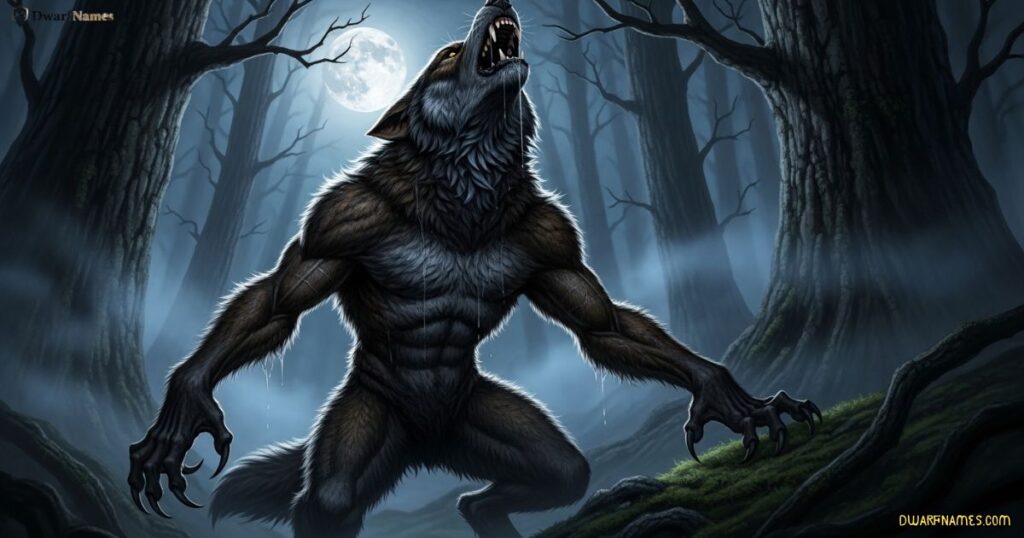
The male werewolf in fantasy is often cast as the warrior, the alpha, the cursed knight, or the lone wanderer. His name tends to carry weight — hard edges, strong vowels, and a sense of barely restrained power.
- Aldric
- Vorn
- Garreth
- Duskarn
- Bruthas
- Keldric
- Marek
- Skolvane
- Hadric
- Fenrath
- Wulfgar
- Aldoven
- Greymar
- Halvorn
- Drakar
- Osric
- Thorvald
- Belgrave
- Nocturnis
- Veldran
- Ragnulf
- Kraven
- Sigebert
- Harkon
- Lycan
- Morvane
- Blackhowl
- Garet
- Skaroth
- Voltan
- Edric
- Craveth
- Mordain
- Ulvric
- Steinhardt
- Branwulf
- Darkmore
- Halvard
- Grimvane
- Kolvast
Female Werewolf Names
Female werewolves in fantasy are some of the most compelling characters in the genre — wild, lethal, wise, or tragic. Their names often carry a different kind of poetry: sharper at the edges, haunting, sometimes beautiful in the way a storm is beautiful.
- Selka
- Vrana
- Morvaine
- Lyssa
- Duskara
- Noctara
- Halvaine
- Skelia
- Greyveil
- Raventhorn
- Aldara
- Fenrith
- Lunavex
- Sorvaine
- Braela
- Morrwyn
- Darksha
- Kelvaine
- Thyra
- Wulfra
- Vesska
- Gailmark
- Nyrith
- Shadowmere
- Belkara
- Ulvaine
- Harska
- Draveth
- Volana
- Skolvaine
- Seraphvex
- Morvra
- Grellith
- Karvaine
- Lyrantha
- Starveil
- Aldris
- Ragnara
- Thornveil
- Cravaine
Cool & Unique Werewolf Names
Sometimes you need a werewolf name that simply feels different — something that stands out from the pack (quite literally). These names lean into the mystique, the unusual sound combinations, and the otherworldly identity of the lycanthrope. For a similar kind of creative variety, names from kitsune names offer fascinating shapeshifter inspiration that pairs well with lycanthrope naming styles.
- Zelvorn
- Askaroth
- Drevaine
- Vexmoor
- Nyrath
- Krullven
- Shadevorn
- Molvex
- Urskaar
- Darkfell
- Thavrex
- Oblaine
- Skorrith
- Vrendal
- Quelborn
- Ashenvane
- Halvex
- Drelkarn
- Skorvaith
- Wraithkar
- Zethvane
- Obsidrak
- Vulmane
- Grexaroth
- Thyrvane
- Nyxvorn
- Sharvex
- Drekvale
- Oblask
- Vexkarr
- Ashgrip
- Zornvane
- Skeldral
- Vorrath
- Krelskaar
Warrior & Badass Werewolf Names
These are the names of alpha wolves, warlords of the pack, and cursed berserkers who have long since stopped mourning their humanity. They fight. They dominate. They leave silence in their wake. If you are building a werewolf warrior for D&D, a dark fantasy RPG, or a brutal novel, start here. You might also find bold warrior-class naming inspiration from samurai names for cross-cultural fantasy comparisons.
- Bloodfang
- Grimvorn
- Ironclaw
- Ravenfist
- Steeljaw
- Darkbane
- Skullmark
- Boneshatter
- Stonehide
- Battlehowl
- Deathtrack
- Ashfang
- Brokentusk
- Wargrip
- Shadowmaul
- Ironhide
- Skullvex
- Dreadmaw
- Grimtrak
- Warbane
- Blackhide
- Duskgrip
- Stoneclaw
- Ravenbane
- Bonesnarl
- Darkgrip
- Ashmaul
- Wraithfang
- Grimbone
- Skulltrack
- Bloodmark
- Ironvorn
- Dreadclaw
- Warbone
- Ashjaw
- Shadowtrack
- Stonehowl
- Grimmaul
- Darkfang
- Bonetrack
Royal & Noble Werewolf Names
Not all werewolves are feral outcasts. Some rule. Some sit on thrones of blackwood and bone, presiding over packs as vast as kingdoms. The noble werewolf carries a name that sounds at home in a great hall — commanding, elegant, and weighted with lineage. If you enjoy building aristocratic fantasy races, elf names offer a beautiful counterpoint to the darker lycanthrope nobility.
- Lord Aldravian
- Duke Morvencourt
- Countess Greyveil
- Baron Keldrath
- Lady Noctariel
- Prince Halvorne
- Duchess Selenara
- Emperor Voldrak
- Marquess Duskmore
- Lady Fenravaine
- Lord Skolvane
- Archduke Ragnareth
- Countess Braelavorne
- Baron Grimmore
- Lady Ashveil
- Lord Vorrath
- Duke Aldrath
- Princess Thyrvaine
- Count Blackvane
- Lady Wraithmore
- Lord Drakmore
- Baron Steinnath
- Countess Morravel
- Prince Kolvard
- Lady Darkenveil
Traditional & Classic Werewolf Names
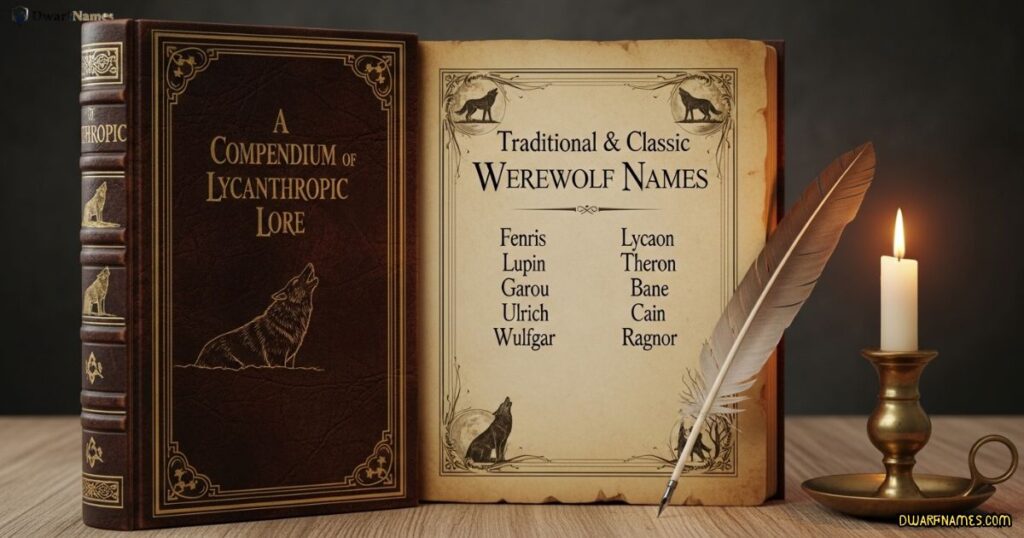
These names reach back to the oldest roots of werewolf mythology — drawing on Germanic, Norse, Slavic, and Celtic traditions that birthed the legend in the first place. They feel timeless, like they have always existed in the world’s shadow. For writers who love classic fantasy race naming, DnD human names also offer a grounded, traditional feel that pairs naturally with these.
- Ulric
- Fenwick
- Aldwulf
- Wulfram
- Sigvard
- Ragnar
- Halvard
- Ulf
- Aldric
- Edwulf
- Gunnulf
- Sigmund
- Thorulf
- Wulfric
- Bernulf
- Hrodulf
- Ragnvald
- Odwulf
- Ethulwulf
- Grimnir
- Varg
- Skoll
- Hati
- Fennar
- Isulf
- Styrulf
- Gunvald
- Randulf
- Hervard
- Bjornulf
Werewolf Naming Traditions & Cultural Lore
In the world of fantasy lycanthropy, names are never chosen carelessly. Among the great pack civilizations, naming is a rite — a sacred act bound to the moon cycle, the hunt, and the blood-bond of the pack.
The Name-Giving Rite
In most werewolf cultures, a child is given two names at birth: a sunname and a moonname. The sunname is the name used in human form — softer, more palatable to the outside world. The moonname is uttered only among pack members during the full moon gathering. To share your moonname with an outsider is either the deepest act of trust or the gravest insult to your pack, depending on tradition.
Aldric Halvorn, for example, might be known as plain “Aldric” in the village market — but among his packmates under the full moon, he is called Grimvane the Unbroken, a name earned through trial and scar.
Earned Names vs. Birth Names
Many pack traditions do not assign permanent names at birth. A pup is called simply by a provisional sound — often an animal call or a color description — until they complete their first hunt. The name earned at that moment is the name they carry for life. This is why so many great werewolf names are compound and descriptive: Stoneclaw, Ashfang, Shadowtrack. They are not names handed down — they are names won.
Clan Suffixes and Prefixes
Different clans mark their members through shared name elements:
- The Grimvane Clan: All members carry “vane” as a suffix, denoting their wind-howl tradition
- The Bloodfang Pack: Compound names always reference body or battle — claw, bone, fang, jaw
- The Ashwood Circle: Names begin with natural elements — Ash, Stone, Bark, Frost
- The Noctariel Line: Noble werewolves using the “-iel” or “-iel” suffix to denote noble blood
This system mirrors how DnD Githyanki names use clan affiliation to shape individual identity — a fascinating parallel for worldbuilders blending multiple fantasy races.
The Howl Name
Beyond sunnames and moonnames, ancient packs recognize a third form of identity: the Howl Name. This is not spoken aloud in words — it is expressed as a unique howl pattern, recognizable to every pack member. When translated into language for outsiders, Howl Names often sound the most alien and powerful of all: Vraeth-Kor, Skelvorith, Nyxaroth. They are sounds that were never quite meant for a human tongue.
Female Werewolf Names — Extended List
For writers seeking additional feminine werewolf names with a darker, more mystical edge — names suitable for moon-priestesses, pack shamans, or cursed noblewomen — this expanded section offers deeper variety. The succubus names resource is another excellent reference for dark feminine fantasy naming with similar atmospheric weight.
- Nythara
- Velskaine
- Mordrith
- Ashveil
- Lunavorn
- Darkenveil
- Greyvaine
- Skolvra
- Thyrveil
- Vrendara
- Oblaine
- Seraphvane
- Morrwen
- Halfmara
- Starvaine
- Skeldra
- Karvex
- Greyska
- Noctaveil
- Ravenath
- Duskvaine
- Thornara
- Wolvaine
- Aldskela
- Grimvara
Werewolf Clan Names & Pack Surnames
Every great pack has a name — a banner, a legend, a howl that echoes across territory lines. Clan names in werewolf culture are often compound descriptors that capture the pack’s history, environment, territory, or founding deed. These function as surnames for individual members and battle-cries for the collective.
Clan Names (Compound Pack Names)
- Grimfang
- Ashclaw
- Ironhide
- Stonetrack
- Duskmaul
- Shadowgrip
- Bloodmoon
- Blackbone
- Darkveil
- Wargrim
- Nightsnarl
- Frostfang
- Stormpaw
- Ashvorn
- Boneridge
- Skullcrest
- Ravenmaw
- Darkstone
- Grimtrack
- Thunderpaw
- Ironmoon
- Ashgrim
- Wolfstone
- Blackclaw
- Dreadveil
- Nightgrip
- Stonehowl
- Frostbone
- Shadowcrest
- Grimridge
- Bloodstone
- Darktrack
- Warfang
- Ashmaul
- Ironbone
- Stormcrest
- Nightstone
- Frostclaw
- Blackveil
- Grimsnarl
- Dreadbone
- Ravencrest
- Darkmaul
- Wolfridge
- Stonefang
- Irontrack
- Ashbone
- Shadowfang
- Grimmaul
- Bloodcrest
Notable Pack Surnames for Individual Members
When a werewolf earns their place in a named clan, they adopt the clan’s name as a surname. Thus:
- Aldric Grimfang — a warrior of the Grimfang Clan
- Selka Bloodmoon — a moon-priestess of the Bloodmoon Circle
- Vorn Ironhide — a scout of the Ironhide Pack
- Thyrvaine Shadowcrest — a noble she-wolf of the Shadowcrest Line
- Kravenath Darkveil — a cursed hunter who walks alone, claimed by no pack but carrying the Darkveil name as a scar
This system gives worldbuilders a flexible two-name structure: personal name + clan/pack name. It is simple, immediately evocative, and endlessly combinable.
Bonus: Werewolf Shaman & Moon-Priest Names
The spiritual leaders of werewolf packs occupy a unique naming tier. These are the keepers of the moon-rites, the readers of bone and blood, the ones who speak the old language. Their names are deliberately difficult — full of sounds that do not sit easily in the mouth, as if they were always meant for a different kind of throat. Interestingly, the mystical naming conventions of mage names and fairy names carry a similar otherworldly resonance worth exploring for contrast.
- Vexkarath
- Nyxovane
- Skelorith
- Vraetha
- Ashvexorn
- Thyrvekaal
- Molvrath
- Seravex
- Drevkaal
- Skolvexar
- Noctorith
- Halfvexorn
- Grimorith
- Vraethvane
- Obsivex
- Skelkaroth
- Nyxovorn
- Ashkoral
- Thyrvexar
- Vraldorn
- Molvekaal
- Seraphvex
- Drevkoral
- Skolvaar
- Noctovex
How to Use These Werewolf Names in Your World
Finding the right name is only half the work. The real magic comes from understanding how to deploy it.
For novelists: Consider giving your werewolf protagonist both a sunname and a moonname, and let the reveal of the moonname serve as a turning point — the moment a human character truly accepts the werewolf’s dual nature.
For tabletop RPG players: Choose a name from the warrior or clan sections that already implies a backstory. “Aldric Grimfang” arrives at the table with a history baked in. Let the name do narrative work before you say a single word about your character.
For game designers and worldbuilders: Build your pack’s naming system first — decide the suffix, the prefix pattern, the earned-name tradition — then populate it with names from the traditional and classic sections. Consistency creates immersion.
For artists and character creators: A name with strong consonants (Kraven, Duskarn, Voldrak) creates a visual sense of weight and presence that guides design choices. Soft names (Selka, Braela, Aldara) suggest a character with hidden depths beneath the beast.
Conclusion
Werewolves endure in the imagination because they capture something true about the human condition: the war between what we are and what we fear we might become. To name one of these creatures — truly name them, with thought and craft and care — is to honor that ancient tension.
The 450+ names in this guide are more than labels. They are invitations. An invitation to build a pack with its own politics and traditions. An invitation to write a character who is both monster and martyr. An invitation to step into a world where the moonrise means something terrible and beautiful.
Whether you found your character’s name in the warrior lists, the noble ranks, the clan surnames, or the shaman archives — take it, shape it, and make it your own. The best names in fantasy fiction are the ones their creators believed in completely.
Now go. The moon is rising. Your pack is waiting.