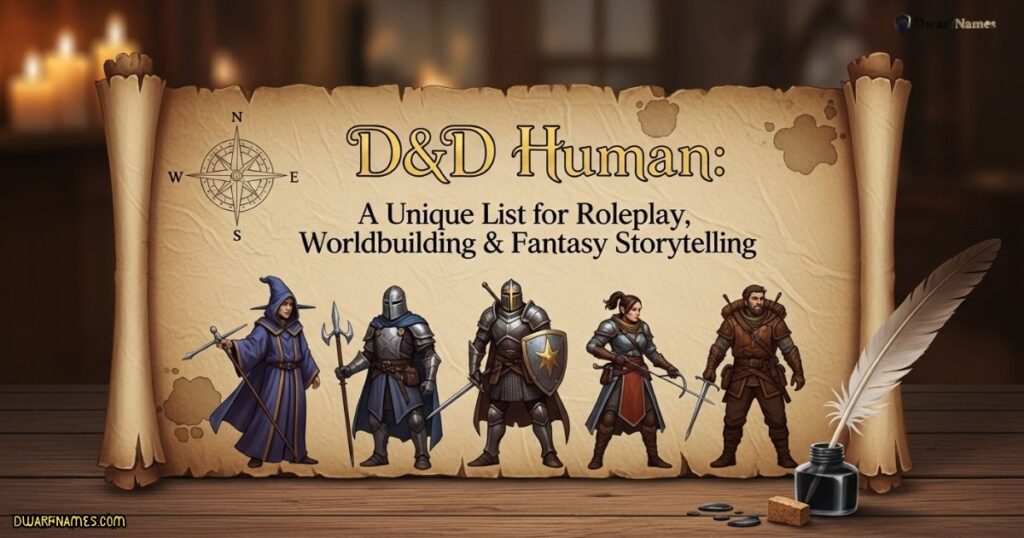
In the vast tapestry of Dungeons & Dragons, few races carry the weight of the world quite like humans. They are builders of empires, breakers of oaths, wanderers of forgotten roads, and the quiet heroes of a thousand untold tales. Where elves live for centuries and dwarves carve their names into stone, humans burn brighter—and sometimes faster—than any other race in the realm. And at the heart of every human character, before a single die is rolled, is a name.
A name is not merely a label. In the world of D&D, a character’s name is the first brushstroke of a portrait that will be painted through every battle, every betrayal, every moment of triumph. Whether you are crafting a noble paladin sworn to the light, a cunning rogue threading through shadowed alleyways, or a traveling merchant with secrets behind every smile, the right name carries the echo of who they are—and who they might become.
Human names in D&D draw from a breathtaking range of cultural roots. Unlike the musical lilt of elf names or the guttural strength of orcish ones, human names mirror the real-world diversity of civilization: ancient Roman cadence, medieval English grit, Norse thunder, Byzantine elegance, and everything in between. This richness makes them uniquely powerful for storytelling.
Whether you are a dungeon master crafting an NPC who will haunt your players’ memories, a player building a character whose name they will shout across the table for years, or a fantasy writer searching for that perfect name that sings—this guide is your companion. Dive in, and let every name be a door to a new story.
Famous Human Names From Literature & Games
Before exploring original names, it helps to look at the legendary figures whose names have shaped fantasy culture. These characters prove that a great name is inseparable from a great story.
Aragorn — The Once and Wandering King
Perhaps the most iconic human hero in all of fantasy literature, Aragorn son of Arathorn carries a name that feels ancient, weathered, and noble all at once. The harsh consonants of ‘Ar-a-gorn’ conjure a man forged by hardship rather than comfort. His many aliases—Strider, Elessar, Thorongil—show how human names can transform alongside a character’s journey. In D&D terms, he is the archetypal ranger-paladin: humble in appearance, extraordinary in destiny.
Geralt of Rivia — The Reluctant Legend
Though a Witcher by trade, Geralt is undeniably human at heart—scarred, cynical, and deeply moral beneath his gruff exterior. His name is short, punchy, and carries Central European grit. ‘Geralt of Rivia’ also demonstrates the power of place-based surnames in fantasy, something we will explore further in the clan and surname sections below. His name has become synonymous with the morally complex hero who chooses the lesser evil when there are no good choices left.
Rand al’Thor — The Dragon Reborn
From Robert Jordan’s Wheel of Time, Rand carries a name rooted in simplicity—a farmboy’s name for a farmboy who becomes a god. The contrast is deliberate and brilliant. In D&D worldbuilding, giving your chosen-one character a humble, everyday name creates powerful dramatic irony. When the prophecies call him the Dragon Reborn, that plain name ‘Rand’ becomes charged with a meaning it never asked for.
Ezio Auditore — The Assassin Poet
From the Assassin’s Creed franchise, Ezio (technically a historical fantasy character) carries a name with Florentine aristocratic beauty. It is lyrical, swift on the tongue, and unforgettable. For D&D rogues and nobles, Italian-inflected names carry an air of Renaissance intrigue—equal parts charm and danger.
Male DnD Human Names
These names carry the strength, ambition, and variety that define the human male in fantasy settings—from battle-scarred veterans to quiet scholars. Whether your character is a mercenary captain or a monastery scribe, there is a name here waiting for him.
- Aldric
- Brennan
- Corvin
- Dorian
- Emrys
- Falkor
- Gavren
- Hadwin
- Idris
- Jareth
- Kaelen
- Lucian
- Marius
- Nevyn
- Osric
- Percival
- Quillan
- Roderic
- Sevan
- Theron
- Ulric
- Varren
- Wulfric
- Xander
- Yoren
- Zephyrin
- Aldous
- Beren
- Caspian
- Draven
- Elric
- Florian
- Gregor
- Hadrian
- Isidore
- Jorvik
- Kenthar
- Lysander
- Mathias
- Niall
- Orrin
- Phelan
- Renwick
- Stellan
- Tiberius
Female DnD Human Names
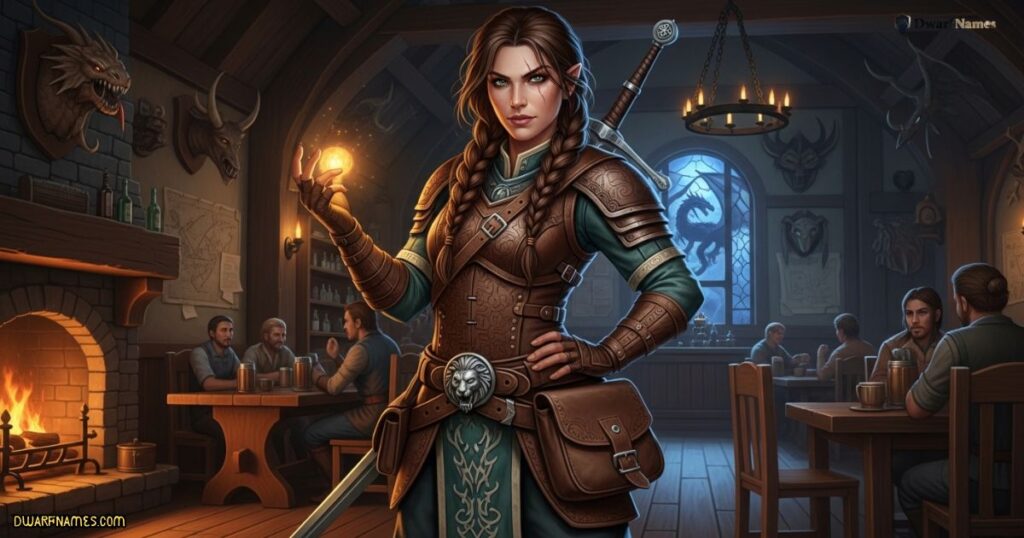
Strong, lyrical, and full of depth—these female human names span the full emotional range of a D&D character. From warrior queens to wandering healers, from court spies to flame-touched sorcerers, every archetype finds its voice here.
- Aelith
- Bryndis
- Cressida
- Delara
- Eirlys
- Faelyn
- Gwyneira
- Heloise
- Isolde
- Jocelyn
- Kataryn
- Lyris
- Merewyn
- Niamh
- Ophira
- Petra
- Rowenna
- Saoirse
- Thessaly
- Ursula
- Vesper
- Wendra
- Xiana
- Ysolde
- Zaera
- Amara
- Belindra
- Cordelith
- Davina
- Erindel
- Fianna
- Gwenara
- Harlow
- Ivara
- Jessamine
- Korveth
- Lorenna
- Mirela
- Nadira
- Orinthia
- Parveen
- Quivara
- Raelith
- Sylvara
- Thalindra
Cool & Unique DnD Human Names
Sometimes a character needs a name that stops the room—something with an unusual sound, an unexpected syllable, a quality that feels original even in a world full of magic. These unique human D&D names are crafted to stand out.
- AzurenAzuren — with a sound as otherworldly as mage names from ancient arcane traditions
- Vexar
- Thorvind
- Quelith
- Zaroven
- Nyxara
- Valdren
- Solvein
- Korreth
- Ixander
- Draeven
- Moravel
- Tyrvald
- Cyndrel
- Haelorn
- Lyraxis
- Parveld
- Rhovann
- Sundrel
- Wythara
- Eryndal
- Gavreth
- Zevoran
- Thessorn
- Vindrel
- Korvara
- Pyravel
- Naedryn
- Ulfaren
- Caelith
Warrior & Badass Human Names for D&D
These names were born on battlefields and whispered in war camps. They carry the weight of shields, the echo of war cries, and the iron scent of hard-fought victory. Perfect for fighters, barbarians, war clerics, and any human who has looked death in the eye and refused to blink.
- Thravik
- Bolvur
- Grelden
- Harkan
- Ironfeld
- Jarrvik
- Kraeven
- Lorcan
- Malgorn
- Nordrek
- Olvrak
- Ragnvar
- Skarveld
- Torvik
- Ulfdan
- Valdrak
- Warbane
- Xavrak
- Ysgard
- Zolvrak
- Askvir
- Brynjak
- Cragden
- Dravnek
- Edrak
- Falkvar
- Gorvin
- Halvrek
- Ingvar
- Jormund
Royal & Noble Human Names
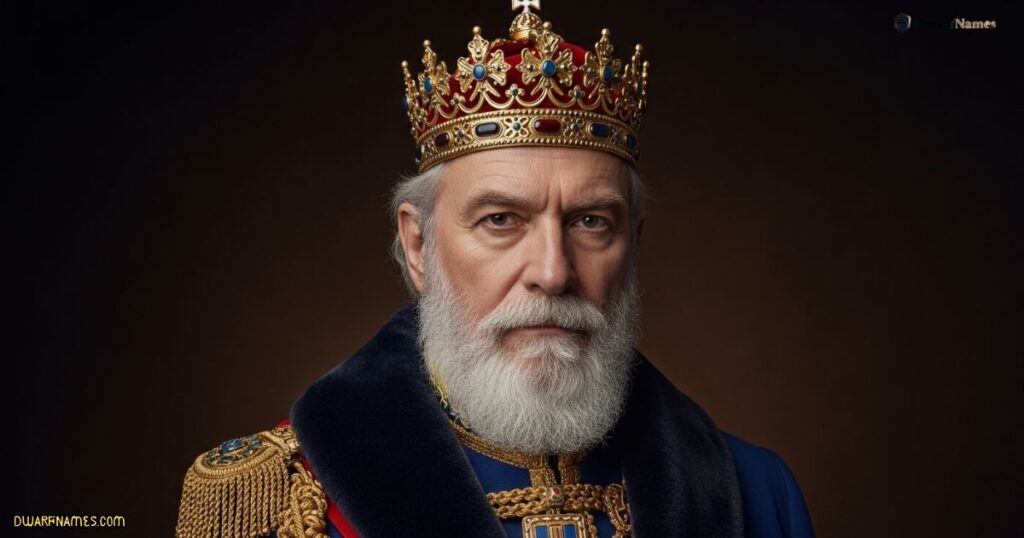
Bloodlines matter in the great kingdoms of fantasy. These names carry the gravity of titles, the weight of crowns, and the elegance of courts where every word is a political move. Ideal for nobles, kings, princes, ambassadors, and the high-born who know that power is as much about a name as a sword.
- Alistair
- Baldwyn
- Caelius
- Demetrios
- Evander
- Fabian
- Geoffroi
- Hadleigh
- Imperiax
- Justinian
- Konstantine
- Leofric
- Montague
- Nikolaev
- Octavian
- Ptolemy
- Quintus
- Reginald
- Sylvester
- Trajan
- Ursian
- Victorien
- Wilhelmus
- Xiander
- Yelrik
- Zosimus
- Alethea
- Beatrix
- Celestine
- Dorinda
- Eudoxia
- Florienne
- Genevieve
- Honorine
- Isadora
- Josephine
Traditional & Classic Human Names
Some names endure because they are timeless—rooted in legend, resonant across generations, and immediately recognizable as belonging to the world of fantasy roleplay. These are the names that feel like they have always existed in the game.
- Arthur
- Baldwin
- Conrad
- Duncan
- Edmund
- Gareth
- Harold
- Ivan
- Julian
- Kenneth
- Leonard
- Marcus
- Nicholas
- Owen
- Philip
- Raymond
- Simon
- Thomas
- Vincent
- Walter
- Agnes
- Beatrice
- Clara
- Dorothea
- Eleanor
- Frances
- Griselda
- Helena
- Imogen
- Joan
Human Naming Traditions: Lore & Worldbuilding
Understanding how humans name their children in your D&D world adds layers of authenticity that players and readers can feel, even if they cannot quite explain why. Human naming traditions vary enormously by region, culture, and era—and that variety is itself the defining trait of the race.
Regional Naming Customs
In the northern kingdoms, where winters are long and gods are stern, names tend toward hard consonants and short syllables—Brann, Keld, Sigrun. These are names built for shouting across wind-scoured plains. Southern coastal kingdoms favor flowing vowels and musical endings—Serafino, Lorelaith, Thessara—reflecting a culture shaped by trade, art, and sea.
Desert civilizations often use names that honor ancestors, carrying the same name through generations with a suffix added to distinguish between them—Karan the Elder, Karan vel Arsen (son of Arsen). In forested border towns, names tend to blend two traditions, creating hybrids that reflect the meeting of cultures.
Occupational & Earned Names
In many human cultures within D&D lore, a second name—sometimes replacing the birth name entirely—is earned through deed. A soldier named Thomas who slays a river hydra might become Thomas Hydrathane, or simply Hydrabane in the common tongue. A healer who saves a plague-stricken village earns the suffix ‘-blessed.’ These earned names function as living biographies, and meeting someone who carries one immediately signals that they have a story worth hearing.
Family Name Traditions
Human family names (surnames) typically follow one of four patterns across D&D-inspired settings. Occupational surnames reflect a family’s historical trade: Mason, Thatcher, Arrowsmith. Geographic surnames reflect the land the family comes from or holds: Dunmore, Ashfeld, Stonebrook. Patronymic surnames connect children to fathers or mothers: Aldricson, Marasdottir. And descriptive surnames—often the most colorful—derive from a notable physical or personal trait: Greymane, Ironhand, Swiftfoot.
For players of human characters who want maximum immersion, choosing a surname from the appropriate tradition for your character’s homeland deepens the entire roleplay experience. A warrior from the northern highlands named Bren Stonemark feels fundamentally different from a southern courtier named Caelius Aurantio—even if their stat blocks are identical.
Names as Social Class Markers
In highly stratified human societies—common in D&D settings like Forgotten Realms—a name instantly signals social standing. Noble families often use classical, multi-syllable names with Latin or Greek echoes. Merchant families favor names that sound aspirational: slightly noble, but not quite. Common folk carry short, practical names. Outlaws and revolutionaries sometimes abandon birth names entirely, choosing monikers that reflect ideology rather than origin.
This means a clever dungeon master can use a character’s name to drop lore clues before a single word of dialogue is spoken. When the party meets a man called Quintus Aldenmere Verani III, they know instantly that he is old money, probably arrogant, and almost certainly has something to lose.
Human Clan Names & Surnames for D&D
The following compound surnames and clan names are ideal for adding texture to your human characters. They work as traditional family names, mercenary company names, noble house identifiers, or legendary ancestral titles.
Occupational & Craft-Based Surnames
- Arrowsmith
- Blackforge
- Copperveil
- Darkweaver
- Elmtanner
- Flintwright
- Goldspinner
- Hammerstone
- Ironbloom
- Jadebinder
Geographic & Land-Based Surnames
- Ashholm
- Brokenwall
- Cliffmere
- Dunbarrow
- Emberfield
- Frostpeak
- Greymarsh
- Highstone
- Ironbrook
- Jadepond
- Lakehaven
- Moorfield
Deed & Battle Surnames
- Bloodsworn
- Chainbreaker
- Dragonslain
- Emberheart
- Flamecrest
- Giantsbane
- Hallowedge
- Ironwill
- Jadehammer
- Kingskiller
- Lionmantle
- Morningsword
Noble & Dynastic Surnames
- Aldenmere
- Blackthorne
- Castelmayne
- Dawnridge
- Eldenmoor
- Falconstride
- Greywood
- Harrowgate
- Ironspire
- Jademantle
- Kingsveil
- Lanternmere
- Morrowdale
- Nighthollow
- Oathkeeper
Expanding Your Roster: Other Fantasy Names Worth Exploring
If you love the depth of human naming conventions, you might also enjoy exploring fairy names for their ethereal, nature-woven quality—perfect for half-human characters with fey ancestry.
For characters with arcane paths, browsing through collections of mage names can offer rich naming inspiration rooted in mystical tradition.
If you are building a morally complex character or a dark campaign, succubus names carry a seductive menace that can inspire compelling villainous human characters or tiefling-human hybrids.
The flowing grace of elf names can also inform human names in regions where elven culture has long influenced human civilization—ideal for high-fantasy settings.
For warriors inspired by Eastern traditions, samurai names are a treasure trove of honor-bound naming conventions that translate beautifully into D&D fighter or monk characters.
Curious about shapeshifters, tricksters, and fox-spirit mythology? Kitsune names offer a fascinating contrast to human naming—ideal for exotic NPCs or characters with unusual heritage.
For dungeon masters populating their worlds with memorable encounters, creature names provide a vast library of monstrous and bestial identities that can make your human antagonists’ pet beasts equally memorable.
If your campaign ventures into the Astral Plane or encounters the militant psi-warriors of the Githyanki, exploring DnD Githyanki names can inspire human characters who have been shaped by contact with those alien forces.
And for darker campaigns where lycanthropy is a threat—or a gift—werewolf names can inspire the dual identity of a human character caught between two natures.
The Power of a Name: Closing Thoughts
There is an old saying among bards and storytellers: give a character a great name, and half the story tells itself. In Dungeons & Dragons, this is truer than anywhere else. A name is the first thing spoken at a new table, the battle cry shouted in a desperate moment, the inscription carved into a tombstone or a throne.
Human names in D&D carry a weight that comes from their very diversity. They can be grand or humble, ancient or freshly coined, earned through deed or inherited through blood. They can echo the rolling hills of a medieval countryside, the marble columns of a dying empire, the war camps of the north, or the sun-baked courts of the south.
The names in this guide are starting points, not endpoints. Take them, change them, break them apart and reassemble the pieces. Add a suffix that belongs to your world. Swap a vowel to change the feel. Give your character a birth name and an earned name and a secret name known only to one other person in the world.
Because in the end, a truly great D&D character name is not just unique DnD human names plucked from a list—it is a name that becomes inseparable from the story around it. It is the name your fellow players will remember long after the campaign ends, the name that will make someone smile years later when they hear it mentioned in passing.
Go forth, name your heroes and villains, your wanderers and kings. The story is waiting.