
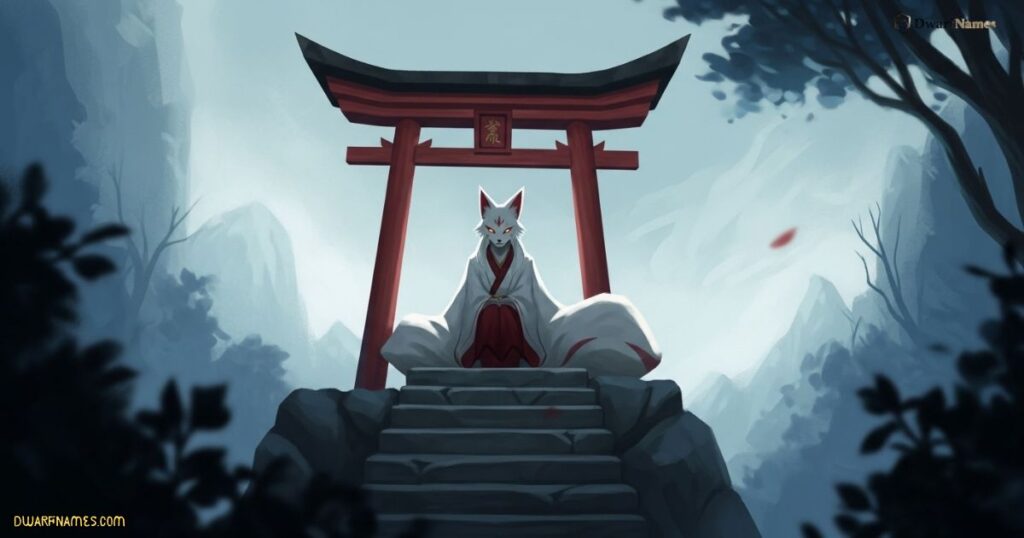

In the ancient forests where moonlight threads through cedar and pine, where foxfire dances on still water and whispers curl between worlds, the Kitsune waits. Shape-shifter. Spirit-weaver. Trickster divine. Among the most beloved and complex beings in Japanese mythology and East Asian fantasy, the Kitsune is no mere fox — it is a creature of centuries, a being whose very name carries the weight of storms and silk in equal measure.
For writers, game masters, and worldbuilders, giving a Kitsune the right name is not a cosmetic choice. It is a covenant with character. A Kitsune name evokes transformation — the slow accumulation of tails, the glimmer of a nine-fold aura, the echo of a thousand-year pact. Whether you are crafting a campaign villain who wears the face of a court noble, a wandering spirit fox who guards forgotten shrines, or a trickster mentor cloaked in riddles, the name must carry that duality: beautiful and dangerous, ancient and alive.
This guide is your complete compendium. We have gathered over 300 Kitsune names — sorted by theme, gender, power, and purpose — alongside lore on how these names are structured, what they mean within the mythology, and how to use them to build stories that shimmer. Whether you call them fox spirits, celestial tricksters, or divine messengers of Inari, the Kitsune deserves a name worthy of their magic.
If you enjoy naming mythological beings, you might also find inspiration among fantasy fairy names or explore the mystical world of mage names — both share that same elegant, otherworldly resonance.
Famous Kitsune Names From Literature & Games
Before we open the gates to our full name vault, let us pause and honor the Kitsune who have already left their marks on our imaginations.
Kurama — Perhaps the most iconic Kitsune in modern storytelling, the Nine-Tailed Fox sealed within Naruto Uzumaki from the Naruto series. Kurama’s name, drawn from Japanese mythology (the Kurama mountain, home of demons and divine beings), perfectly mirrors his nature: ancient, mighty, and tethered between wrath and wisdom. His arc from enemy to ally is one of fantasy’s greatest redemption stories, and his name carries the mountain’s impassable gravity.
Ahri — From the world of League of Legends, Ahri is a Vastaya Kitsune searching for her lost memories and true identity. Her name is soft yet haunting — a reflection of her power to charm and her longing for something pure. Ahri has introduced millions of players to Kitsune aesthetics: fox ears, swirling orbs of foxfire, beauty weaponized as survival.
Tamamo-no-Mae — A legendary figure from Japanese folklore, said to be a nine-tailed fox who disguised herself as a beautiful court lady to manipulate the Emperor. Her name translates roughly to “Lady of the Jeweled Cattail” — a name of grace concealing something far more perilous. She is the archetypal Kitsune villain, and her legend has inspired countless games, novels, and tabletop campaigns.
Kiko — From the Usagi Yojimbo comics, Kiko is a young fox spirit whose name is simple and warm, embodying a more playful face of Kitsune energy. Names need not always be grand to be meaningful — sometimes a short, bright name tells a story of a spirit still growing into their tails.
These four names alone tell us everything: Kitsune names span the spectrum from mountain-dark to jewel-bright, from warrior to trickster, from ancient to newborn.
Male Kitsune Names
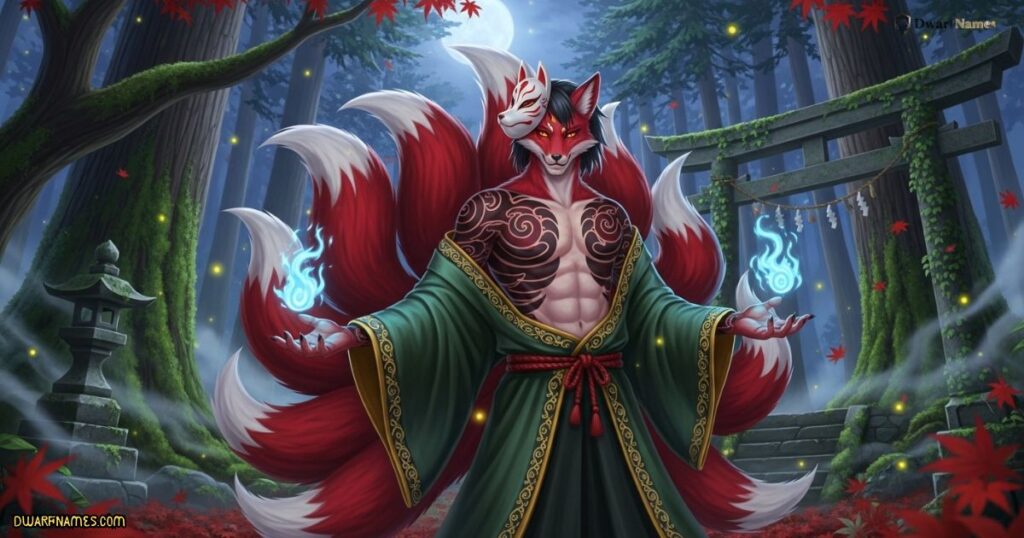
Male Kitsune in mythology and fantasy often serve as guardian spirits, wandering sages, or celestial warriors sworn to Inari. Their names tend to balance elegance with weight — a soft syllable hiding iron beneath it.
- Kaito
- Raiden
- Soren
- Haruki
- Mizuki (unisex but often male in fox spirits)
- Takeshi
- Orochi
- Genbu
- Kojiro
- Ryusei
- Tsukimaro
- Akinori
- Hayato
- Kenzō
- Tobimaro
- Shirabe
- Fumio
- Isamu
- Katsuro
- Naomichi
- Yashiro
- Zenichi
- Amaterō
- Daitoku
- Hishiro
- Ichimaru
- Jūzō
- Kazuhari
- Midorimaru
- Noritaka
- Ōkami
- Raijin
- Sōtarō
- Takamaru
- Umimaru
- Yasuoki
- Zenjirō
- Aomaru
- Byakuren
- Chikamaru
Female Kitsune Names
Female Kitsune are perhaps the most iconic in mythology — spies, seductresses, shrine maidens, divine messengers. Their names often carry the sound of water, cherry blossom, or moonlit silk. They are beauty with teeth.
- Yuki
- Akane
- Hana
- Setsuko
- Fujiko
- Mizuki
- Tsukiko
- Himari
- Koharu
- Sakura
- Inari
- Kirara
- Natsume
- Rin
- Shiori
- Tomoe
- Umeko
- Yukino
- Ayame
- Beniko
- Chiyo
- Daisen
- Emiko
- Fujimi
- Ginko
- Harume
- Isana
- Juri
- Kasumi
- Lotus
- Mayu
- Narumi
- Ohana
- Petalwhisper
- Quiriko
- Reiraku
- Sumi
- Tamamo
- Uranami
- Wakana
- Xenith
- Yachiyo
- Zukimi
- Asuha
- Byakuya
- Chizuru
- Daikoku
- Eirene
- Fumika
- Gemizu
Much like the succubus names of darker fantasy traditions, female Kitsune names walk the line between allure and danger — the sweetest names often hide the sharpest spirits.
Cool & Unique Kitsune Names
These names break from tradition and lean into the fantastical — perfect for original characters, unconventional spirits, or Kitsune who have long since shed the conventions of the old shrines.
- Kairoshin
- Vexmaru
- Zoraku
- Nephiru
- Sylvenmaru
- Auriken
- Frostwhisper
- Dawnkiri
- Emberveil
- Glaciomaru
- Hexsora
- Inkbloom
- Jadekiri
- Kyokuren
- Lumiven
- Moonvex
- Noctimaru
- Obsidori
- Phantazen
- Quillfire
- Ripplekin
- Shadowori
- Thistlebloom
- Umbraveil
- Voidmaru
- Whisperkin
- Xenomaru
- Yamibloom
- Zetsuori
- Ashveil
- Blazekiri
- Crimsomaru
- Dustwhisper
- Eclipsori
- Fadebloom
- Glowmaru
- Hazekiri
- Ironveil
Warrior & Badass Kitsune Names
When the foxfire burns red and the celestial battle begins, you need a name that hits like a war drum. These Kitsune names are forged for warriors, divine soldiers, and fox spirits who have drawn blood in the service of Inari or for darker masters entirely.
- Kurokami
- Ragetail
- Ironfang
- Stormclaw
- Ashenveil
- Blazecrest
- Deathmaru
- Emberclaw
- Firestrike
- Ghostblade
- Hellmaru
- Ironbloom
- Jadeclaw
- Kageblaze
- Lightningfang
- Moonblade
- Nightstrike
- Onifire
- Phantomblade
- Quickstrike
- Rageclaw
- Shadowfang
- Thundermaru
- Umbrablade
- Voidclaw
- Warblossom
- Xenofang
- Yamiblade
- Zeroclaw
- Ashfang
- Bloodmaru
- Crimsonblade
- Darkclaw
- Eclipseblade
- Flintfang
If you enjoy crafting battle-hardened characters with mythological weight, check out these samurai names — many pair beautifully with a Kitsune warrior’s honorific.
Royal & Noble Kitsune Names
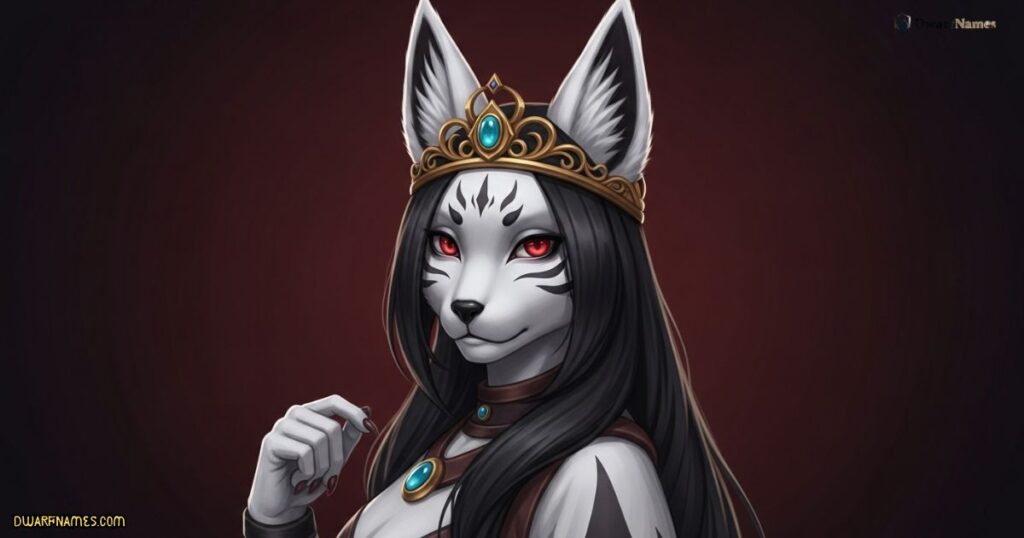
Some Kitsune ascend beyond the mortal forests to serve as celestial nobles, divine advisors, or ancient monarchs of the spirit realm. Their names carry the gravity of centuries and the sheen of gold.
- Amaterashi
- Byakudō
- Celestimaru
- Divenmaru
- Eirikokami
- Fujinori
- Genmaru
- Himemaru
- Irikami
- Jōmaru
- Kōmyō
- Lumimaru
- Majestokami
- Noblefang
- Ōgenmaru
- Pearlbloom
- Queenmaru
- Regalfang
- Seijōmaru
- Tenshimaru
- Umegold
- Velvetbloom
- Wisteriamaru
- Ximaru
- Yūkōmaru
- Zenithdō
- Auramaru
- Brightkami
- Crownclaw
- Dawnmaru
Traditional & Classic Kitsune Names
Rooted in Shinto tradition, these names feel as though they were carved into shrine wood centuries ago. They are the names of fox spirits that appear in old scroll illustrations and whispered campfire tales.
- Inari
- Kuzunoha
- Tamamo
- Shiranui
- Byakko
- Hakumei
- Kokon
- Mizuchi
- Nue
- Onibi
- Raikō
- Seiryū
- Tenkou
- Usagi
- Yakomizu
- Zenshiro
- Amagi
- Beni
- Chikara
- Dōji
- Enki
- Fukami
- Ginzō
- Hotaru
- Izumi
These names echo across a tradition that also gave rise to powerful beings like werewolves and other shapeshifting spirits — creatures whose names carry transformation at their core.
Kitsune Naming Traditions: The Lore Behind the Name
In Japanese mythology, a Kitsune does not simply receive a name — a name is earned, or bestowed as a divine gift. Understanding this tradition will help you craft names that feel authentic rather than assembled.
The Tail Count and Naming A Kitsune gains power with each century of life, growing a new tail every hundred years — up to nine. Their names often subtly reflect this accumulation. A young one-tail might carry a simple, bright name: Hana, Rin, Kaito. A nine-tail elder might bear something heavier, compounded, layered: Tsukimaro-no-Byakko, Tamamo-no-Ryūjin. The more tails, the more their name expands.
The “no” Particle Traditional Kitsune names in formal contexts often use the particle no to link name to title or lineage: Tamamo-no-Mae (Lady Tamamo), Kuzunoha-no-Hana. This particle signals aristocracy and age — a Kitsune who uses no in their name has likely lived long enough to have a reputation.
Color Names In the Kitsune tradition, color carries immense spiritual meaning. Shiro (white) Kitsune serve the divine and bring blessings. Kuro (black) Kitsune walk closer to shadow and chaos. Gin (silver) Kitsune are rare seers. Kin (gold) Kitsune are considered heavenly and untouchable. Many Kitsune names incorporate these color roots — Shirokami, Ginbloom, Kinmaru — to immediately signal alignment and nature to those who know how to listen.
Shrine Names and Clan Affiliation A Kitsune born near the Fushimi Inari shrine might carry Fushimi as a prefix. One who serves a water kami might bear Mizu or Kawa as a root. These geographical and divine affiliations function like surnames — context that grounds an otherwise ethereal being in a specific spiritual territory.
For those building diverse fantasy pantheons, these naming structures share interesting parallels with elf naming traditions, where bloodline and magical affiliation often shape the name’s form and weight.
Kitsune Clan Names: Compound Honorifics and Lineage Titles
These are the great clan names — the titles that echo through the spirit world and make mortal hearts skip when heard whispered at dusk. A Kitsune who bears a clan name carries an entire dynasty of tricksters and sages behind them.
- Shadowtail Clan
- Moonfire Lineage
- Ashenbloom House
- Crimsonveil Kin
- Dawnwhisper Line
- Embergloom Clan
- Frostfang Lineage
- Ghostbloom House
- Hollowmoon Kin
- Ironpetal Line
- Jadeclaw Clan
- Kageori Lineage
- Luminveil House
- Midnightbloom Kin
- Ninecrown Line
- Obsidianmaru Clan
- Pearlwhisper Lineage
- Quicksilver House
- Rainshroud Kin
- Starfang Line
- Thistleblaze Clan
- Umbrakin Lineage
- Voidpetal House
- Wisteriafang Kin
- Xenofire Line
- Yamibloom Clan
- Zerophantom Lineage
- Ashcrown House
- Brightmoon Kin
- Crystalfang Line
- Duskveil Clan
- Eclipsebloom Lineage
- Frostmoon House
- Gildedtail Kin
- Hollowblaze Line
- Inkwhisper Clan
- Jademoonshroud Lineage
- Kindlebloom House
- Lunarclaw Kin
- Mirewisper Line
For worldbuilders developing entire mythological systems, you might also find the creature names guide useful when populating the spirit world around your Kitsune clans, or explore D&D human names when crafting the mortal societies your fox spirits infiltrate.
Kitsune Last Names & Surnames
When Kitsune walk among humans — disguised as scholars, healers, or traveling merchants — they often adopt surnames to blend in. These surnames carry hidden meaning for those who know what to look for.
- Foxmantle
- Silvertail
- Moonveil
- Ashwarden
- Bloomweaver
- Crimsoncroft
- Dawnhallow
- Embervane
- Frostweald
- Ghosthollow
- Hiddenmane
- Ironleaf
- Jadehaven
- Kindlewick
- Lunarcroft
- Mistweaver
- Nightbloom
- Obsidianmere
- Petalward
- Quickmoon
- Riddlecroft
- Shadowmere
- Thornveil
- Umbracroft
- Veilweaver
- Whisperstone
- Xenmoon
- Yamimere
- Zephyrbloom
- Ashcroft
Some of these surnames carry that same sharp elegance you find in Githyanki naming conventions — beings whose names are simultaneously a mask and a declaration.
Kitsune Name Generator Ideas: Build Your Own
If you want to craft entirely original Kitsune names, understanding the building blocks of their naming language puts the magic in your hands. Here is a modular system you can use to assemble names that feel authentic and powerful.
Prefix Elements (Nature & Power) Tsuki (moon) / Kage (shadow) / Hana (flower) / Mizu (water) / Kiri (mist) / Kami (divine) / Gin (silver) / Kin (gold) / Yami (darkness) / Hi (fire) / Kaze (wind) / Sora (sky) / Umi (sea) / Yuki (snow) / Hoshi (star)
Core Name Roots -maru / -ori / -bloom / -veil / -fang / -claw / -blaze / -whisper / -thorn / -kiri / -kami / -dō
Suffix Titles (for elder or noble Kitsune) -no-Mae / -no-Kami / -no-Ryū / -no-Hana / -no-Tsuki
Combine freely. Yami-no-Tsuki becomes “Moon of Darkness.” Ginbloom becomes a silver fox spirit who blossoms in moonlight. Kaze-no-Kiri is the wind-mist wanderer who passes through villages without leaving footprints.
The best Kitsune name is one that tells a small story in two syllables — or unravels a mystery across five.
Conclusion: Give Your Kitsune a Name That Lives
In folklore, to know a spirit’s true name is to hold power over them. In storytelling, to choose a name well is to breathe life into something that was not there before.
The Kitsune is one of fantasy’s most layered archetypes — ancient enough to carry wisdom, wild enough to embrace chaos, beautiful enough to lure mortals off the path, and deep enough to grieve when the century turns and everyone they knew is gone. That deserves a name that carries all of that weight.
Whether you are naming a player character, a campaign villain, a novel’s heart, or simply building a world for the joy of it — let the name be a doorway. Let it hint at history. Let it carry color and season and tail-count in its syllables.
You have three hundred names here, plus the tools to build three hundred more. The foxfire is lit. The shrine gate is open. Step through.
FAQ’s
What are the 13 kitsunes?
In Japanese folklore, kitsune are not officially divided into 13 types. However, modern interpretations sometimes classify them by abilities like elemental foxes, celestial messengers, tricksters, guardians, and spirit fox variations in folklore studies today contexts
Does the kitsune have a name?
Kitsune is a general Japanese word for fox spirit, not a single being with one name. Individual kitsune in stories often have personal names, especially in folklore, anime, and shrine traditions across Japan culture mythology
Who is the god of all kitsune?
Inari Ōkami is the Shinto deity most closely associated with kitsune, fox spirits in Japan. Kitsune serve as messengers of Inari, who governs rice, fertility, prosperity, and worldly success in folklore traditions belief system culture
Are Kitsunes 7 or 9 tails?
Kitsune can have multiple tails, usually one to nine. The most powerful are nine-tailed kitsune, known as kyūbi no kitsune, symbolizing age, wisdom, and magical strength in Japanese folklore and mythology stories belief systems traditions
Are kitsunes only female?
Kitsune are not exclusively female in Japanese folklore. They are shapeshifting spirits that can appear as male or female humans, depending on the story, tradition, and role they play in myths and cultural narratives folklore